How OSINT Platforms Facilitate Advanced Cross Verification of Information
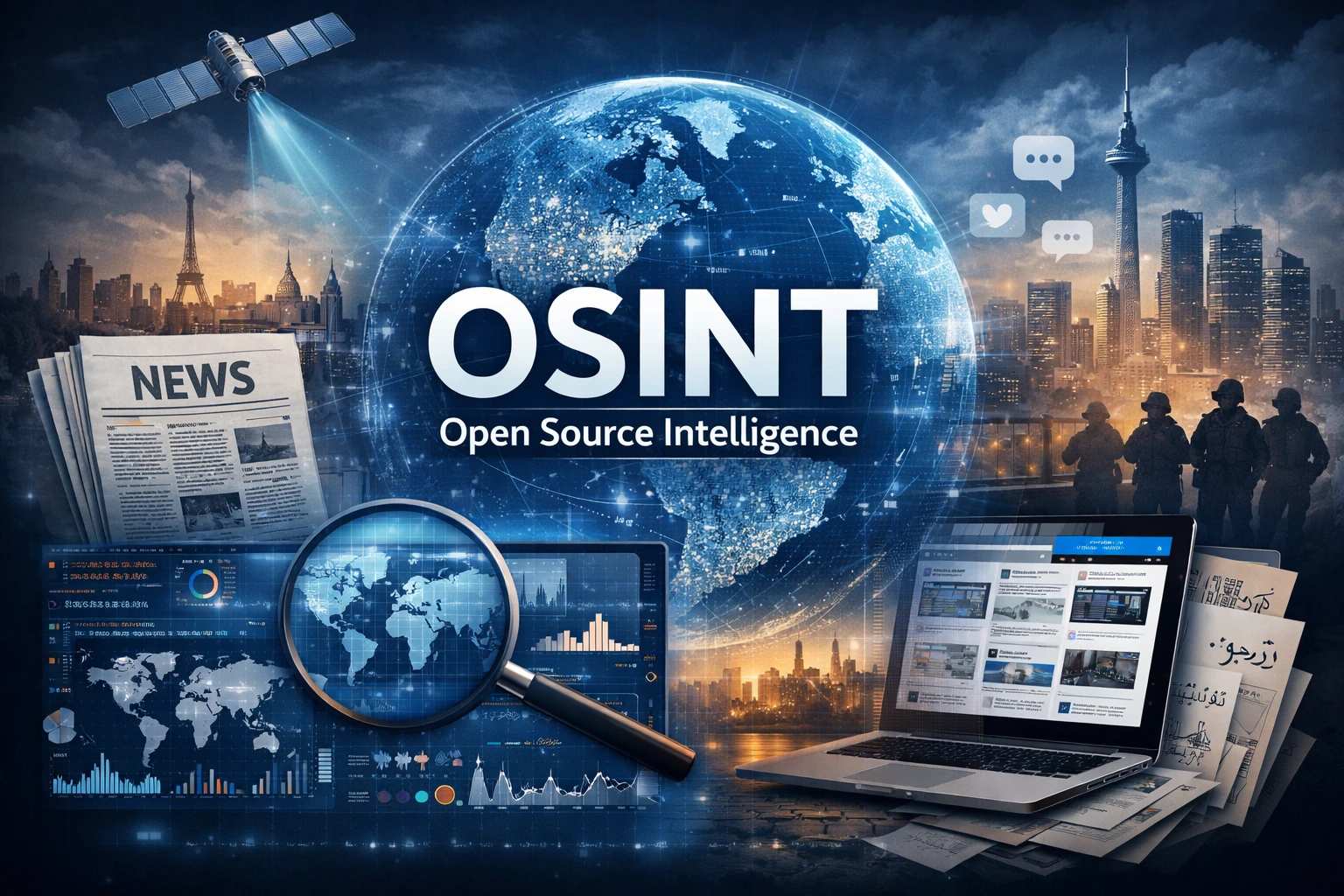
In the rapidly evolving landscape of intelligence gathering, the ability to verify information accurately and efficiently stands as a cornerstone of reliable analysis. Open Source Intelligence (OSINT) platforms have transformed from basic data aggregators into sophisticated ecosystems that enable advanced cross verification across diverse sources. By integrating multi-dimensional data collection, AI-driven correlation, and collaborative workflows, these platforms empower analysts in government, law enforcement, and security sectors to mitigate misinformation, confirm threat indicators, and build robust evidence chains.
Knowlesys Open Source Intelligent System exemplifies this evolution, serving as a comprehensive OSINT platform that supports intelligence discovery, alerting, analysis, and collaboration. Designed for high-stakes environments, it facilitates seamless cross verification by fusing disparate data streams into actionable, verifiable intelligence.
The Critical Role of Cross Verification in Modern Intelligence Work
Cross verification involves corroborating a single piece of information through multiple independent sources to establish credibility and reduce the probability of error or deception. In OSINT contexts, where data originates from public domains prone to manipulation, outdated details, or deliberate disinformation, this process is essential.
Effective cross verification addresses key challenges: distinguishing authentic narratives from coordinated campaigns, validating geolocations and timestamps, confirming entity identities, and tracing propagation paths. Advanced OSINT platforms automate and enhance these tasks, shifting analysts from manual sifting to strategic interpretation.
Platforms achieve this through layered methodologies: source diversity (social media, forums, news, public records), temporal and behavioral correlation, multimedia analysis, and human-machine consensus mechanisms. The result is intelligence that withstands scrutiny in operational decision-making.
Multi-Source Data Aggregation as the Foundation
Advanced OSINT platforms begin with comprehensive intelligence discovery, capturing data from global platforms including major social networks, forums, news outlets, and specialized sites. Knowlesys Open Source Intelligent System supports high-volume ingestion across text, images, videos, and other formats, covering multiple languages and regions.
This broad coverage enables baseline cross verification by allowing analysts to compare the same event or claim across platforms. For instance, a reported incident on one social network can be immediately checked against contemporaneous mentions on others, revealing consistencies or discrepancies in details, timing, and attribution.
AI-Powered Correlation and Behavioral Analysis
Beyond collection, platforms employ intelligent analysis to facilitate deeper cross verification. Knowlesys Open Source Intelligent System utilizes AI to perform entity linking, sentiment assessment, and behavioral modeling, automatically correlating indicators such as account interactions, propagation patterns, and temporal anomalies.
In practice, this means detecting synchronized behaviors indicative of coordinated activity. If similar narratives emerge across disparate accounts with overlapping device fingerprints or timezone offsets, the platform flags these for verification, constructing visual knowledge graphs that highlight linkages.
Multimedia-specific verification further strengthens this capability. Through image and video analysis, platforms enable reverse searches, metadata extraction, and content matching to confirm origins or detect alterations, cross-referencing visual evidence with textual reports.
Real-Time Alerting and Threshold-Based Validation
Intelligence alerting modules in modern platforms incorporate cross-verification logic directly into early warning mechanisms. Knowlesys Open Source Intelligent System delivers minute-level alerts on sensitive content, with built-in risk scoring derived from multi-source corroboration.
Analysts can define custom thresholds — such as minimum source count for confirmation or propagation velocity — ensuring alerts trigger only when information achieves preliminary verification across channels. This reduces noise and prioritizes high-confidence findings for rapid response.
Collaborative Workflows for Human Oversight and Consensus
While automation accelerates verification, human expertise remains indispensable. Knowlesys Open Source Intelligent System supports intelligence collaboration through shared data access, task assignment, and instant messaging, enabling teams to contribute diverse perspectives.
In complex cases, such as attributing influence operations, team members can cross-verify behavioral chains by supplementing automated correlations with domain knowledge. The platform's report generation tools then compile verified insights into structured outputs, preserving audit trails for accountability.
Addressing Emerging Challenges Through Platform Evolution
As disinformation tactics grow more sophisticated, OSINT platforms continue to advance. Knowlesys Open Source Intelligent System incorporates cross-modal fusion — integrating text, visual, and network data — to verify narratives unfolding across formats.
By emphasizing behavioral and network-oriented analysis over isolated content review, these platforms expose subtle inconsistencies that evade traditional methods. This approach aligns with best practices in intelligence communities, where multi-layered verification underpins threat assessment and response.
Conclusion: Building Trustworthy Intelligence Ecosystems
Advanced OSINT platforms like Knowlesys Open Source Intelligent System redefine cross verification by automating correlation, enhancing source diversity, and integrating collaborative validation. In an information environment saturated with noise, these capabilities ensure that intelligence professionals can confidently distinguish signal from deception.
Through rigorous, technology-enabled processes, such platforms not only accelerate discovery and alerting but also uphold the integrity of analysis — delivering reliable insights that inform critical decisions in security, counterterrorism, and strategic operations.