The Long Term Impact of Local Media Digitization on Intelligence Operations
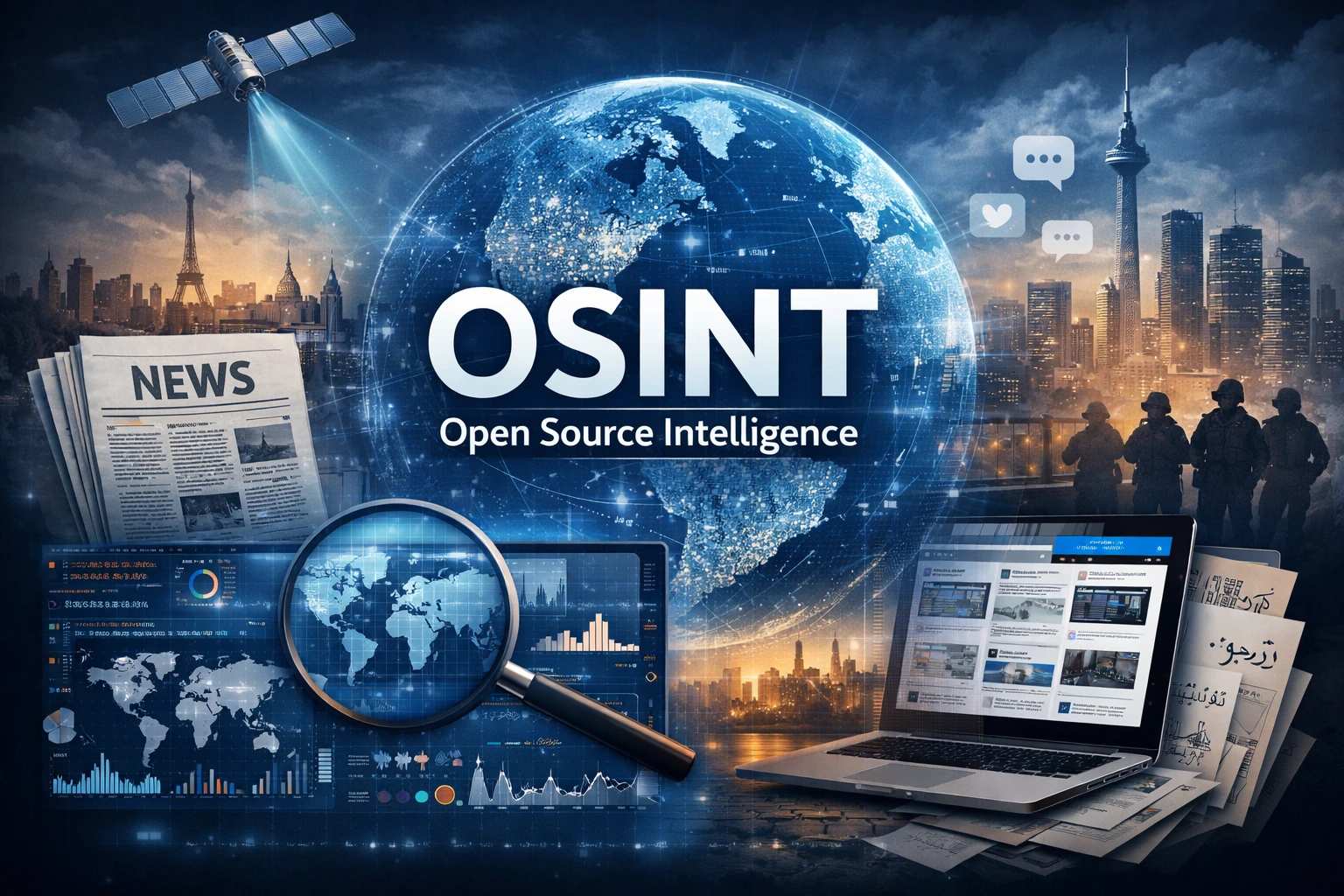
In the evolving landscape of global security, the digitization of local media—encompassing newspapers, radio stations, television broadcasts, and community outlets transitioning to online formats—has fundamentally reshaped how intelligence operations are conducted. What was once a fragmented ecosystem of print and analog broadcasts has become a vast, searchable, and real-time repository of publicly available information. This transformation has elevated open-source intelligence (OSINT) from a supplementary tool to a primary pillar of modern intelligence workflows, enabling faster discovery, deeper contextual analysis, and more agile threat alerting.
The Historical Context: From Analog Constraints to Digital Abundance
Historically, local media served as a critical but limited source for intelligence gathering. Analysts relied on physical clippings, monitored radio frequencies, or accessed delayed television segments, often facing barriers such as geographic access, language differences, and time lags in dissemination. Digitization dismantled these barriers by converting local content into searchable digital archives, online publications, and streaming platforms. Today, community newspapers publish breaking stories instantaneously online, local radio stations stream live with transcripts, and regional TV outlets upload segments to websites and social channels.
This shift has exponentially increased the volume and velocity of accessible data. Intelligence professionals now draw from hyper-local sources—town hall discussions digitized on community forums, regional investigative reports uploaded as PDFs, or live-streamed municipal meetings—to build comprehensive situational awareness. The long-term result is a democratization of intelligence access, where even smaller agencies or specialized teams can leverage global networks of local digitized outlets without traditional resource dependencies.
Enhanced Intelligence Discovery Through Granular Coverage
One of the most profound long-term impacts lies in expanded intelligence discovery. Digitized local media provides granular insights into events that national or international outlets might overlook. Emerging risks, such as localized unrest, environmental incidents, or grassroots movements, often surface first in community-level reporting. With digital formats, these signals become immediately capturable through automated monitoring.
Knowlesys Open Source Intelligent System exemplifies this capability by enabling comprehensive scanning across diverse sources, including digitized local news sites, regional broadcasts, and associated social media feeds. The platform's intelligence discovery features allow operators to define targeted parameters—geographic regions, specific outlets, or thematic keywords—to uncover hidden patterns in local narratives. Over time, this has shifted operations from reactive to proactive, as analysts identify precursors to larger threats embedded in seemingly routine local coverage.
Accelerated Threat Alerting and Reduced Response Latency
Digitization has compressed the timeline from event occurrence to intelligence awareness. Where analog local media might take days to reach distant analysts, digital versions deliver content in minutes. This acceleration supports minute-level threat alerting, crucial in scenarios involving rapid escalation, such as civil disturbances or emerging security incidents.
In practice, digitized local reports often contain early indicators—eyewitness accounts, official statements, or visual evidence—that feed directly into alerting mechanisms. Knowlesys Open Source Intelligent System integrates AI-driven recognition to flag sensitive content across text, images, and video from these sources, ensuring timely notifications via multiple channels. The cumulative effect over years has been a cultural shift in intelligence operations toward real-time responsiveness, minimizing the window for threats to expand unchecked.
Deeper Intelligence Analysis Enabled by Rich, Contextual Data
Beyond speed, digitization enriches analysis with layered context. Local digitized media preserves historical archives, multimedia elements, and community perspectives unavailable in aggregated national feeds. Analysts can trace event evolution through chronological local coverage, assess sentiment shifts via digitized opinion pieces, or correlate geographic data with reported incidents.
Advanced platforms like Knowlesys Open Source Intelligent System facilitate this through multidimensional analysis tools, including propagation mapping, entity profiling, and multimedia tracing. For instance, a local digitized report on infrastructure vulnerabilities can be cross-referenced with related online discussions and visual evidence, yielding actionable insights into potential risks. Long-term, this has fostered more nuanced understanding, reducing reliance on single-source verification and enhancing confidence in analytical outputs.
Collaborative Workflows in a Digitized Ecosystem
The abundance of digitized local media has also transformed collaborative intelligence workflows. Teams distributed across regions or agencies can now share and build upon the same digital sources seamlessly. This fosters integrated operations where field insights from one locale inform analysis in another, creating a networked intelligence environment.
Knowlesys Open Source Intelligent System supports this through secure data sharing, task assignment, and joint reporting features. Analysts collaborate on refining monitoring rules for local outlets, validating findings from digitized sources, and generating unified reports. Over extended periods, such collaboration has strengthened institutional knowledge bases, allowing organizations to adapt more effectively to evolving digital media landscapes.
Challenges and Strategic Adaptations
Despite these advantages, digitization introduces challenges that demand ongoing adaptation. The sheer volume of local digital content risks information overload, while varying quality standards across community outlets can introduce noise or misinformation. Sustained efforts in AI-enhanced filtering, source credibility assessment, and verification protocols remain essential.
Knowlesys addresses these through precise extraction rules, high-accuracy recognition models, and robust stability features that maintain operational continuity. By focusing on comprehensive coverage balanced with analytical precision, the system helps operators navigate the complexities of digitized local media without compromising reliability.
Conclusion: A Permanent Realignment of Intelligence Priorities
The long-term impact of local media digitization on intelligence operations is a permanent realignment toward OSINT-centric approaches. What began as a technical transition has evolved into a strategic imperative, where digitized local sources provide foundational layers for intelligence discovery, rapid alerting, in-depth analysis, and collaborative decision-making. Platforms such as Knowlesys Open Source Intelligent System have been instrumental in operationalizing this shift, empowering organizations to harness the full potential of digital local media for superior security outcomes.
As digitization continues to mature—with emerging integrations of AI, multimedia analytics, and cross-platform tracing—the value of local sources will only grow. Intelligence operations that strategically embrace this evolution will maintain decisive advantages in an increasingly interconnected threat environment.