How Multilingual Media Analysis Strengthens Government Foreign Affairs Assessment
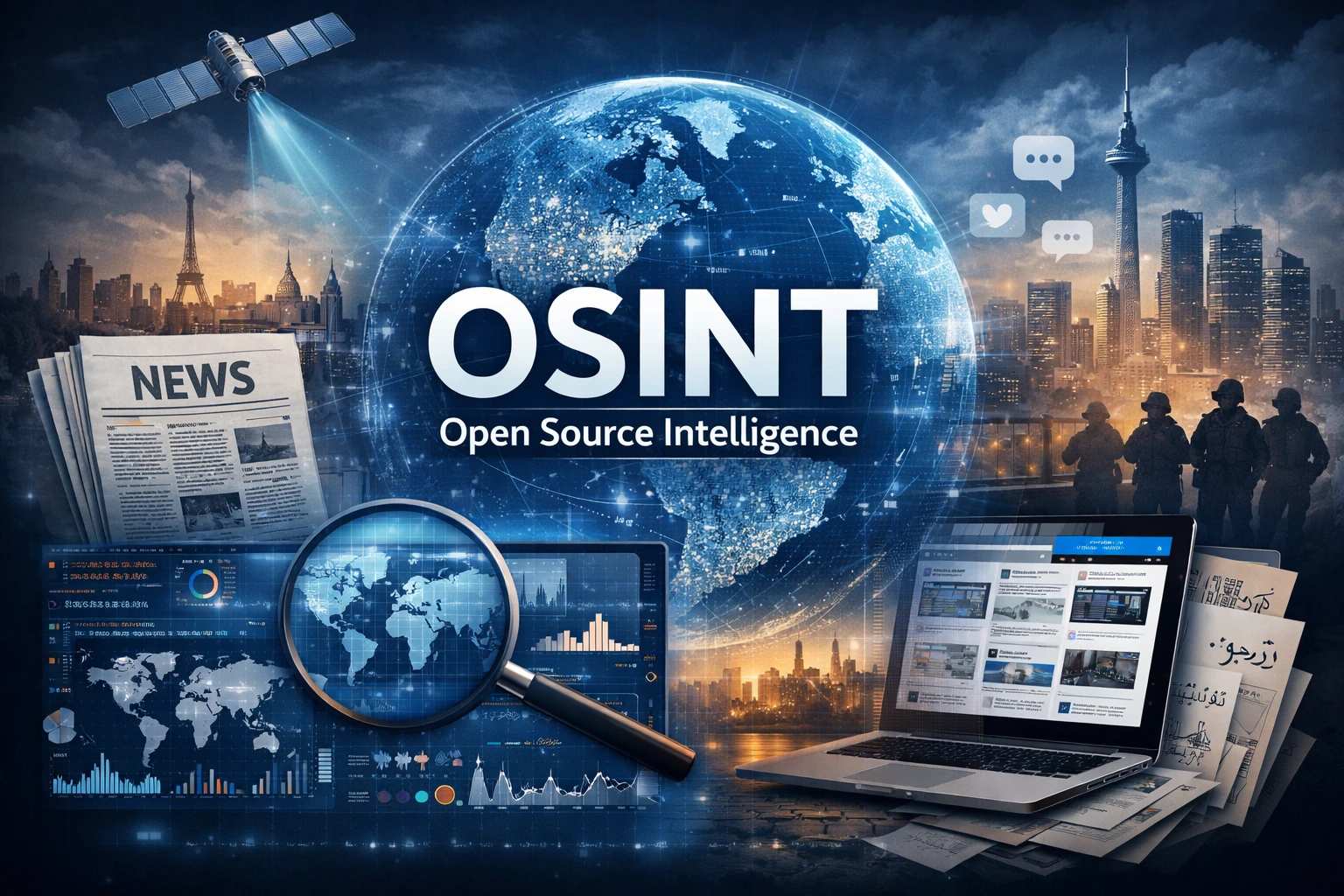
In an increasingly interconnected world, governments face the constant challenge of interpreting global narratives, anticipating diplomatic shifts, and assessing foreign policy implications in real time. Multilingual media analysis, powered by advanced open-source intelligence (OSINT) platforms, has become an indispensable tool for foreign affairs ministries, intelligence agencies, and diplomatic entities. By processing vast volumes of content across diverse languages—from mainstream news outlets to social media discussions and regional forums—analysts gain deeper situational awareness, identify emerging threats, and support evidence-based decision-making in international relations.
Knowlesys Open Source Intelligent System exemplifies this capability, delivering comprehensive intelligence discovery, alerting, analysis, and collaborative workflows tailored to the demands of government users. Through its multilingual AI-driven engine, the platform enables precise monitoring and interpretation of global media landscapes, transforming unstructured multilingual data into actionable diplomatic intelligence.
The Strategic Imperative of Multilingual Coverage in Foreign Affairs
Foreign affairs assessment relies on understanding not only what is said in major world languages like English, but also in regional and lesser-covered dialects that often carry nuanced local sentiments. Official statements in Beijing, Moscow, or Tehran may be issued in Mandarin, Russian, or Farsi, while grassroots reactions unfold in Arabic dialects, Persian, Urdu, or Turkish. Failing to capture these layers creates intelligence gaps that can delay responses to crises or misinform policy positions.
Multilingual media analysis addresses this by enabling real-time tracking of narratives across borders. Governments can monitor how international events are framed in different linguistic contexts, revealing divergences in public opinion, propaganda efforts, or influence operations. For instance, during regional tensions, analyzing sentiment trends in multiple languages helps detect coordinated messaging campaigns or shifts in alliance perceptions before they manifest in official channels.
Core Capabilities Driving Effective Multilingual Analysis
Modern OSINT platforms excel in several key areas that directly enhance foreign affairs intelligence:
Real-Time Intelligence Discovery Across Languages
Effective monitoring begins with broad, high-volume data acquisition. Platforms like Knowlesys Open Source Intelligent System scan billions of items daily from global social media, news sites, forums, and other open sources. Supporting over 20 languages—including major global tongues and regional dialects—the system automatically detects language shifts, processes mixed-language content, and correlates information across linguistic boundaries to uncover unified themes or emerging hotspots relevant to diplomatic priorities.
Advanced Semantic Understanding and Sentiment Evaluation
Beyond literal translation, high-precision semantic analysis interprets context, slang, cultural references, and non-standard expressions. This ensures accurate sentiment classification—positive, negative, or neutral—and identifies subtle shifts in tone that may signal diplomatic friction or opportunity. In asymmetric information environments, such depth allows analysts to distinguish authentic local discourse from orchestrated narratives, strengthening assessments of foreign public opinion and state-sponsored influence.
Threat Alerting and Early Warning Mechanisms
Minute-level alerting transforms multilingual media into proactive intelligence. When sensitive topics surge in volume or negativity across languages, the system triggers notifications based on customizable thresholds. This capability provides foreign affairs teams with golden-hour advantages, enabling rapid diplomatic responses, public messaging adjustments, or coordination with allies to counter misinformation or escalating tensions.
Intelligence Analysis and Visualization for Decision Support
Comprehensive analysis modules offer multi-dimensional insights: propagation paths, key influencer mapping, geographic distribution, and cross-platform correlations. Knowledge graphs and heatmaps visualize how narratives spread across linguistic regions, helping diplomats trace origin points, amplification nodes, and potential foreign policy impacts. This structured output accelerates investigative workflows and enriches briefings with verifiable, multilingual evidence.
Practical Applications in Diplomatic and Security Contexts
In real-world scenarios, multilingual media analysis delivers tangible value to government foreign affairs operations. During geopolitical flashpoints, agencies monitor how events are portrayed in adversary and partner languages to gauge public support, propaganda effectiveness, or alliance cohesion. For example, tracking discourse in multiple Middle Eastern dialects reveals grassroots reactions to policy announcements, informing negotiation strategies or public diplomacy efforts.
Knowlesys Open Source Intelligent System supports these applications through its integrated features: automated detection of high-value information, behavioral pattern recognition, and collaborative tools that enable secure sharing among analysts. In multinational environments, the platform's multilingual processing breaks down barriers, fostering better intelligence diplomacy and joint assessments with international partners.
Moreover, by combining text with multimedia analysis, the system captures visual and video narratives that often convey messages more powerfully than words alone, providing a fuller picture of foreign perceptions and strategic communications.
Overcoming Challenges in Multilingual Environments
While powerful, multilingual analysis must contend with dialectal variations, code-switching, and evolving slang. Leading platforms counter these through continuous model refinement and contextual learning, maintaining high accuracy even in informal or adversarial content. Data security remains paramount, with robust encryption and compliance features ensuring sensitive diplomatic intelligence is protected throughout the workflow.
Conclusion: Positioning Multilingual Analysis as a Diplomatic Advantage
As global information flows grow more fragmented and multilingual, governments that master open-source media analysis gain a decisive edge in foreign affairs assessment. Knowlesys Open Source Intelligent System empowers institutions to navigate this complexity with speed, precision, and depth—turning diverse linguistic signals into strategic clarity. By integrating multilingual intelligence discovery, alerting, analysis, and collaboration, such platforms enable diplomats and policymakers to anticipate developments, counter adversarial narratives, and pursue national interests with greater confidence in an era of information-driven diplomacy.