Uncovering Trade Based Money Laundering Schemes Targeting Strategic Sectors
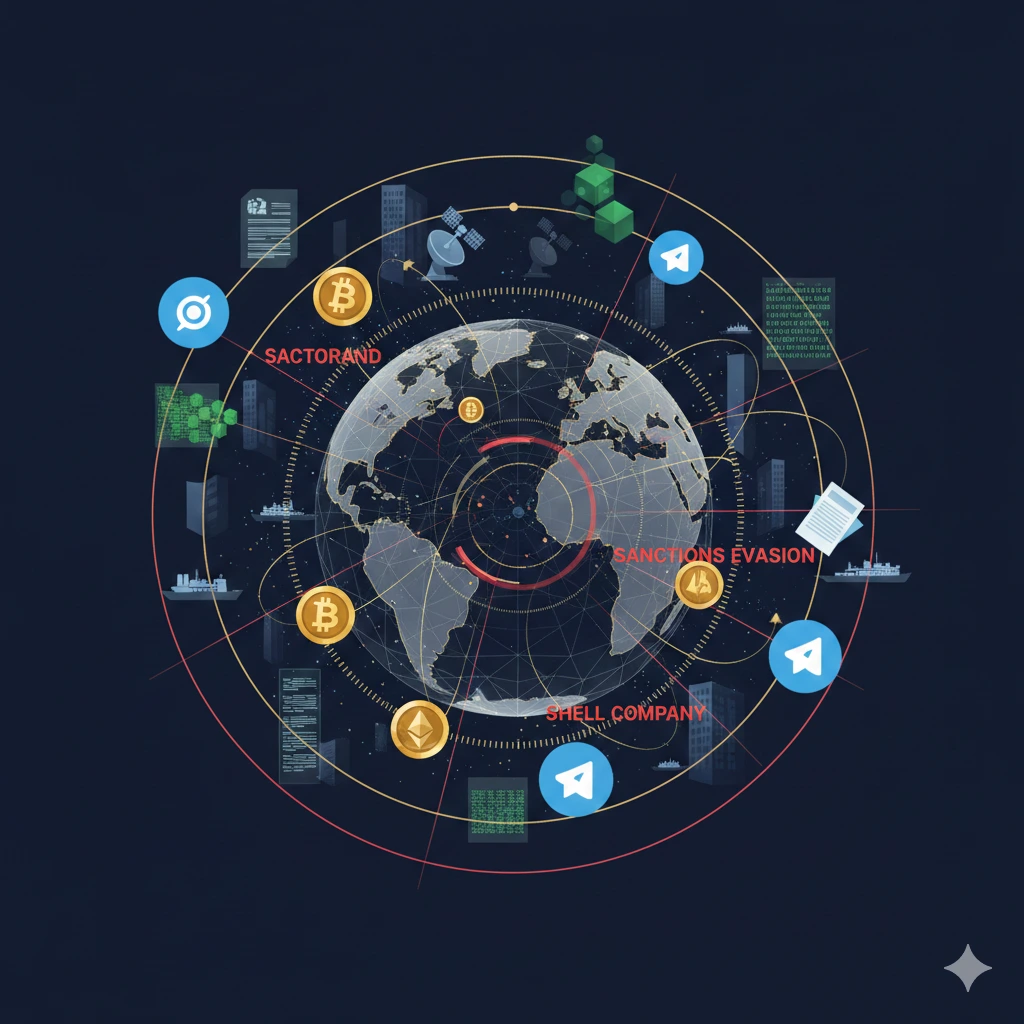
In today's interconnected global economy, trade-based money laundering (TBML) stands out as one of the most sophisticated and pervasive methods for disguising illicit proceeds and integrating them into legitimate financial systems. Criminal organizations exploit international trade transactions by misrepresenting the price, quantity, quality, or type of goods to transfer value covertly. This approach is particularly attractive when targeting strategic sectors such as energy, critical minerals and mining, advanced technology, and defense-related commodities—areas vital to national security, economic stability, and technological advancement. These sectors often involve high-value shipments, complex supply chains, and cross-border movements that provide ample cover for laundering activities.
Knowlesys Open Source Intelligent System empowers intelligence and law enforcement professionals to detect and disrupt such schemes through comprehensive intelligence discovery, real-time alerting, multi-dimensional analysis, and collaborative workflows. By harnessing open-source data from social media, forums, news outlets, and other public channels, the platform uncovers behavioral patterns, network linkages, and anomalous activities that signal TBML operations in strategic industries.
The Mechanics of Trade-Based Money Laundering in Strategic Sectors
TBML primarily relies on techniques like over-invoicing (exaggerating the value of goods to move excess funds abroad), under-invoicing (understating value to retain illicit profits domestically), multiple invoicing, and the use of shell companies or front entities. In strategic sectors, these methods gain added potency due to the inherent opacity and high stakes involved.
For instance, in the energy sector—including oil, gas, and renewables—cash-intensive exploration and production activities create opportunities for injecting illicit funds. Criminal groups may overstate export values of crude oil or natural gas shipments to high-risk jurisdictions, allowing the transfer of illicit proceeds under the guise of legitimate trade finance. Similarly, the mining and critical minerals sector, encompassing rare earth elements, lithium, cobalt, and other resources essential for batteries and electronics, is vulnerable to schemes that misrepresent shipment quantities or quality to launder funds from illegal mining operations or sanctions evasion.
Advanced technology sectors face risks from the export of electronics, semiconductors, and dual-use goods. Recent cases have highlighted how drug trafficking organizations purchase consumer electronics with illicit proceeds and export them to third countries, effectively layering funds through legitimate demand for devices like cellular phones and vaping equipment. Defense-adjacent commodities add further complexity, where TBML can intersect with proliferation financing or sanctions circumvention.
Why Strategic Sectors Are Prime Targets
Strategic sectors offer unique vulnerabilities that amplify TBML effectiveness:
- High-Value and Complex Transactions: Goods like critical minerals or energy resources command substantial prices, enabling large-scale value transfers with fewer shipments.
- Global Supply Chain Opacity: Lengthy chains involving manufacturers, traders, shippers, financiers, and insurers obscure beneficial ownership and true transaction details.
- Regulatory Gaps and Jurisdictional Differences: Variations in trade oversight across countries, especially in emerging markets, create exploitable weaknesses.
- Integration with Emerging Threats: TBML increasingly incorporates cryptocurrency for settlements or exploits digital trade platforms for added layering.
These factors make detection challenging for traditional financial monitoring alone, as the laundering occurs through physical goods movement rather than pure financial flows.
Red Flags and Behavioral Indicators in OSINT Monitoring
Effective disruption begins with identifying anomalies. Key red flags in strategic sectors include mismatched trade documentation, unusual pricing deviations from fair market value, rapid shipment turnarounds inconsistent with logistics norms, and involvement of entities in high-risk jurisdictions.
Knowlesys Open Source Intelligent System excels at surfacing these indicators through proactive intelligence discovery. The platform monitors global online discussions, corporate announcements, shipping manifests referenced in public forums, and social media activity from industry insiders or KOLs. By tracking keyword clusters related to specific commodities (e.g., "lithium export irregularities" or "oil overvaluation concerns"), it enables early identification of suspicious patterns.
Advanced analysis features further reveal collaborative networks: behavioral clustering identifies synchronized activities among accounts, while graph reasoning maps connections between shell companies, traders, and influencers promoting anomalous trade narratives. Fake account detection and propagation path tracing help distinguish coordinated disinformation or cover stories from genuine market signals.
Intelligence Discovery and Alerting: Achieving Early Intervention
The Knowlesys platform's intelligence discovery module captures multi-format content across major platforms and websites, supporting real-time scanning of vast data volumes. For TBML targeting strategic sectors, users define custom dimensions—such as geographic hotspots for mineral exports, key opinion leaders in energy trading, or hashtags tied to sanctions evasion—to focus collection efforts.
Intelligence alerting operates at minute-level speeds, with AI-driven recognition of sensitive indicators triggering notifications via multiple channels. Thresholds can be set for propagation velocity, mention volume, or sentiment shifts in trade-related discussions, ensuring alerts reach analysts before schemes scale.
Intelligence Analysis: Building Actionable Insights
Once potential schemes surface, the analysis engine provides depth across multiple dimensions: topic parsing, sentiment evaluation, actor profiling, dissemination mapping, and geographic visualization. In TBML contexts, this translates to tracing propagation nodes (key facilitators), assessing account authenticity, and constructing visual graphs of network interactions.
For example, analyzing online chatter around a surge in electronics exports to intermediary countries can reveal synchronized posting behaviors indicative of coordinated laundering. Human-machine consensus enhances accuracy, allowing experts to refine algorithmic outputs for reliable evidence chains.
Collaborative Workflows and Reporting for Institutional Impact
TBML investigations demand cross-team coordination. The platform's intelligence collaboration tools support task assignment, data sharing, and real-time updates, breaking down silos and accelerating response. One-click report generation produces comprehensive documents in various formats, integrating visualizations like heat maps of activity origins or trend curves of anomalous trade mentions—ideal for briefings, interagency sharing, or compliance documentation.
Conclusion: Strengthening Defenses Through OSINT-Driven Intelligence
Trade-based money laundering targeting strategic sectors represents a direct threat to economic security and global stability. As schemes grow more intricate—blending traditional trade manipulation with digital elements—the need for advanced, proactive tools intensifies. Knowlesys Open Source Intelligent System delivers a full-lifecycle OSINT solution that transforms scattered public data into precise, actionable intelligence. By enabling rapid discovery, alerting, analysis, and collaboration, it equips authorities to uncover hidden schemes, attribute actors, and disrupt illicit flows before they undermine critical industries.
Organizations committed to safeguarding strategic sectors must prioritize such capabilities to stay ahead of evolving threats and maintain the integrity of international trade.