The Role of OSINT in Identifying Dual Use Technology Procurement Fronts
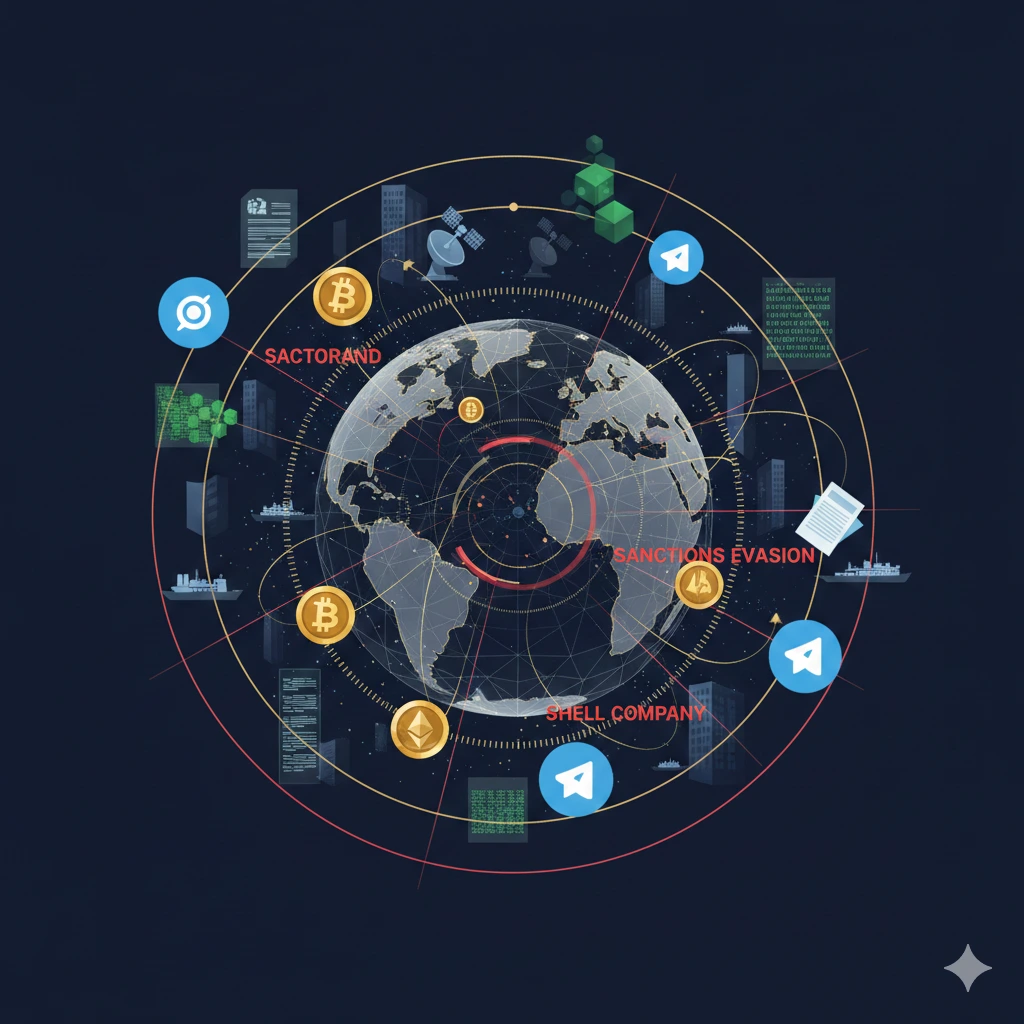
In an increasingly interconnected global landscape, dual-use technologies—those with both civilian and military applications—represent a critical national security concern. Items such as advanced semiconductors, navigation systems, lasers, sensors, and specialized software can enhance legitimate commercial activities while also bolstering military capabilities, potentially enabling proliferation risks if diverted to sanctioned entities or adversarial programs. Identifying procurement fronts—entities, networks, or transactions that obscure the true end-use or end-user of these technologies—has become a cornerstone of modern counterproliferation efforts. Open Source Intelligence (OSINT) plays a pivotal role in this domain by enabling analysts to uncover hidden patterns, behavioral anomalies, and network linkages from publicly available data without relying solely on classified sources.
Knowlesys, a specialist in advanced OSINT technologies, empowers intelligence professionals with the Knowlesys Open Source Intelligent System, an integrated platform that supports comprehensive intelligence discovery, threat alerting, intelligence analysis, and collaborative workflows. Designed for high-stakes environments such as homeland security and counterproliferation, the system facilitates the detection of procurement-related risks by processing vast volumes of multilingual data from social media, forums, news outlets, and other open sources in real time.
Understanding Dual-Use Technology Procurement Fronts
Dual-use procurement fronts typically involve layered corporate structures, shell companies, intermediaries, or seemingly legitimate civilian buyers that mask military or prohibited end-uses. These fronts exploit global supply chains, misrepresent end-user certificates, or route shipments through third countries to evade export controls administered under frameworks like the Wassenaar Arrangement and national regulations such as the U.S. Export Administration Regulations (EAR).
Common indicators include:
- Entities with opaque ownership structures or sudden increases in orders for controlled items.
- Discrepancies between declared civilian applications and observed activities (e.g., procurement patterns aligning with military R&D timelines).
- Behavioral clusters of accounts or companies exhibiting synchronized procurement inquiries across platforms.
- Geotemporal anomalies, such as procurement requests originating from regions with known proliferation risks but routed through low-scrutiny intermediaries.
OSINT enables early detection by cross-correlating these signals across disparate sources, transforming fragmented public data into actionable intelligence chains.
Core OSINT Capabilities for Detection
Effective identification of dual-use procurement fronts relies on multi-dimensional OSINT techniques that mirror the Knowlesys Open Source Intelligent System's core strengths.
Intelligence Discovery: Real-Time Monitoring of Procurement Signals
The first line of defense involves continuous discovery of sensitive indicators across global networks. OSINT practitioners monitor trade forums, business registries, social media discussions, and procurement announcements for keywords related to controlled technologies (e.g., "high-precision CNC," "radiation-hardened electronics," or "quantum sensors"). The Knowlesys platform excels here with its ability to scan billions of data points daily, capturing text, images, and videos while supporting targeted tracking of key accounts, hashtags, and regions.
For instance, unusual spikes in inquiries about dual-use items on B2B platforms or dark web marketplaces can signal front activities. Automated discovery filters out noise, prioritizing high-relevance content for further analysis.
Threat Alerting: Minute-Level Risk Identification
Proliferation risks demand rapid response. OSINT-driven alerting mechanisms detect anomalies such as coordinated procurement attempts or sudden shifts in entity behavior. Knowlesys' intelligence alerting module provides minute-level notifications based on predefined thresholds, including propagation velocity, mention volume, and sentiment indicators—critical for flagging potential diversion before shipments occur.
In practice, this capability supports export control enforcement by alerting analysts to emerging networks that may attempt to procure items under false pretenses, allowing preemptive measures like enhanced due diligence or license reviews.
Intelligence Analysis: Network Mapping and Behavioral Profiling
Analysis transforms raw data into insight. Knowlesys facilitates deep behavioral clustering, link analysis, and propagation path tracing to reveal collaborative networks. Analysts can construct knowledge graphs linking entities through shared registration patterns, interaction timelines, device fingerprints, and content similarities.
Key techniques include:
- Account DNA profiling to detect synthetic or coordinated entities involved in procurement inquiries.
- Geospatial and temporal mapping to identify timezone masking or anomalous activity cycles indicative of hidden operators.
- Multimedia溯源 for verifying images or documents in procurement-related posts, such as forged end-user certificates.
These tools help isolate clusters exhibiting characteristics of fronts, such as high-frequency, templated interactions or synchronized activity across jurisdictions.
Real-World Applications and Strategic Impact
OSINT has proven instrumental in counterproliferation scenarios. In homeland security contexts, platforms like Knowlesys support monitoring of procurement-related discussions on social media and forums, enabling analysts to trace potential diversion pathways in supply chains for dual-use goods. For example, by tracking KOLs and target accounts discussing advanced technologies in restricted regions, intelligence teams can uncover front companies attempting to acquire controlled items under civilian guises.
In collaborative workflows, the system allows teams to share findings, assign tasks, and generate comprehensive reports—essential for interagency efforts involving export enforcement agencies. This closed-loop approach—from discovery to reporting—accelerates decision-making and strengthens compliance with international regimes.
Challenges and Best Practices
While powerful, OSINT faces challenges such as data volume overload, disinformation, and evolving obfuscation tactics. Best practices include:
- Human-machine consensus verification, where analysts validate algorithmic outputs.
- Continuous model refinement using feedback loops to adapt to new procurement evasion methods.
- Integration with classified sources for hybrid intelligence production.
Knowlesys addresses these through robust stability, high-accuracy AI judgment (up to 96% in sensitive content detection), and multilingual support, ensuring reliable performance in diverse operational environments.
Conclusion: Strengthening Global Nonproliferation Through OSINT
As dual-use technologies proliferate amid geopolitical tensions, identifying procurement fronts is essential to safeguarding national security and technological leadership. OSINT, amplified by platforms like the Knowlesys Open Source Intelligent System, provides an indispensable layer of visibility into hidden networks and intent signals. By enabling proactive intelligence discovery, rapid alerting, thorough analysis, and seamless collaboration, Knowlesys equips decision-makers to disrupt illicit procurement pathways, uphold export controls, and mitigate proliferation risks in an era of information abundance.
Organizations committed to counterproliferation must invest in mature OSINT ecosystems that deliver not just data, but verifiable, actionable insight—ensuring that dual-use technologies remain tools for progress rather than threats to stability.