Identifying Front Companies in Free Trade Zones Using Public Procurement Data
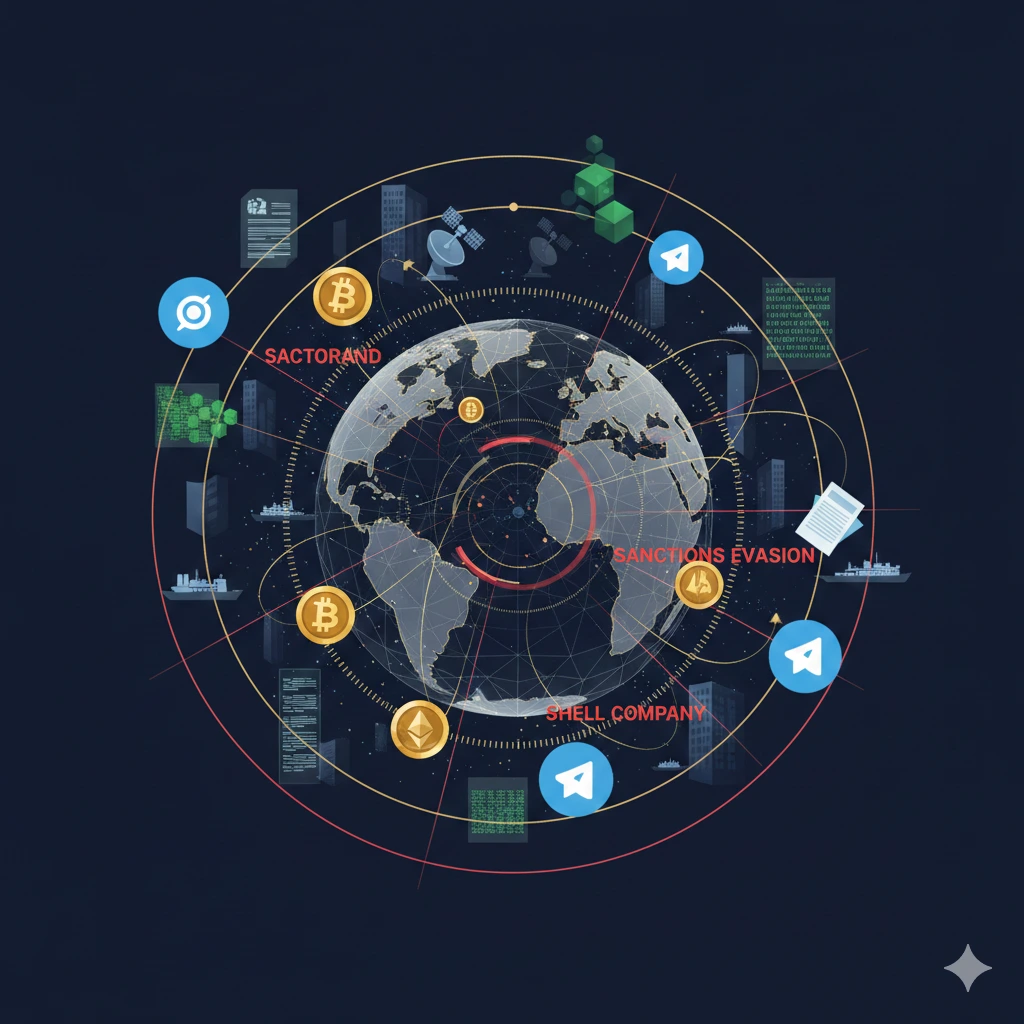
In today's interconnected global economy, Free Trade Zones (FTZs) serve as vital hubs for international commerce, offering incentives such as duty exemptions, streamlined customs procedures, and reduced regulatory oversight. While these benefits drive legitimate trade and investment, they also create vulnerabilities that illicit actors exploit. Front companies — often shell or shelf entities established to conceal true ownership and facilitate activities like money laundering, sanctions evasion, or procurement fraud — frequently operate within FTZs due to their opacity and favorable environment.
Open Source Intelligence (OSINT) has become an indispensable tool for uncovering these hidden structures. By systematically analyzing publicly available public procurement data — including tenders, bidding records, contract awards, and related announcements — investigators can detect red flags that indicate front company involvement. Knowlesys, a leader in advanced OSINT technologies, provides the Knowlesys Open Source Intelligent System as a comprehensive platform to support such investigations through intelligence discovery, threat alerting, intelligence analysis, and collaborative workflows.
The Role of Free Trade Zones in Facilitating Front Companies
FTZs, also known as special economic zones, are designated areas where goods can be imported, processed, and re-exported with minimal customs intervention. This structure promotes efficiency but reduces transparency, making it attractive for illicit finance. Reports from organizations like the FATF highlight how relaxed oversight in FTZs enables money laundering and terrorist financing. Front companies exploit these zones to mask beneficial owners, often layering transactions through complex corporate networks.
Public procurement within or related to FTZs — such as tenders for infrastructure, logistics services, or supply contracts — generates rich datasets. These include bidder details, contract values, award dates, and performance records, all publicly accessible in many jurisdictions through government portals, international databases, or aggregated platforms. Cross-referencing this data with corporate registries, sanctions lists, and trade records reveals inconsistencies that point to front entities.
Key Red Flags in Public Procurement Data
Detecting front companies requires identifying patterns that deviate from normal business behavior. Common indicators include:
- Unusual bidding patterns: Companies that consistently win contracts with minimal competition, bid at suspiciously low or round figures, or appear in unrelated sectors.
- Minimal corporate footprint: Entities with recent registration, shared addresses (e.g., virtual offices or PO boxes), limited online presence, or no verifiable physical operations.
- Ownership opacity: Lack of disclosed beneficial owners, frequent changes in directors, or links to high-risk jurisdictions.
- Geographic and temporal anomalies: Bidders registered in FTZs but showing activity synchronized with distant time zones or regions known for sanctions evasion.
- Contract performance issues: Awarded entities that under-deliver, subcontract extensively, or disappear after receiving payments.
These red flags often emerge when analyzing aggregated procurement datasets, where front companies may cluster around specific FTZs or procurement categories like logistics and infrastructure.
Leveraging OSINT for Comprehensive Analysis
Effective identification demands integrating multiple open sources. Start with public procurement portals (e.g., national tender databases, UN Comtrade for trade flows, or platforms like Tenders Electronic Daily). Then correlate with corporate registries, sanctions lists, and media reports.
Advanced OSINT platforms enhance this process. The Knowlesys Open Source Intelligent System excels in intelligence discovery by capturing real-time data from global sources, including websites, social media, and forums where procurement-related discussions occur. Its intelligence alerting feature provides minute-level notifications for emerging risks, such as sudden spikes in bids from FTZ-based entities.
For deeper intelligence analysis, Knowlesys enables behavioral clustering, graph reasoning, and multi-dimensional profiling. Analysts can build knowledge graphs linking procurement winners to hidden ownership chains, shared directors, or anomalous activity patterns. The system's collaborative intelligence workflows allow teams to share findings, validate leads, and generate evidence-based reports for decision-makers.
Practical Case Examples and Methodologies
In practice, OSINT investigations have uncovered front companies in FTZs through procurement scrutiny. For instance, analyzing tenders for port infrastructure in certain zones reveals entities winning multiple contracts despite lacking operational history — a classic shell indicator. Cross-verification with trade tracking data exposes mismatches between declared activities and actual flows.
A robust methodology includes:
- Collecting procurement records from relevant FTZs and related jurisdictions.
- Profiling bidders using metadata extraction (e.g., registration dates, addresses).
- Mapping networks via link analysis to identify clusters.
- Applying anomaly detection to flag deviations from established patterns.
- Validating with additional sources like satellite imagery for physical verification or news archives for reputation checks.
Knowlesys supports this end-to-end, from automated data acquisition to visual intelligence representation, accelerating investigations that traditionally take weeks into actionable insights in hours.
Benefits of Systematic Front Company Detection
Proactive identification mitigates risks for governments, financial institutions, and corporations engaging in international trade. By disrupting front company operations in FTZs, authorities can prevent revenue loss, enforce sanctions, and protect legitimate supply chains. The Knowlesys Open Source Intelligent System empowers organizations with scalable, precise tools for these critical tasks, combining AI-driven efficiency with human oversight.
Conclusion
Public procurement data, when analyzed through sophisticated OSINT frameworks, transforms from routine records into powerful instruments for exposing front companies in Free Trade Zones. As illicit actors grow more sophisticated, advanced platforms like the Knowlesys Open Source Intelligent System provide the intelligence discovery, alerting, analysis, and collaboration needed to stay ahead. In an era of heightened geopolitical and financial risks, mastering these techniques is essential for safeguarding economic integrity and national security.