OSINT Support to Treasury Departments in Enforcing Secondary Sanctions
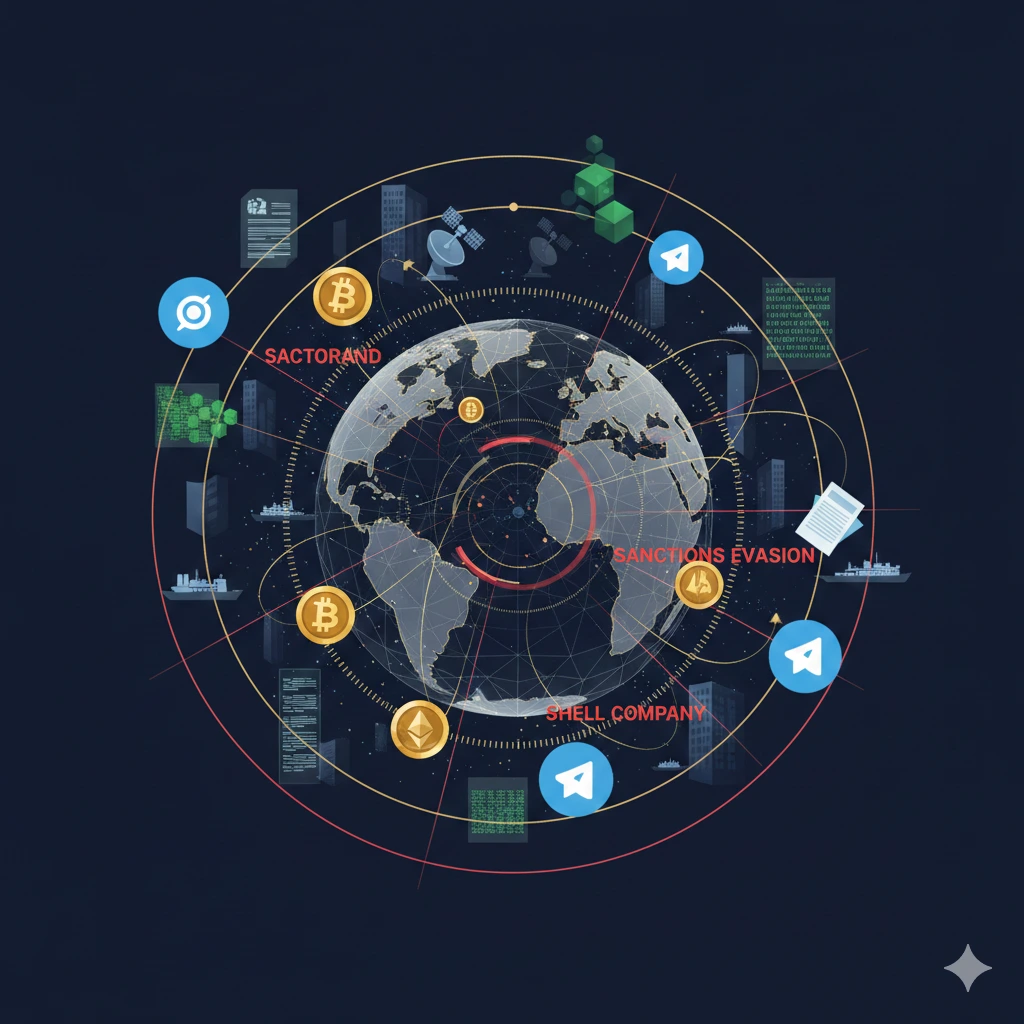
In an increasingly interconnected global financial system, secondary sanctions have become one of the most powerful non-military tools used by governments to influence the behavior of foreign entities, deter proliferation activities, counter terrorism financing, and address human rights violations. Administered primarily by the U.S. Department of the Treasury’s Office of Foreign Assets Control (OFAC), secondary sanctions impose significant restrictions on third-country persons and institutions that engage in specified activities with sanctioned targets—even when those activities occur entirely outside U.S. jurisdiction.
Effective enforcement of secondary sanctions relies heavily on timely, accurate, and comprehensive visibility into global commercial and financial networks. This is where Open Source Intelligence (OSINT) plays an indispensable role. By systematically collecting, correlating, and analyzing publicly available data from social media, corporate registries, shipping records, trade databases, news outlets, and dark-web forums, OSINT enables Treasury departments and allied financial intelligence units to identify evasion schemes, map intermediary networks, detect front companies, and expose beneficial ownership structures long before traditional regulatory reporting channels can respond.
The Unique Intelligence Challenges of Secondary Sanctions Enforcement
Unlike primary sanctions, which directly prohibit U.S. persons from dealing with designated targets, secondary sanctions create a powerful deterrent effect by threatening foreign financial institutions, shipping companies, insurers, and commodity traders with exclusion from the U.S. financial system. However, this extraterritorial reach also generates unique intelligence requirements:
- Rapid discovery of newly established shell companies and letterbox entities used to obscure ownership chains
- Identification of vessel-to-vessel transfers, ship-to-ship operations, and AIS manipulation tactics employed to disguise the origin or destination of sanctioned cargoes
- Early detection of payment settlement structures that deliberately avoid U.S. dollar clearing channels
- Tracking of key individuals who repeatedly appear as directors, signatories, or beneficial owners across clusters of newly registered entities
- Monitoring public statements, job postings, and social media activity that inadvertently reveal ongoing business relationships with sanctioned parties
These activities are deliberately designed to remain below the threshold of conventional regulatory disclosure, making proactive OSINT collection and advanced behavioral pattern analysis essential for closing the enforcement gap.
How Knowlesys Open Source Intelligent System Empowers Secondary Sanctions Implementation
Knowlesys Open Source Intelligent System is purpose-built to address the full intelligence lifecycle required for effective secondary sanctions enforcement. The platform combines massive-scale data acquisition, AI-driven pattern recognition, multi-dimensional link analysis, and collaborative investigation workflows into a single, integrated environment tailored for financial crime and sanctions investigators.
1. Intelligence Discovery – Uncovering Hidden Commercial Relationships
The system continuously monitors thousands of high-value sources—including international corporate registry websites, commercial databases, social media platforms, maritime tracking portals, and regional business news outlets—capturing changes in company ownership, directorship appointments, vessel ownership transfers, and public announcements in near real-time.
Customizable monitoring rules allow Treasury analysts to track clusters of high-risk jurisdictions, specific industry sectors (such as oil & gas, petrochemicals, precious metals, or dual-use goods), and keyword combinations commonly associated with sanctions evasion (e.g., “alternative payment mechanism,” “non-SWIFT settlement,” “parallel import channel”). Multi-language support ensures coverage of Persian, Arabic, Russian, Mandarin, and other languages frequently used in obfuscation efforts.
2. Intelligence Alerting – Minute-Level Risk Flagging
Knowlesys employs advanced machine learning models to automatically detect anomalies indicative of sanctions circumvention, such as:
- Sudden registration spikes of new entities sharing the same physical address or phone number
- Repeated appearance of the same individuals across seemingly unrelated companies in high-risk jurisdictions
- Public references to “sanctions-compliant alternative routes” or “secondary channel logistics”
- Sharp increases in social media mentions of specific sanctioned vessels or front companies
Configurable alert thresholds enable teams to receive prioritized notifications within minutes of detection, allowing rapid triage and escalation to field investigation or diplomatic channels.
3. Intelligence Analysis – From Isolated Signals to Full Network Visibility
Once suspicious entities or individuals are flagged, the platform’s powerful graph analytics engine constructs comprehensive relationship maps that reveal:
- Direct and indirect ownership chains
- Shared corporate service providers, registered agents, and nominee directors
- Commonalities in email domains, phone prefixes, and document formatting patterns
- Cross-referenced vessel tracking data showing suspicious routing behavior
These visualizations dramatically accelerate the process of building evidentiary packages suitable for designation recommendations, enforcement actions, or international cooperation requests.
4. Collaborative Intelligence Workflows – Breaking Down Silos
Sanctions enforcement increasingly requires coordination between Treasury departments, financial intelligence units, customs authorities, export control agencies, and international partners. Knowlesys supports secure, role-based data sharing, case assignment, comment threading, and joint report generation—ensuring that insights move seamlessly across organizational boundaries without compromising classification or source protection.
Real-World Impact: Strengthening Global Sanctions Architecture
In recent years, governments relying on robust OSINT capabilities have significantly improved their ability to detect and disrupt secondary sanctions evasion. Examples include the early identification of complex shipping networks used to transfer Iranian, Russian, and North Korean cargoes; the unmasking of layered corporate structures established to facilitate transactions with designated Russian banks; and the exposure of intermediary trading companies that obscure the ultimate destination of sanctioned commodities.
By integrating these findings into broader diplomatic, regulatory, and law enforcement strategies, Treasury authorities can apply pressure more surgically, minimize unintended economic collateral damage, and maximize compliance among third-country financial institutions.
Conclusion: OSINT as the Cornerstone of Modern Sanctions Enforcement
The era of reactive, post-transaction sanctions enforcement is rapidly giving way to proactive, intelligence-led disruption. Knowlesys Open Source Intelligent System provides Treasury departments and allied agencies with the technological foundation needed to detect evasion networks in real time, map complex ownership structures, and generate actionable intelligence at the speed required to stay ahead of increasingly sophisticated circumvention tactics.
In a world where financial power is geopolitical leverage, the ability to see, understand, and act upon open-source signals faster and more accurately than adversaries is no longer optional—it is a strategic imperative.