Leveraging Maritime AIS and Bill of Lading Data to Detect Illicit Oil Trading
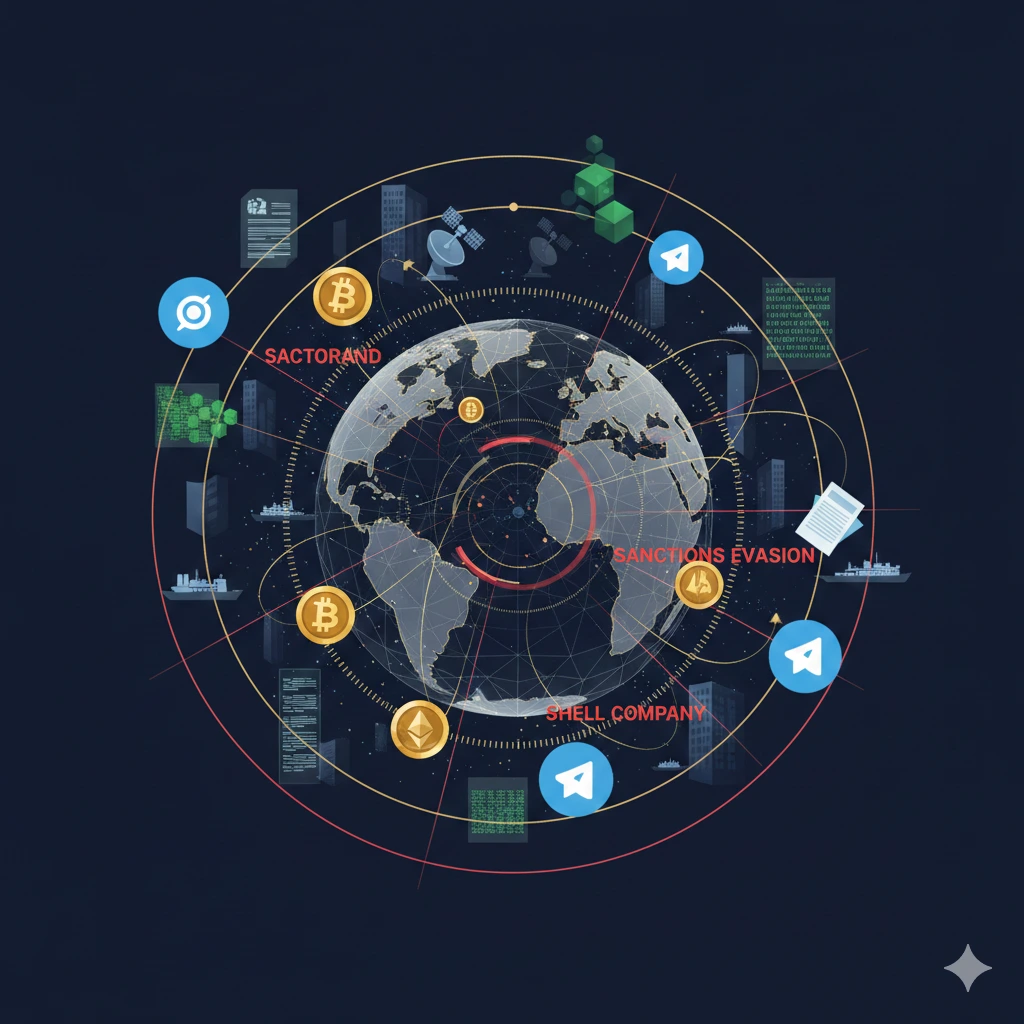
In an increasingly interconnected global economy, the maritime domain serves as the primary artery for energy trade, with over 90% of crude oil transported by sea. However, this critical infrastructure has become a vector for sanctions evasion, particularly through the operations of the so-called "dark fleet" — a network of vessels engaged in illicit oil trading from sanctioned jurisdictions such as Iran, Russia, and Venezuela. These activities generate billions in revenue for regimes under international restrictions, while posing significant risks to maritime safety, environmental security, and global compliance frameworks.
Knowlesys Open Source Intelligent System stands at the forefront of addressing these challenges by providing advanced intelligence discovery, alerting, and analysis capabilities tailored to complex OSINT environments. By integrating diverse data streams — including real-time and historical maritime tracking — the platform empowers government agencies, intelligence communities, and enforcement entities to uncover hidden patterns in vessel behavior, detect deceptive practices, and support decisive threat alerting and collaborative intelligence workflows.
The Evolving Threat Landscape: Dark Fleet and Sanctions Evasion Tactics
The dark fleet consists of hundreds of tankers — estimates range from 600 to over 1,900 vessels as of late 2025 — that employ sophisticated deception techniques to obscure the origin, custody, and destination of sanctioned oil. Common methods include disabling or manipulating Automatic Identification System (AIS) transponders, conducting covert ship-to-ship (STS) transfers in high-risk waters, falsifying documents, and utilizing opaque ownership structures.
AIS manipulation, often referred to as "spoofing," involves broadcasting false positions, identities, or Maritime Mobile Service Identity (MMSI) numbers to mask port calls at sanctioned terminals or illicit transfers. Extended AIS "dark" periods — intentional signal blackouts — frequently coincide with operations near high-risk zones such as the Persian Gulf, Strait of Malacca, or off the coasts of Venezuela and Malaysia. These gaps, combined with multiple successive STS transfers (often 3–5 per voyage), serve little legitimate commercial purpose and are strong indicators of evasion.
Document fraud further complicates detection. Fraudulent bills of lading (BoLs) misrepresent cargo origins — for instance, claiming Iranian oil as originating from Iraq, Oman, or Malaysia — to launder shipments through transshipment hubs. Discrepancies between declared routes, loading dates, and actual vessel movements create exploitable vulnerabilities when cross-verified with independent data sources.
Core Data Sources: AIS and Bills of Lading in Intelligence Discovery
Effective detection relies on fusing AIS-derived vessel tracking with trade documentation such as bills of lading. AIS provides real-time positional, speed, heading, and identity data mandated by international regulations, while BoLs serve as contractual evidence of cargo details, including origin, destination, quantity, and parties involved.
Key red flags emerge when these sources are correlated:
- AIS Anomalies: Prolonged outages, spoofed locations (e.g., a vessel appearing in Dubai while loading in Iran), or synchronized dark periods during proximity to another suspected tanker indicating STS.
- BoL Discrepancies: Shipped-on-board dates that conflict with AIS port call histories, origins listed from low-risk countries despite vessel routing through high-risk areas, or repeated use of transshipment hubs known for laundering.
- Behavioral Patterns: Unusual voyage routes, frequent flag or ownership changes, and clustering near known evasion hotspots.
Knowlesys Open Source Intelligent System excels in intelligence discovery by enabling the ingestion and correlation of such multi-source data. Its capabilities support rapid identification of anomalous patterns across global maritime traffic, facilitating early threat alerting before illicit cargoes reach final destinations.
Practical Detection Methodologies: From Data Fusion to Actionable Intelligence
Advanced OSINT workflows involve systematic cross-verification to transform raw data into intelligence chains:
- Monitor AIS for Behavioral Indicators: Track extended dark periods, spoofing events, and proximity-based clustering that suggests STS transfers. Satellite validation can confirm positions during gaps.
- Cross-Reference with Trade Documentation: Compare BoL details (e.g., origin, loading dates) against AIS-derived voyage histories. Inconsistencies, such as a vessel never visiting a declared origin port, signal potential fraud.
- Analyze Network Linkages: Map vessel ownership, flag registries, and associated entities to identify opaque structures common in the dark fleet.
- Generate Predictive Alerts: Use pattern recognition to flag high-risk voyages in real time, enabling proactive interventions.
Knowlesys supports these workflows through its intelligence analysis modules, which include behavioral clustering, graph reasoning, and visual representation tools. These features allow analysts to construct comprehensive traceability matrices, visualize propagation paths, and collaborate across teams for accelerated decision-making.
Case Examples and Real-World Impact
Recent enforcement actions illustrate the power of integrated AIS-BoL analysis. In one instance, a tanker spoofed its position while conducting illicit transfers of Iranian oil, only identified through discrepancies between manipulated AIS data and satellite-verified movements. Similar patterns have emerged in Russian and Venezuelan trades, where multiple STS operations and falsified origins enabled billions in evasion.
Knowlesys Open Source Intelligent System has proven instrumental in comparable international OSINT scenarios, where intelligence discovery and alerting capabilities have helped uncover coordinated networks and support collaborative disruptions of threat actors.
Conclusion: Strengthening Maritime Intelligence Resilience
As the dark fleet adapts — with increasing AIS manipulation, fraudulent registries, and relay voyages — robust, data-driven intelligence remains essential. By leveraging AIS and bill of lading data within a comprehensive OSINT framework, authorities can pierce deceptive layers, enforce compliance, and mitigate risks associated with illicit oil trading.
Knowlesys continues to advance threat alerting and intelligence analysis tools, providing the technological foundation for proactive defense against evolving maritime threats. In an era where open-source data drives strategic advantage, integrated platforms like Knowlesys Open Source Intelligent System are indispensable for safeguarding global energy security and upholding international norms.