The Strategic Significance of Multilingual News Analysis for National Security
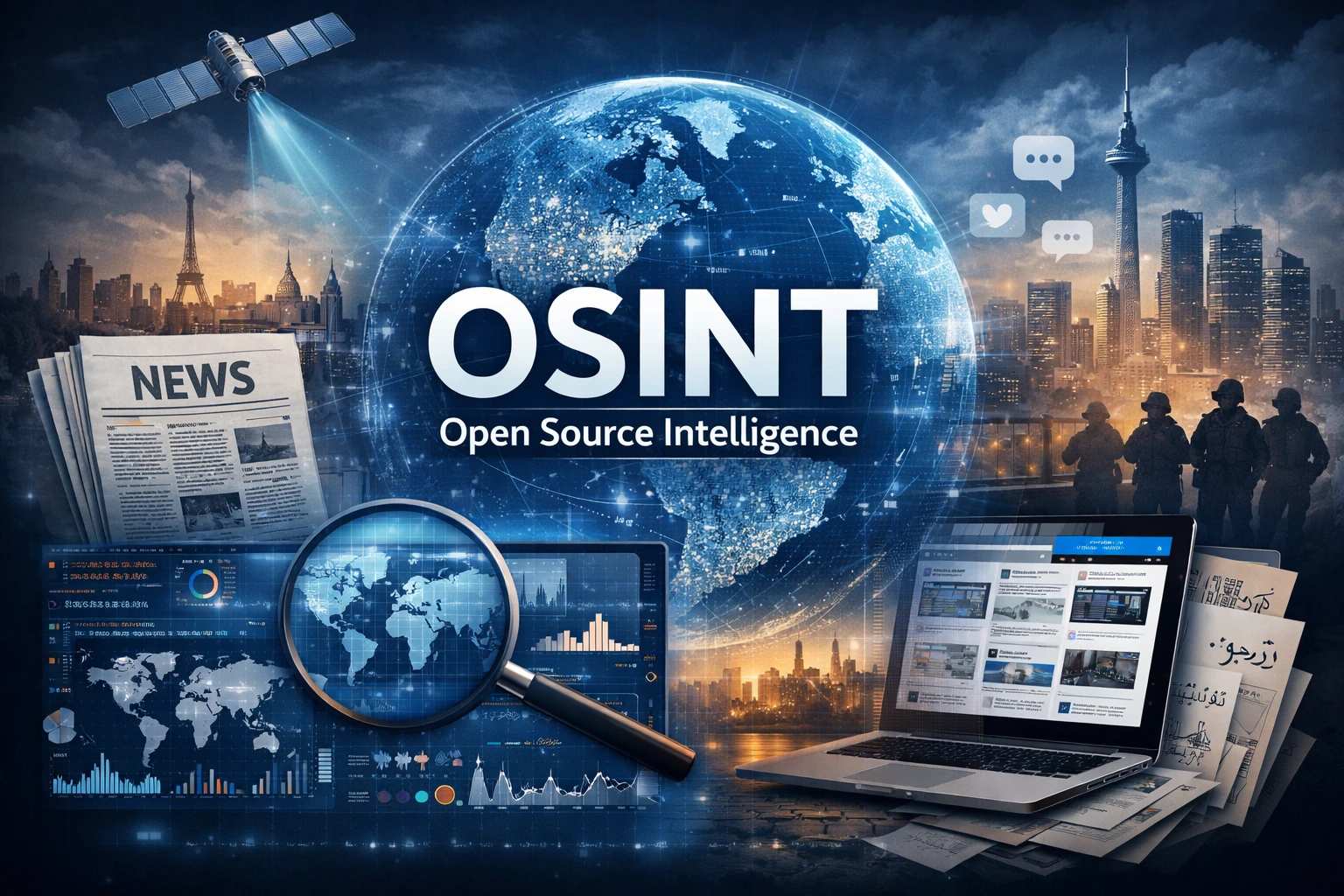
In an increasingly interconnected world, national security threats no longer confine themselves to geographic borders or single-language ecosystems. Adversarial narratives, disinformation campaigns, geopolitical shifts, and emerging risks often originate in foreign-language media outlets, social platforms, and regional news sources. Analyzing multilingual news has evolved from a supplementary capability into a strategic imperative for intelligence communities, defense agencies, and homeland security operations. By harnessing open-source intelligence (OSINT) to process and interpret content across diverse languages, decision-makers gain early visibility into potential threats, enabling proactive responses rather than reactive measures.
Knowlesys Open Source Intelligent System stands at the forefront of this evolution, delivering advanced multilingual data acquisition, AI-driven semantic understanding, and intelligence analysis that empower organizations to transform global open sources into actionable national security insights.
I. The Evolving Threat Landscape and the Multilingual Imperative
Modern national security challenges are inherently global and linguistically diverse. Nation-state actors, terrorist organizations, and non-state influencers routinely disseminate propaganda, coordinate operations, and shape public perception through media in Arabic, Russian, Chinese, Farsi, Spanish, and numerous other languages. Monitoring English-language sources alone creates critical blind spots, as key indicators of instability—such as regional policy debates, economic grievances, or coordinated influence efforts—frequently emerge first in local languages.
Intelligence assessments consistently highlight that open-source information constitutes 80-95% of the foundational data used in all-source analysis. When multilingual news is overlooked, adversaries exploit these gaps to conduct influence operations undetected. For instance, foreign-language social media and news can reveal early signs of hybrid warfare tactics, sanctions evasion networks, or cyber-enabled disinformation before they cross into English-speaking domains. The strategic value lies in bridging these linguistic divides to achieve comprehensive situational awareness.
II. Core Contributions of Multilingual News Analysis to Intelligence Cycles
Effective multilingual news analysis enhances every phase of the intelligence process: discovery, alerting, analysis, and collaborative dissemination.
In intelligence discovery, systems must scan global platforms—including major social networks, news portals, forums, and multimedia channels—to capture real-time content without linguistic barriers. Knowlesys Open Source Intelligent System supports over 20 languages in its comprehensive data collection engine, enabling the identification of sensitive OSINT across text, images, and videos from diverse regions. This full-spectrum coverage ensures no critical discussion evades detection, whether in emerging markets or high-risk jurisdictions.
Threat alerting benefits immensely from multilingual processing. AI-powered models perform rapid semantic analysis to detect sentiment shifts, emerging hotspots, and anomalous patterns in non-English content. By triggering minute-level warnings on high-velocity narratives or coordinated messaging, the system provides golden-hour response windows for homeland security teams to assess and mitigate risks before escalation.
Intelligence analysis deepens with multilingual capabilities through multi-dimensional evaluation: topic clustering, author profiling, propagation tracing, and entity relationship mapping. Knowlesys excels in constructing behavioral models and knowledge graphs that reveal hidden linkages, even when content originates in mixed-language environments or incorporates dialects and informal expressions. This contextual depth transforms raw data into verifiable evidence chains, supporting precise attribution and predictive assessments.
III. Addressing Technical Challenges in Multilingual OSINT
Processing foreign-language news presents unique hurdles, including dialectal variations, cultural nuances, code-switching, and evolving slang. Literal keyword matching fails in these contexts, often leading to missed signals or false positives.
Advanced platforms overcome these obstacles through sophisticated natural language processing and machine learning. Knowlesys Open Source Intelligent System incorporates semantic understanding that goes beyond translation, interpreting intent and context across languages. Its support for mixed-language scenarios and non-standard communication ensures higher accuracy in threat detection, reducing analyst workload while elevating confidence in outputs.
Stability and scalability further reinforce reliability: clustered architectures maintain 99.9% uptime, processing billions of messages daily without compromising performance. Combined with robust data security measures—including full-lifecycle encryption—the system aligns with stringent compliance requirements in national security environments.
IV. Real-World Impact: From Early Warning to Strategic Decision-Making
In practice, multilingual news analysis has proven decisive across homeland security scenarios. Intelligence teams leveraging such capabilities have identified disinformation campaigns targeting allied nations, traced influence operations in contested regions, and monitored adversarial narratives that signal escalation risks.
For government institutions, Knowlesys facilitates collaborative workflows where teams share multilingual insights, assign investigative tasks, and generate automated reports in formats suited for executive briefings or inter-agency dissemination. This closed-loop approach—from discovery to report—accelerates decision cycles and strengthens inter-operability with partners.
By integrating multilingual OSINT into broader intelligence frameworks, agencies enhance all-source fusion, validate classified inputs, and counter deception efforts more effectively. The result is a more resilient posture against hybrid threats in an era where information dominance is synonymous with security advantage.
V. Conclusion: Multilingual Analysis as a Cornerstone of Modern National Security
The strategic significance of multilingual news analysis cannot be overstated. In a world of fragmented information flows and deliberate obfuscation, the ability to comprehend and act on foreign-language sources determines whether threats are neutralized early or allowed to proliferate. Knowlesys Open Source Intelligent System delivers the technological foundation for this capability, combining exhaustive coverage, rapid processing, precise analysis, and collaborative tools to meet the demands of contemporary intelligence operations.
As geopolitical complexities intensify, investing in multilingual OSINT is not merely advantageous—it is essential for maintaining information superiority and safeguarding national interests in the digital age.