Standardized Processing of Multilingual News Data for OSINT Analysis
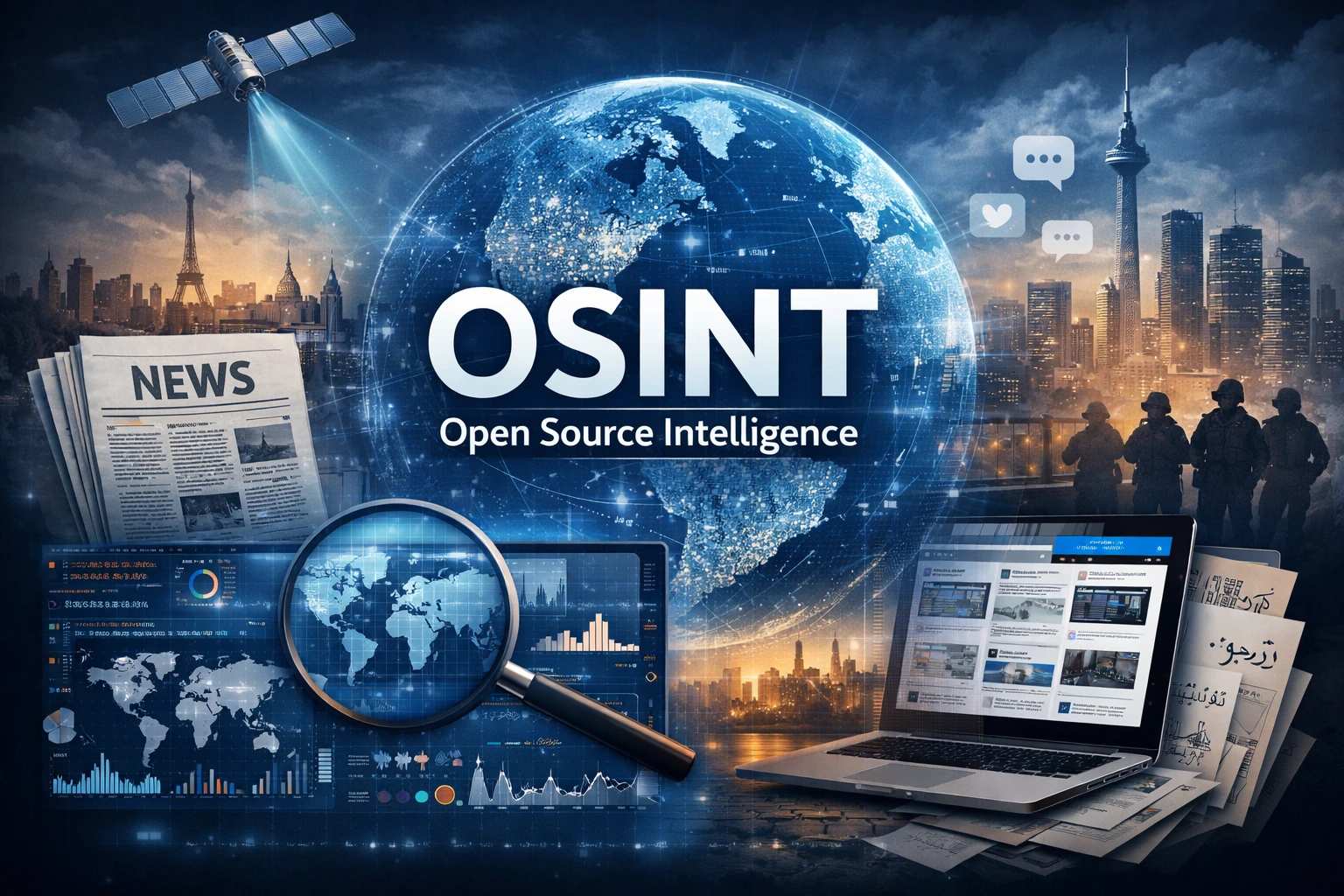
In the rapidly evolving landscape of open-source intelligence (OSINT), the ability to process and analyze news data from diverse global sources has become a critical capability for intelligence professionals. Multilingual news streams—spanning major international outlets, regional publications, and local media—contain invaluable insights into geopolitical developments, emerging threats, and public sentiment shifts. However, the heterogeneity of these sources, including varying formats, languages, scripts, and structures, poses significant challenges to timely and accurate intelligence production. Knowlesys addresses these complexities through its advanced Knowlesys Open Source Intelligent System, which incorporates robust mechanisms for standardized processing of multilingual news data, enabling seamless intelligence discovery, alerting, analysis, and collaborative workflows.
The Imperative for Standardization in Multilingual OSINT
Global news ecosystems generate enormous volumes of content daily, with much of it published in languages beyond English. Effective OSINT requires moving beyond monolingual limitations to capture a comprehensive view of international events. Raw multilingual data often arrives in inconsistent formats: differing date structures, metadata schemas, encoding variations, and embedded multimedia elements. Without standardization, analysts face fragmented datasets that hinder correlation, entity recognition, and trend detection across sources.
Standardized processing transforms this disparate input into a unified, actionable intelligence base. It involves normalization of metadata, consistent language handling, deduplication, and structured extraction of key elements such as headlines, publication timestamps, authors, and geographic indicators. Knowlesys Open Source Intelligent System excels in this domain by applying template-based collection rules and intelligent metadata extraction, achieving high accuracy rates in processing global news feeds. This foundation supports downstream tasks like sentiment evaluation, propagation tracing, and threat alerting with greater reliability.
Core Components of Standardized Multilingual News Processing
1. Data Acquisition and Ingestion from Diverse Sources
The first stage entails comprehensive collection from international news websites, wire services, and aggregated feeds. Knowlesys Open Source Intelligent System supports coverage of major global platforms and regional outlets, scanning billions of data items daily to identify relevant multilingual news. Custom monitoring dimensions allow users to target specific geographic regions, topics, or keywords, ensuring focused ingestion without overwhelming volume.
By leveraging platform-agnostic collection techniques, the system captures content in over 20 languages, including those with complex scripts such as Arabic, Cyrillic, and others prevalent in high-risk regions. This broad acquisition scope is essential for detecting early signals in non-English media that may precede wider international coverage.
2. Normalization and Metadata Standardization
Once ingested, raw news data undergoes rigorous normalization to create a consistent schema. This includes unifying date and time formats across time zones, standardizing author and source attribution, and extracting structured metadata such as categories, tags, and interaction metrics where available. Knowlesys employs intelligent extraction algorithms that achieve exceptional precision, ensuring metadata accuracy reaches near-perfect levels for reliable downstream analysis.
Normalization also addresses encoding inconsistencies and script variations, converting all text to a uniform representation that facilitates cross-lingual processing. This step eliminates common pitfalls like garbled characters or misaligned timestamps, which can otherwise distort temporal analysis of event progression.
3. Language Detection, Translation, and Contextual Handling
Multilingual environments demand sophisticated language identification and translation capabilities. Knowlesys Open Source Intelligent System integrates context-aware processing to handle mixed-language content, dialects, and informal expressions common in news commentary. Automatic language detection routes content to appropriate models, while semantic understanding preserves nuance during any required translation or cross-lingual comparison.
Rather than relying solely on literal translation, the system applies contextual inference to interpret culturally specific references, idiomatic expressions, and evolving terminology. This ensures that intelligence outputs reflect true meaning, avoiding distortions that could lead to misinformed assessments.
4. Deduplication and Content Enrichment
News aggregation frequently results in redundant stories from syndicated sources or republished articles. Knowlesys implements advanced deduplication techniques based on content similarity, metadata overlap, and propagation patterns to maintain a clean intelligence repository. Enriched data includes entity linking, topic clustering, and geographic tagging, transforming standardized news into interconnected intelligence assets.
Integration with Broader OSINT Workflows
Standardized multilingual news processing serves as a foundational layer within the Knowlesys Open Source Intelligent System's full intelligence lifecycle. Processed data feeds directly into intelligence discovery modules for real-time identification of sensitive content, alerting mechanisms for rapid threat notification, and analysis tools for multi-dimensional examination—including sentiment trends, propagation pathways, and key influencer identification.
In collaborative environments, standardized outputs enable seamless sharing among team members, supporting workflow efficiency through shared dashboards, visual graphs, and automated reporting. Analysts can trace event narratives across languages, correlate international perspectives, and build comprehensive situational awareness without language-induced silos.
Practical Applications in High-Stakes Scenarios
Consider a scenario involving geopolitical tensions in a multilingual region: local news in regional languages may reveal early indicators of unrest, while international outlets provide confirmatory context. Knowlesys Open Source Intelligent System standardizes these streams, allowing analysts to detect synchronized narratives, identify origin points, and monitor escalation in near real-time.
In counterterrorism operations, standardized processing of foreign-language news helps uncover propaganda dissemination patterns or recruitment signals embedded in seemingly innocuous reports. For corporate security teams monitoring supply chain risks, the system normalizes global business news to highlight emerging regulatory changes or instability in non-English markets.
Conclusion: Enabling Global Intelligence Superiority
Standardized processing of multilingual news data is no longer optional in modern OSINT—it is essential for maintaining strategic advantage in an interconnected world. Knowlesys Open Source Intelligent System delivers this capability through comprehensive, accurate, and efficient handling of diverse news sources, empowering intelligence professionals to convert global information chaos into precise, actionable insight. By bridging linguistic and structural divides, the platform supports faster decision-making, enhanced threat anticipation, and more effective collaborative operations across international boundaries.