How Government Agencies Use OSINT Systems to Address Information Fragmentation
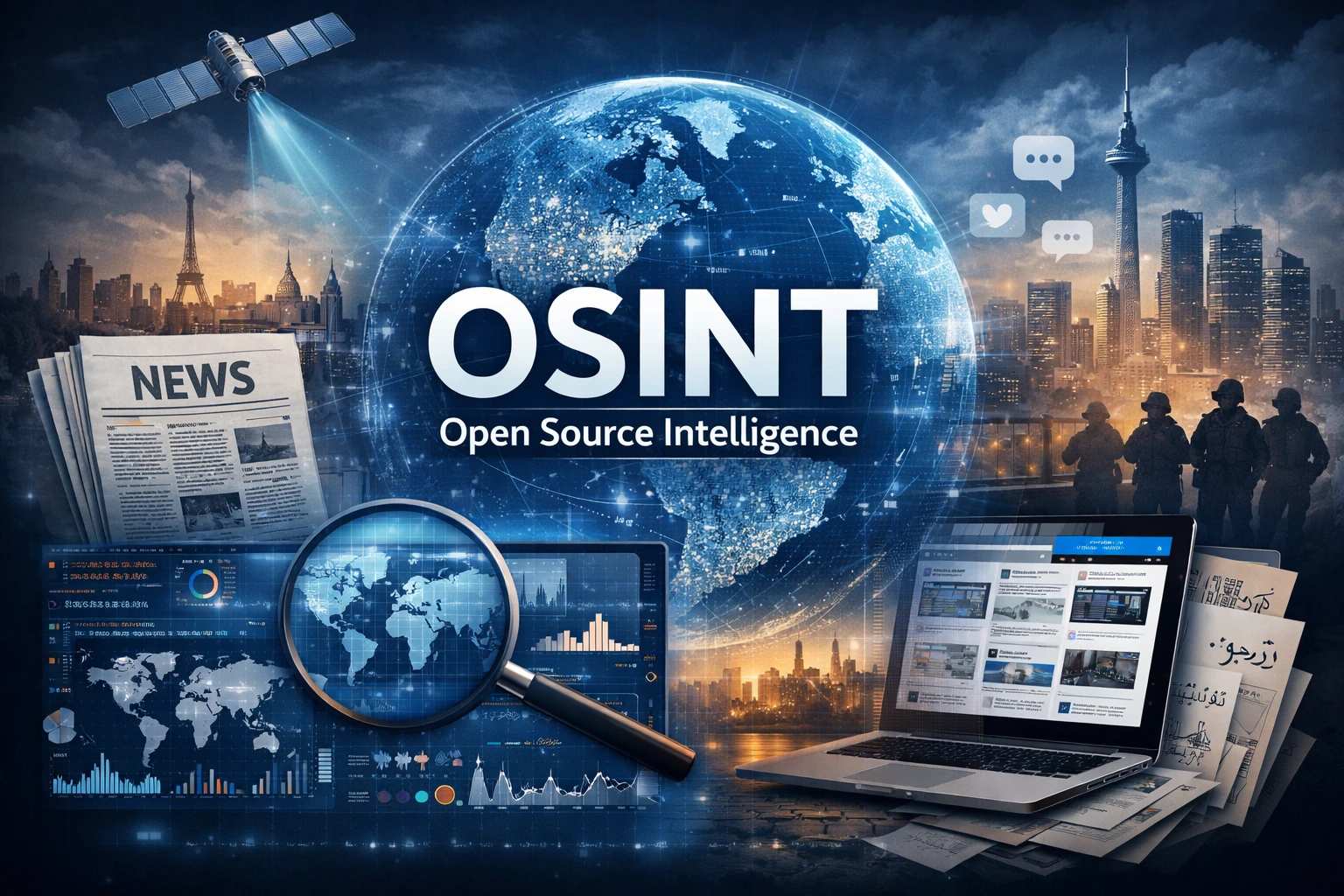
In today's rapidly evolving digital landscape, government agencies face an unprecedented volume of publicly available information scattered across social media platforms, news outlets, forums, dark web channels, and multimedia sources. This abundance creates significant challenges: data silos, inconsistent formats, conflicting narratives, and delayed insights that hinder timely decision-making in national security, law enforcement, and homeland security operations. Open Source Intelligence (OSINT) systems have emerged as powerful tools to overcome these issues by systematically collecting, correlating, and analyzing fragmented data into cohesive, actionable intelligence. Knowlesys, a leader in advanced OSINT technologies, delivers the Knowlesys Open Source Intelligent System — a comprehensive platform designed to transform dispersed public data into unified strategic advantages for government entities.
The Challenge of Information Fragmentation in Government Intelligence Operations
Information fragmentation manifests in multiple ways within government workflows. Agencies often contend with isolated data streams from diverse sources: real-time social media posts, archived news articles, geolocated multimedia, and anonymized dark web discussions. Without proper integration, analysts struggle to connect disparate pieces — such as linking a viral video clip to coordinated account behaviors or tracing a threat narrative across platforms and languages. This leads to incomplete situational awareness, duplicated efforts, and missed opportunities for early intervention in threats like misinformation campaigns, transnational crime, or emerging security risks.
Traditional approaches relying on manual searches or single-source monitoring exacerbate these problems, resulting in delayed responses and resource inefficiencies. Modern OSINT systems address this by employing AI-driven aggregation, behavioral modeling, and cross-source correlation to build a holistic view of events and actors in cyberspace.
Intelligence Discovery: Unifying Scattered Data Sources
Effective OSINT begins with comprehensive discovery that spans the entire open-source ecosystem. Government agencies leverage platforms capable of real-time, multi-modal collection from global social media (including Twitter, Facebook, YouTube), news sites, forums, and even multimedia-heavy channels. This breaks down silos by capturing text, images, videos, and metadata in one unified pipeline.
Knowlesys Open Source Intelligent System excels in this area through its intelligence discovery module, which supports full-domain monitoring of thousands of targeted accounts, key opinion leaders, and custom topics. By aggregating data from diverse origins — including high-volume daily scans of billions of items — the system eliminates blind spots and ensures no critical fragment is overlooked. For instance, homeland security teams can fuse social chatter with geotemporal patterns to detect coordinated activities that appear localized but originate from distant nodes.
Intelligence Alerting: Overcoming Time-Based Fragmentation
Fragmentation is not only spatial but temporal — critical information can emerge and dissipate rapidly across platforms. Agencies require systems that deliver near-instantaneous notifications to prevent escalation. Advanced OSINT tools use AI to identify sensitive content within seconds or minutes, pushing alerts via multiple channels to decision-makers.
The Knowlesys Open Source Intelligent System provides minute-level (as fast as 10 seconds) early warning for high-risk indicators, including negative sentiment spikes, multimedia threats, or anomalous propagation. This capability allows law enforcement and intelligence units to respond proactively, turning fragmented early signals into coordinated prevention strategies before threats gain momentum.
Intelligence Analysis: Correlating Fragments into Actionable Insights
Once collected, fragmented data must be analyzed across multiple dimensions to reveal underlying patterns. Government OSINT platforms apply thematic parsing, sentiment evaluation, actor profiling, propagation tracing, and multimedia forensics to connect dots that manual processes might miss.
Knowlesys Open Source Intelligent System offers nine core analysis dimensions, including author profiling for false account detection, dissemination path reconstruction via visual graphs, and geographic heatmapping. These features enable agencies to integrate seemingly unrelated fragments — such as synchronized posts from dispersed accounts or recurring behavioral anomalies — into clear threat pictures. In homeland security scenarios, this might involve linking foreign influence narratives across languages and platforms to identify coordinated operations.
Intelligence Collaboration: Breaking Down Organizational Silos
Fragmentation often extends to internal agency structures, where teams operate in isolation, leading to redundant work and incomplete intelligence. Collaborative OSINT workflows promote shared access, task assignment, and real-time synchronization among analysts.
Through its intelligence collaboration features, Knowlesys Open Source Intelligent System supports team-based data sharing, workflow automation via tickets and notifications, and collective enrichment of reports. This fosters a unified operational picture, allowing diverse units — from field investigators to strategic analysts — to contribute fragments and build comprehensive cases efficiently.
Intelligence Reporting: Consolidating Insights for Decision-Makers
The final step in addressing fragmentation involves distilling integrated intelligence into clear, compliant outputs. Automated reporting tools generate multi-format documents with embedded visualizations, ensuring stakeholders receive a complete narrative rather than disjointed pieces.
Knowlesys Open Source Intelligent System enables one-click creation of fact-based reports, periodic summaries (daily to annual), and export in HTML, Word, Excel, or PPT formats. This streamlines compliance and briefing processes, providing policymakers with consolidated, evidence-backed insights derived from formerly fragmented sources.
Real-World Impact: OSINT in Government Practice
Government agencies worldwide apply integrated OSINT to tackle fragmentation in high-stakes environments. In counterterrorism, systems track coordinated narratives across platforms to disrupt threats early. Law enforcement uses account behavior correlation to uncover organized crime networks. Homeland security teams monitor migration-related discussions and multimedia to anticipate border risks.
Knowlesys Open Source Intelligent System has supported such operations by delivering full-lifecycle intelligence management — from rapid discovery of scattered indicators to collaborative analysis and reporting. Its robust architecture, handling massive data volumes with high accuracy and stability, aligns with the demands of national-level missions while maintaining data security and compliance standards.
Conclusion: Building Resilience Through Integrated OSINT
Information fragmentation remains a persistent obstacle in government intelligence, but advanced OSINT systems offer a proven path forward. By unifying collection, alerting, analysis, collaboration, and reporting, platforms like the Knowlesys Open Source Intelligent System empower agencies to convert chaotic public data into strategic clarity. As digital threats grow more dispersed and dynamic, investing in comprehensive OSINT capabilities is essential for maintaining operational superiority, accelerating response times, and safeguarding national interests in an interconnected world.