Intelligence Value of Non Official Information Sources in Geopolitical Conflicts
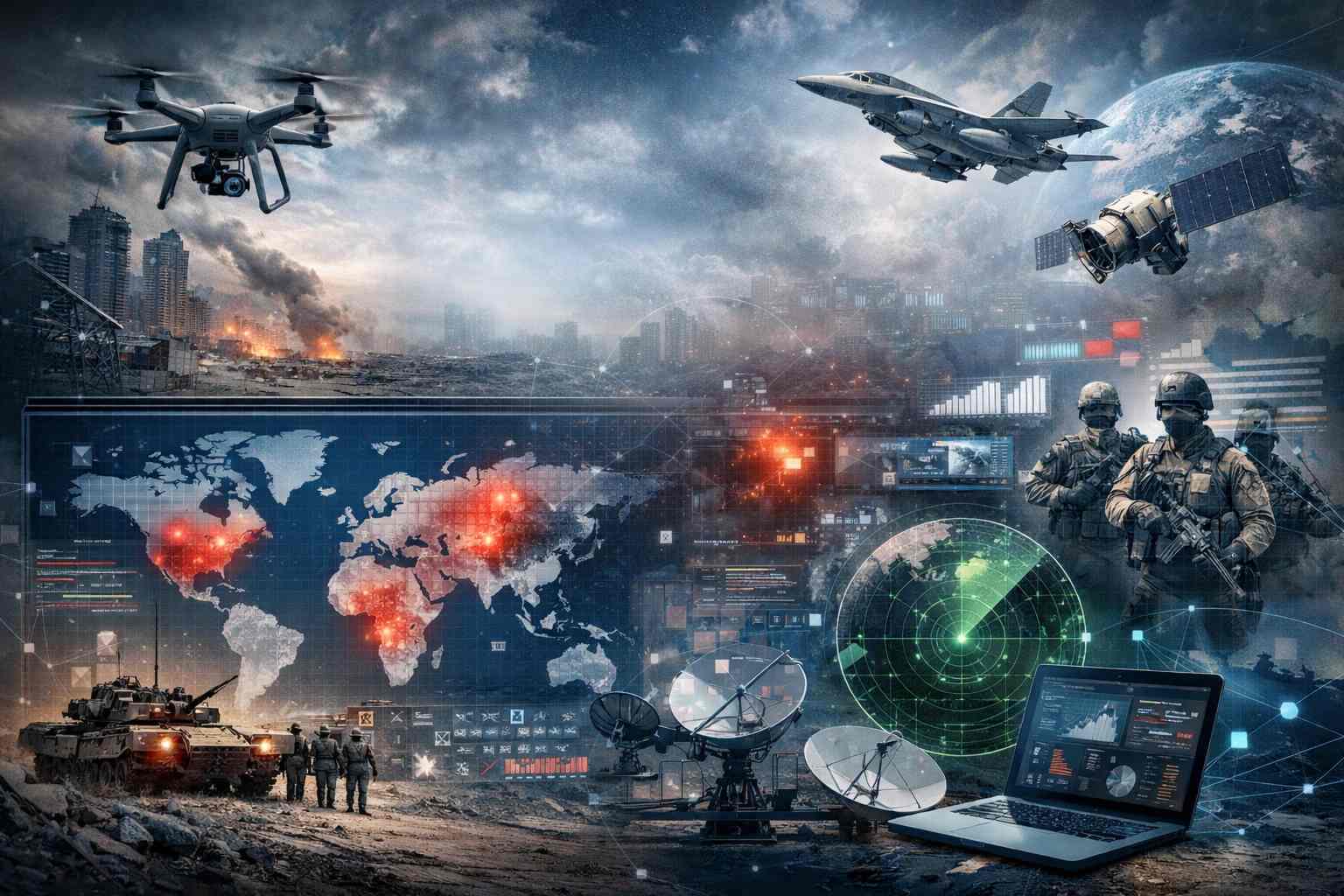
In the evolving landscape of international relations, geopolitical conflicts are increasingly shaped by information flows that extend far beyond traditional diplomatic channels and classified intelligence. Non-official information sources—encompassing social media posts, citizen-generated videos, independent blogs, forums, and other publicly accessible digital content—have emerged as powerful indicators of on-the-ground realities, public sentiment, disinformation campaigns, and even strategic intentions. These sources provide unfiltered insights that official narratives may obscure, delay, or manipulate, offering intelligence professionals a complementary layer of visibility in complex threat environments.
Knowlesys Open Source Intelligent System stands at the forefront of harnessing these non-official channels, delivering advanced capabilities in intelligence discovery, threat alerting, intelligence analysis, and collaborative intelligence workflows. By enabling the systematic collection and correlation of diverse open-source data, the platform empowers government security institutions, defense agencies, and strategic analysts to transform fragmented public signals into coherent, actionable intelligence that informs decision-making in high-stakes geopolitical scenarios.
The Strategic Role of Non-Official Sources in Modern Conflicts
Geopolitical conflicts today unfold in a hybrid domain where physical maneuvers intersect with information operations. Non-official sources excel in revealing patterns that classified intelligence may miss due to access limitations or time lags. Social media platforms, in particular, serve as real-time sensors for troop movements, civilian impacts, logistical challenges, and morale indicators. During prolonged engagements, these sources have demonstrated their capacity to expose operational details through geolocated user content, timestamped imagery, and synchronized behavioral signals across networks of accounts.
One of the most prominent illustrations comes from the Russia-Ukraine conflict, where non-official information has played a pivotal role in documenting events, countering disinformation, and supporting accountability efforts. Publicly shared videos and photographs, combined with commercial satellite imagery, have enabled verification of incidents ranging from military deployments to civilian harm. Such sources have facilitated the identification of specific assets, the tracing of propaganda narratives, and the attribution of actions that might otherwise remain concealed. This democratization of evidence has shifted the information advantage, allowing for preemptive exposure of false flag operations and rapid debunking of misleading claims.
Key Advantages Over Traditional Intelligence Channels
Non-official sources offer several distinct advantages in geopolitical analysis:
- Timeliness and Volume: Data emerges in near real-time, often minutes after events occur, providing early indicators that outpace slower official reporting cycles.
- Granularity and Diversity: Insights capture localized perspectives, cultural nuances, and grassroots reactions that official channels may filter or overlook.
- Resilience to Suppression: Decentralized platforms make complete information blackout difficult, ensuring continuity even under censorship or restricted access.
- Cost-Effectiveness: Leveraging publicly available data reduces reliance on resource-intensive covert collection methods.
These attributes make non-official sources indispensable for situational awareness, predictive assessment, and influence operation detection. However, their value is maximized only through rigorous verification, cross-correlation with multiple streams, and advanced analytical tools to filter noise from signal.
Intelligence Discovery and Threat Alerting in Practice
Effective utilization begins with comprehensive intelligence discovery across global platforms. Knowlesys Open Source Intelligent System supports multi-modal monitoring—text, images, and videos—enabling the identification of sensitive content in real time. Custom monitoring rules allow targeting of key accounts, influencers, geographic regions, and thematic clusters, ensuring coverage of both broad trends and specific entities of interest.
Threat alerting capabilities deliver minute-level notifications for emerging risks, such as coordinated disinformation spikes or anomalous activity patterns indicating escalation. By setting thresholds on propagation speed, sentiment shifts, and engagement metrics, the system ensures critical developments reach decision-makers promptly, facilitating proactive responses in fluid conflict environments.
Advanced Intelligence Analysis for Deeper Insights
Raw data from non-official sources gains strategic depth through multifaceted analysis. Knowlesys platform applies behavioral profiling to detect coordinated entities, false personas, and influence networks. Propagation path tracing reveals origin points and amplification nodes, while sentiment and thematic clustering highlight narrative evolution.
Geospatial and temporal mapping visualizes activity hotspots, exposing discrepancies like timezone masking or synchronized bursts that suggest orchestrated efforts. These techniques have proven essential in identifying hidden linkages in geopolitical confrontations, transforming disparate posts into evidence of broader operational intent.
Collaborative Intelligence Workflows for Institutional Impact
In government and defense contexts, intelligence value is amplified through team-based workflows. Knowlesys facilitates secure data sharing, task assignment, and consensus building among analysts, enabling comprehensive assessments that integrate diverse perspectives. This collaborative approach reduces silos, accelerates verification, and supports the production of unified reports for policy and operational stakeholders.
By embedding human expertise within AI-assisted processes, the system maintains analytical rigor while scaling to handle massive data volumes, ensuring reliable outputs in time-sensitive scenarios.
Conclusion: Embracing Non-Official Sources as a Core Intelligence Asset
As geopolitical conflicts grow more information-centric, non-official sources represent an irreplaceable dimension of the intelligence mosaic. Their ability to provide immediate, diverse, and resilient insights complements traditional disciplines, enhancing overall situational understanding and strategic foresight.
Knowlesys Open Source Intelligent System equips organizations with the technological foundation to fully exploit this potential—delivering end-to-end capabilities from discovery to collaborative reporting. In an era defined by rapid information dynamics and hybrid threats, prioritizing non-official sources through sophisticated OSINT platforms is no longer optional; it is essential for maintaining advantage in the global arena.