Geopolitical Situational Awareness Models for Government Decision Making
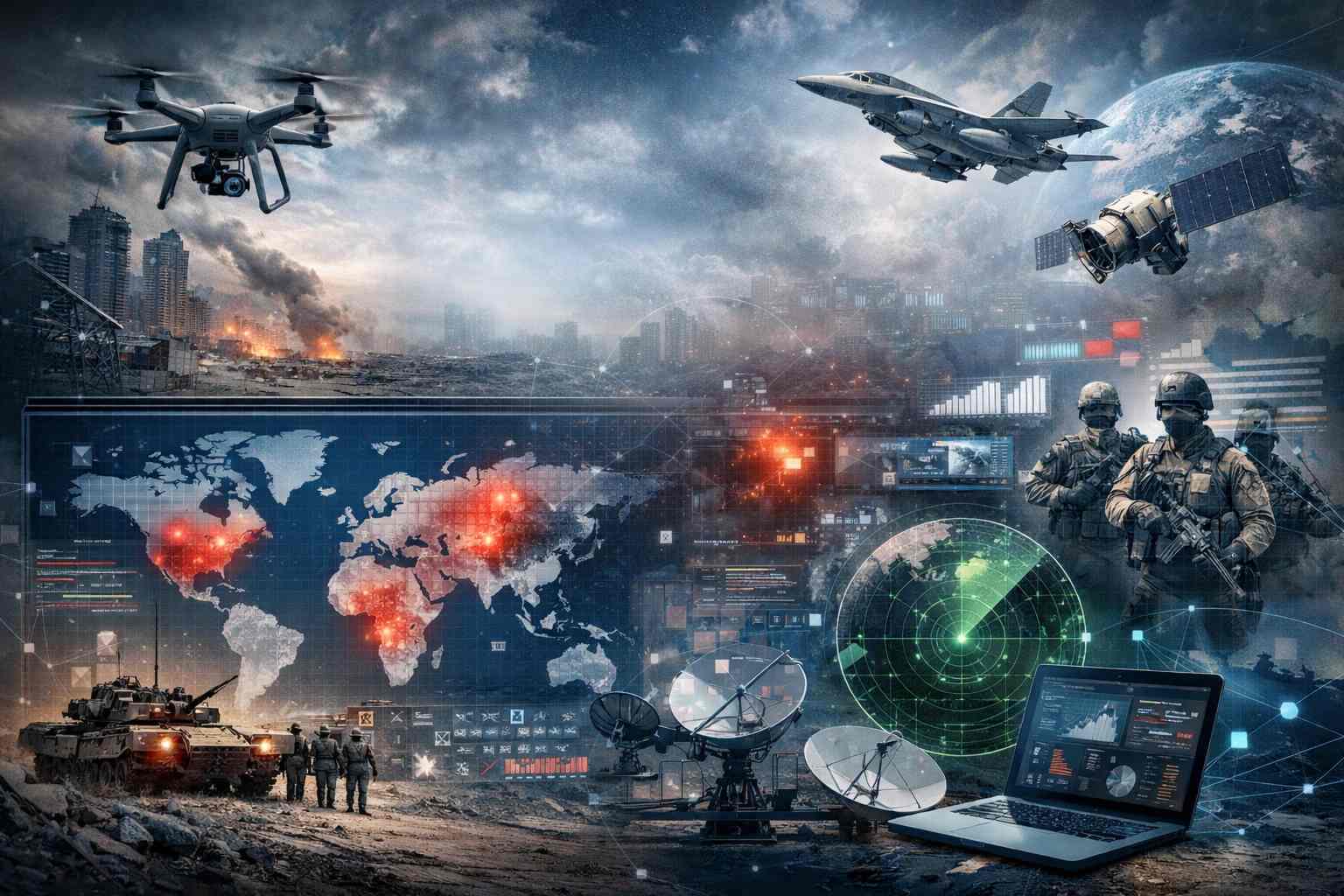
In an increasingly volatile global landscape marked by hybrid threats, rapid information flows, and interconnected crises, governments require robust frameworks to maintain real-time understanding of geopolitical dynamics. Geopolitical situational awareness models integrate open-source intelligence (OSINT) to transform disparate public data into coherent, actionable insights that inform strategic decisions at the highest levels. These models enable policymakers to anticipate shifts in alliances, detect emerging conflicts, assess influence operations, and evaluate risks to national interests before they escalate into crises.
Knowlesys stands at the forefront of this evolution with the Knowlesys Open Source Intelligent System, a comprehensive OSINT platform engineered for intelligence agencies, law enforcement, and national security entities. By delivering intelligence discovery, threat alerting, intelligence analysis, and collaborative workflows, the system empowers government decision-makers to build layered situational awareness across regions and domains.
The Strategic Imperative of Geopolitical Situational Awareness
Geopolitical situational awareness extends beyond traditional intelligence collection to encompass continuous monitoring of political, economic, social, and technological indicators that shape international stability. In today's environment, where state and non-state actors exploit digital channels for propaganda, disinformation, and coordinated influence, timely awareness is essential for proactive diplomacy, crisis prevention, and resource allocation.
Effective models rest on four pillars: comprehensive data acquisition from global open sources, rapid detection of anomalies and escalations, multidimensional analysis to uncover patterns and intent, and seamless collaboration to distribute insights across agencies. OSINT serves as the foundational sensor in these models, providing unclassified yet high-value information that complements classified sources and fills gaps in restricted environments.
For government entities, these models support critical functions such as early warning of regional instability, evaluation of foreign policy impacts, monitoring of cross-border threats, and assessment of cyber-geopolitical intersections. The Knowlesys Open Source Intelligent System operationalizes this by processing vast volumes of multilingual content from major social platforms, news outlets, forums, and multimedia sources, ensuring no critical signal is overlooked amid the noise.
Intelligence Discovery: Establishing a Broad Observational Baseline
The first stage of any geopolitical situational awareness model involves systematic discovery of relevant indicators across the information ecosystem. This requires scanning billions of daily entries to identify emerging topics, actor behaviors, and narrative shifts that may signal geopolitical change.
Knowlesys excels in this domain through customizable monitoring dimensions that include keywords, hashtags, geographic regions, key opinion leaders, target accounts, and specific websites. The platform captures text, images, and videos in real time, supporting over 20 languages to provide truly global coverage. This capability allows analysts to establish baselines for normal activity in contested regions—such as tracking discourse around territorial disputes, alliance formations, or economic sanctions—while automatically surfacing deviations that warrant further scrutiny.
By automating the ingestion and initial triage of open data, the system reduces the cognitive load on analysts and ensures persistent visibility into dynamic geopolitical theaters, from great-power competition zones to fragile border areas.
Threat Alerting: Achieving Minute-Level Responsiveness
Speed is paramount when geopolitical events can cascade rapidly. Modern situational awareness models incorporate automated alerting mechanisms that trigger on predefined thresholds related to volume spikes, sentiment shifts, propagation velocity, or content sensitivity.
Knowlesys delivers exceptional performance here, with sensitive content detection in as little as 10 seconds and full alerting within minutes. Multi-channel notifications—via system alerts, email, or dedicated clients—ensure that key personnel receive immediate visibility into potential escalations, such as coordinated disinformation campaigns, sudden surges in protest rhetoric, or indications of hybrid warfare preparations.
This rapid-response layer enables government decision-makers to initiate diplomatic engagements, adjust military postures, or activate contingency plans during the critical early window when intervention remains most effective. In practice, such alerting has proven vital in preempting misinformation-driven instability and mitigating risks from asymmetric threats.
Intelligence Analysis: Uncovering Hidden Patterns and Intent
Raw data alone cannot drive decisions; sophisticated analysis converts information into understanding. Advanced models employ AI-driven tools for sentiment evaluation, entity resolution, propagation mapping, behavioral clustering, and network visualization to reveal underlying structures and motivations.
Within the Knowlesys platform, analysts benefit from nine core analysis dimensions, including topic parsing, emotion classification, hotspot trending, account profiling, fake entity detection, dissemination pathway reconstruction, geographic heatmapping, and multimedia forensics such as face recognition and content溯源. These features allow for precise attribution of influence operations, identification of coordinated actor clusters, and forecasting of escalation trajectories based on historical patterns and current momentum.
Visual outputs—such as propagation graphs, keyword clouds, trend curves, and knowledge graphs—facilitate rapid comprehension and evidence-based briefings. This analytical depth transforms OSINT from a supplementary feed into a primary driver of geopolitical insight, enabling leaders to weigh options with greater confidence amid uncertainty.
Collaborative Intelligence Workflows: Enabling Unified Decision-Making
Geopolitical challenges rarely reside within a single agency's purview. Effective models emphasize collaboration to integrate perspectives from intelligence, diplomacy, defense, and law enforcement communities.
Knowlesys supports this through shared intelligence repositories, task assignment workflows, broadcast notifications, and instant messaging integration. Teams can enrich assessments collaboratively, avoid duplication, and maintain a unified operational picture. One-click generation of formatted reports—in HTML, Word, Excel, or PPT—streamlines the transition from analysis to executive communication, ensuring that insights reach policymakers in digestible, presentation-ready form.
This collaborative ecosystem fosters cross-agency alignment, accelerates consensus-building, and enhances the overall resilience of government responses to geopolitical developments.
Conclusion: Positioning OSINT as the Cornerstone of Modern Geopolitical Strategy
As geopolitical competition intensifies across physical and digital domains, situational awareness models grounded in OSINT offer governments a decisive advantage in foresight and agility. By systematically discovering, alerting on, analyzing, and collaborating around open-source indicators, decision-makers can navigate complexity with clarity and act decisively to safeguard national interests.
The Knowlesys Open Source Intelligent System exemplifies this paradigm, providing a mature, reliable platform that has evolved through extensive experience in high-stakes intelligence environments. Its full-spectrum capabilities—from rapid discovery of emerging signals to rigorous analytical validation and seamless team coordination—equip government entities to maintain superior situational awareness and make informed choices in an era defined by uncertainty and speed.
In the hands of skilled operators, such models do not merely monitor the world—they shape strategic outcomes by illuminating paths forward amid the fog of global affairs.