Capturing Key Events in Conflict Zones Through Open Source Intelligence
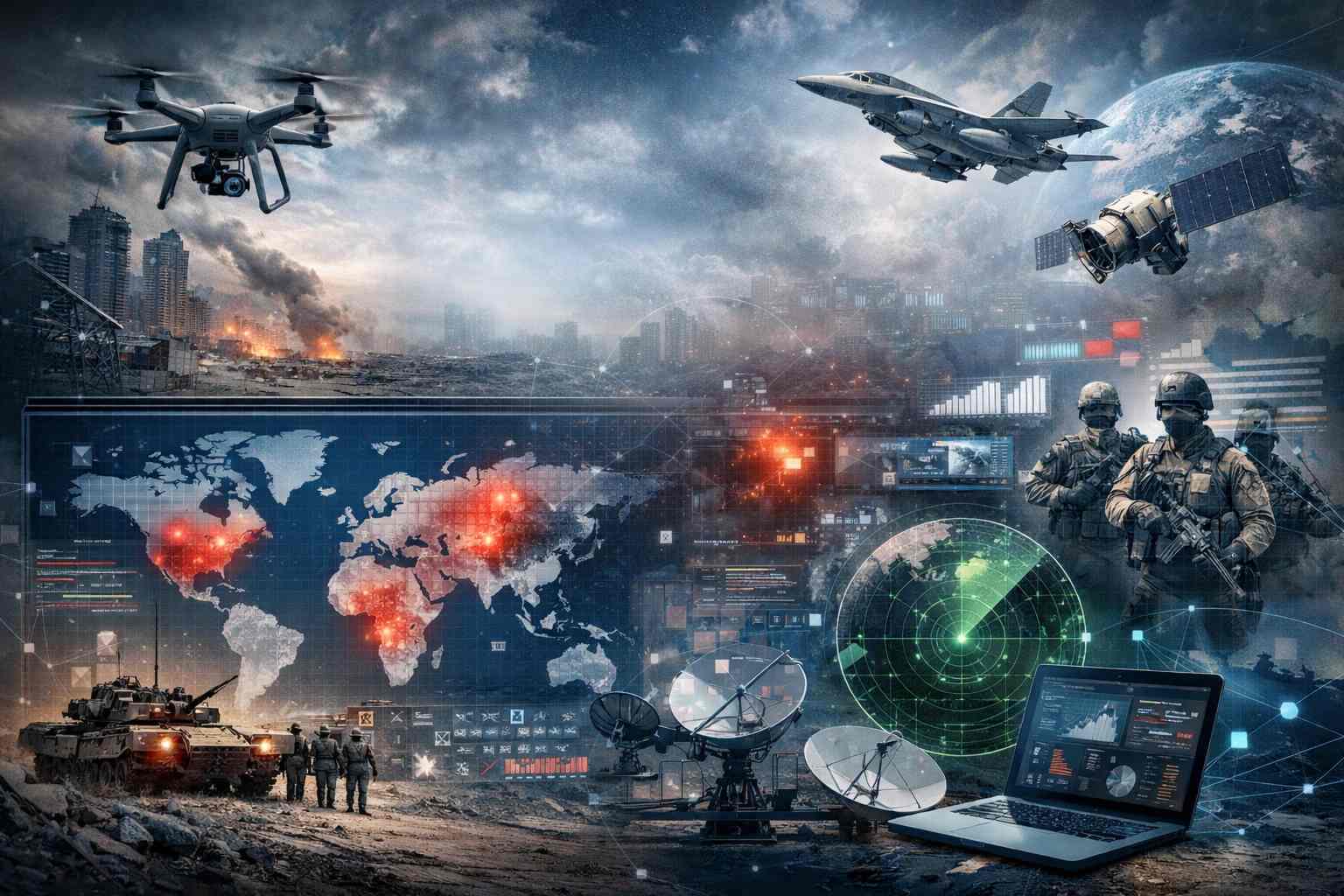
In the volatile landscape of modern armed conflicts, where traditional intelligence gathering faces severe limitations due to restricted access, security risks, and information warfare, Open Source Intelligence (OSINT) has emerged as a transformative force. By systematically collecting and analyzing publicly available data—from social media posts and user-generated videos to satellite imagery and geospatial metadata—OSINT enables real-time situational awareness, event reconstruction, and evidence-based attribution. Platforms like the Knowlesys Open Source Intelligent System exemplify this evolution, offering comprehensive intelligence discovery, threat alerting, intelligence analysis, and collaborative workflows to convert fragmented open data into actionable insights for security and defense stakeholders.
The Strategic Imperative of OSINT in Conflict Monitoring
Contemporary conflicts, such as those in Ukraine, Gaza, and Syria, generate an unprecedented volume of publicly accessible information. Civilians, journalists, and combatants often document events in real time via smartphones, sharing geolocated footage on platforms like Twitter (now X), Telegram, TikTok, and YouTube. This democratization of information creates both opportunities and challenges: while it pierces the "fog of war," it also demands sophisticated tools to filter noise, verify authenticity, and correlate disparate sources.
OSINT addresses these demands by focusing on intelligence discovery across global social media, news outlets, forums, and multimedia content. Advanced systems capture text, images, and videos at scale, identifying sensitive indicators such as troop movements, weapon sightings, or inflammatory narratives that signal escalation. The Knowlesys Open Source Intelligent System supports full-domain scanning and customizable monitoring of keywords, hashtags, target accounts, and geographic regions, ensuring directed yet comprehensive coverage in high-risk environments.
Real-Time Intelligence Discovery and Multimodal Capture
Effective OSINT begins with broad yet precise intelligence discovery. In conflict zones, key events often manifest first through user-generated content: videos of airstrikes, photos of damaged infrastructure, or eyewitness accounts of civilian displacement. Traditional text-based monitoring falls short here, as visual and audio elements frequently carry critical context.
Modern platforms overcome this by supporting multimodal capture—text, images, and videos—breaking through limitations of legacy systems. For instance, AI-driven recognition identifies sensitive content in multimedia, such as prohibited imagery or coordinated propaganda, enabling the detection of emerging threats that might otherwise remain hidden. Knowlesys Open Source Intelligent System excels in this area, processing vast data volumes daily to uncover patterns indicative of key events, from missile launches to forced migrations.
Threat Alerting: Achieving Minute-Level Responsiveness
Speed is paramount in conflict zones, where delays can allow isolated incidents to escalate into broader crises. Intelligence alerting transforms passive discovery into proactive response. By setting thresholds for propagation speed, mention volume, sentiment intensity, or negative grading, systems trigger notifications within minutes—or even seconds—of detection.
In practice, this capability has proven vital. During rapid escalations, minute-level alerts provide decision-makers with a narrow window to assess risks, verify developments, and coordinate responses. Knowlesys delivers alerting with response times as fast as 5 minutes, using AI to flag high-risk OSINT across multilingual sources and push notifications via multiple channels, ensuring critical intelligence reaches stakeholders without delay.
Intelligence Analysis: Reconstructing Events and Mapping Dynamics
Once captured and alerted, raw data requires rigorous analysis to reveal underlying patterns. OSINT analysis encompasses multiple dimensions: content theme parsing, sentiment evaluation, propagation pathway tracing, geographic heatmapping, and entity profiling—including account authenticity assessment and influence evaluation of key propagators.
Visual tools such as propagation graphs, heat maps, and trend curves present complex information intuitively, accelerating insight generation. In conflict scenarios, analysts can trace event origins, identify diffusion nodes, and correlate multimedia evidence with satellite or geospatial data to geolocate incidents precisely. Knowlesys Open Source Intelligent System provides these nine-dimensional analysis capabilities, shortening traditional investigation cycles from days to minutes and supporting evidence chains for accountability or operational planning.
Collaborative Intelligence Workflows in High-Stakes Environments
Conflicts demand coordinated efforts across teams, often spanning agencies or international partners. Intelligence collaboration features enable secure sharing of findings, task assignment via work orders, broadcast notifications, and real-time messaging to eliminate data silos and accelerate collective decision-making.
By integrating discovery, alerting, and analysis into unified workflows, platforms facilitate seamless handoffs—from initial detection to in-depth review and reporting—enhancing overall efficiency in dynamic threat landscapes.
Case Insights: OSINT Impact in Prominent Conflict Zones
Real-world applications underscore OSINT's value. In Ukraine, open-source techniques have tracked troop convoys, verified strikes through geolocated videos, and documented potential violations using layered satellite imagery and social media. Similar approaches in Gaza and Syria have reconstructed hospital incidents, mapped civilian harm, and exposed disinformation by cross-verifying timestamps, metadata, and visual markers.
Organizations leveraging advanced OSINT platforms gain an edge in identifying weak signals—such as synchronized narratives or anomalous activity spikes—that precede major events. Knowlesys supports these efforts with robust, multilingual coverage and high-accuracy AI recognition, empowering users to monitor regional tensions and mitigate spillover risks proactively.
Conclusion: OSINT as a Cornerstone of Modern Intelligence
As conflicts increasingly unfold in the digital domain, OSINT shifts from supplementary to essential. It provides verifiable, near-real-time visibility where on-ground access is restricted, supporting threat anticipation, event documentation, and strategic response. The Knowlesys Open Source Intelligent System embodies this advancement, delivering end-to-end capabilities—intelligence discovery, minute-level alerting, multidimensional analysis, and collaborative workflows—to meet the demands of homeland security, counterterrorism, and national defense in an era of information saturation and asymmetric threats. By harnessing open sources with precision and speed, stakeholders can capture key events more effectively, turning publicly available data into decisive intelligence advantage.