Application Boundaries of OSINT in Military Security Analysis
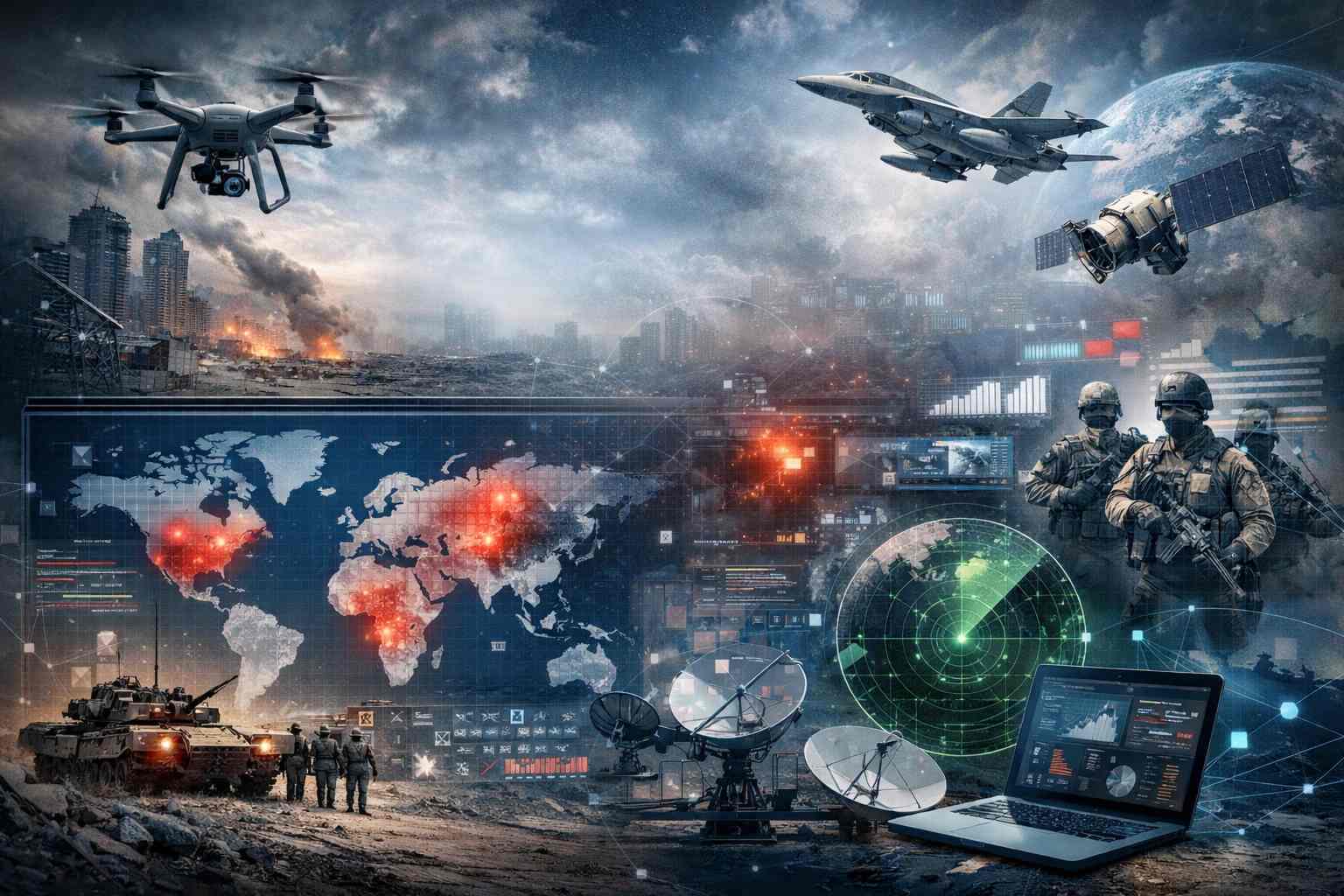
In the contemporary security landscape, Open Source Intelligence (OSINT) has transitioned from a supplementary resource to a foundational pillar of military intelligence operations. As global conflicts increasingly unfold in information-saturated environments, defense organizations rely on publicly available data to gain situational awareness, assess threats, and inform strategic decisions. Platforms such as the Knowlesys Open Source Intelligent System exemplify how advanced OSINT technologies enable defense organizations to process vast volumes of open data efficiently, transforming raw information into actionable intelligence for homeland security, counterterrorism, and broader military applications. However, the effective deployment of OSINT is constrained by inherent boundaries that define its scope, reliability, and integration within the broader intelligence ecosystem.
The Strategic Role of OSINT in Modern Military Operations
OSINT encompasses the collection, analysis, and exploitation of information from publicly accessible sources, including social media, news outlets, geospatial data, academic publications, and commercial databases. In military contexts, it provides near-real-time insights that complement classified intelligence disciplines such as signals intelligence (SIGINT) and human intelligence (HUMINT). Defense entities leverage OSINT for threat detection, capability assessment, and operational planning, often initiating the intelligence cycle with open sources before layering on restricted data.
For instance, OSINT enables the monitoring of adversarial force movements, equipment deployments, and doctrinal developments through analysis of satellite imagery, social media geotags, and public announcements. The Knowlesys Open Source Intelligent System supports this by facilitating intelligence discovery across global platforms, tracking thousands of target accounts and keywords to capture sensitive indicators in real time. This capability proves invaluable in scenarios requiring rapid response, such as identifying emerging threats or verifying adversary narratives during periods of heightened tension.
Core Applications in Military Security Analysis
OSINT's utility spans multiple levels of military engagement, from strategic forecasting to tactical support.
Threat Assessment and Capability Evaluation
Military analysts use OSINT to evaluate foreign military capabilities by aggregating data on equipment specifications, training exercises, and procurement activities. Publicly available defense publications, trade shows, and social media posts from personnel often reveal insights into modernization efforts, force structures, and operational readiness. Advanced platforms like the Knowlesys Open Source Intelligent System enhance this through AI-driven analysis, identifying patterns in behavioral data and correlating disparate sources to produce comprehensive profiles.
Situational Awareness and Early Warning
In dynamic operational theaters, OSINT delivers minute-level alerts on unfolding events. By monitoring social media trends, news flows, and geospatial overlays, military units can detect troop concentrations, civil unrest, or propaganda campaigns that signal escalation. The system's intelligence alerting module ensures timely notifications, enabling commanders to preempt risks and allocate resources effectively.
Support to Targeting and Damage Assessment
OSINT contributes to precision targeting by providing initial geolocation and contextual data. During post-strike evaluations, public imagery and reports help verify battle damage, reducing reliance on scarce reconnaissance assets. Collaborative features in tools like Knowlesys facilitate team-based analysis, allowing analysts to share visualizations and refine assessments collaboratively.
Inherent Boundaries and Limitations of OSINT
Despite its strengths, OSINT operates within defined boundaries that limit its standalone efficacy in military security analysis.
Reliability and Vulnerability to Deception
Public sources are susceptible to misinformation, disinformation, and deliberate deception. Adversaries may employ "event barraging"—flooding channels with fabricated reports—to overwhelm analysts or mask genuine activities. OSINT's dependence on verifiable provenance requires rigorous cross-checking, often necessitating integration with classified sources to mitigate false positives.
Depth and Sensitivity Constraints
OSINT excels in breadth but often lacks the depth provided by clandestine methods. It cannot access internal deliberations, encrypted communications, or covert deployments. Boundaries arise when critical details—such as precise order-of-battle data or leadership intentions—remain beyond public reach, necessitating hybrid intelligence fusion.
Legal, Ethical, and Operational Boundaries
Collection must comply with international laws, privacy regulations, and data protection standards. Overreach risks diplomatic repercussions or legal challenges. In armed conflict, OSINT use must align with principles of distinction and proportionality, avoiding harm to civilians through improper exploitation of personal data. Knowlesys addresses these concerns through robust encryption, compliance features, and customizable retention policies that support secure, auditable workflows.
Technological and Resource Limitations
Processing massive data volumes demands significant computational resources and skilled analysts. Language barriers, cultural nuances, and platform restrictions further constrain coverage. While AI advancements mitigate these issues, human oversight remains essential to contextualize findings and avoid algorithmic biases.
Maximizing OSINT Effectiveness Within Defined Boundaries
To navigate these limitations, military organizations adopt integrated approaches. OSINT serves as the "first resort" for initial discovery, feeding into all-source analysis for validation. The Knowlesys Open Source Intelligent System exemplifies this by offering end-to-end support—intelligence discovery, alerting, analysis, and collaboration—while maintaining high standards of accuracy and security. Its behavioral modeling and graph-based reasoning help uncover hidden networks, enhancing decision-making without overstepping inherent boundaries.
Training programs and doctrinal updates further strengthen OSINT integration, ensuring analysts apply critical thinking to filter noise and exploit opportunities. By treating OSINT as a force multiplier rather than a complete substitute, militaries achieve informational advantage in contested environments.
Conclusion: Balancing Potential and Prudence
OSINT has redefined military security analysis, offering unprecedented access to global information flows that inform strategy and operations. Yet its application boundaries—rooted in reliability challenges, legal constraints, and inherent gaps—demand disciplined use and complementary intelligence disciplines. Platforms such as the Knowlesys Open Source Intelligent System, built on decades of specialized expertise, empower defense entities to operate confidently within these boundaries, delivering timely, actionable insights that enhance national security objectives while upholding ethical and operational standards. As information environments evolve, mastering OSINT's boundaries will remain a decisive factor in maintaining strategic superiority.