Data Integration and Analysis in Geopolitical Risk Assessment
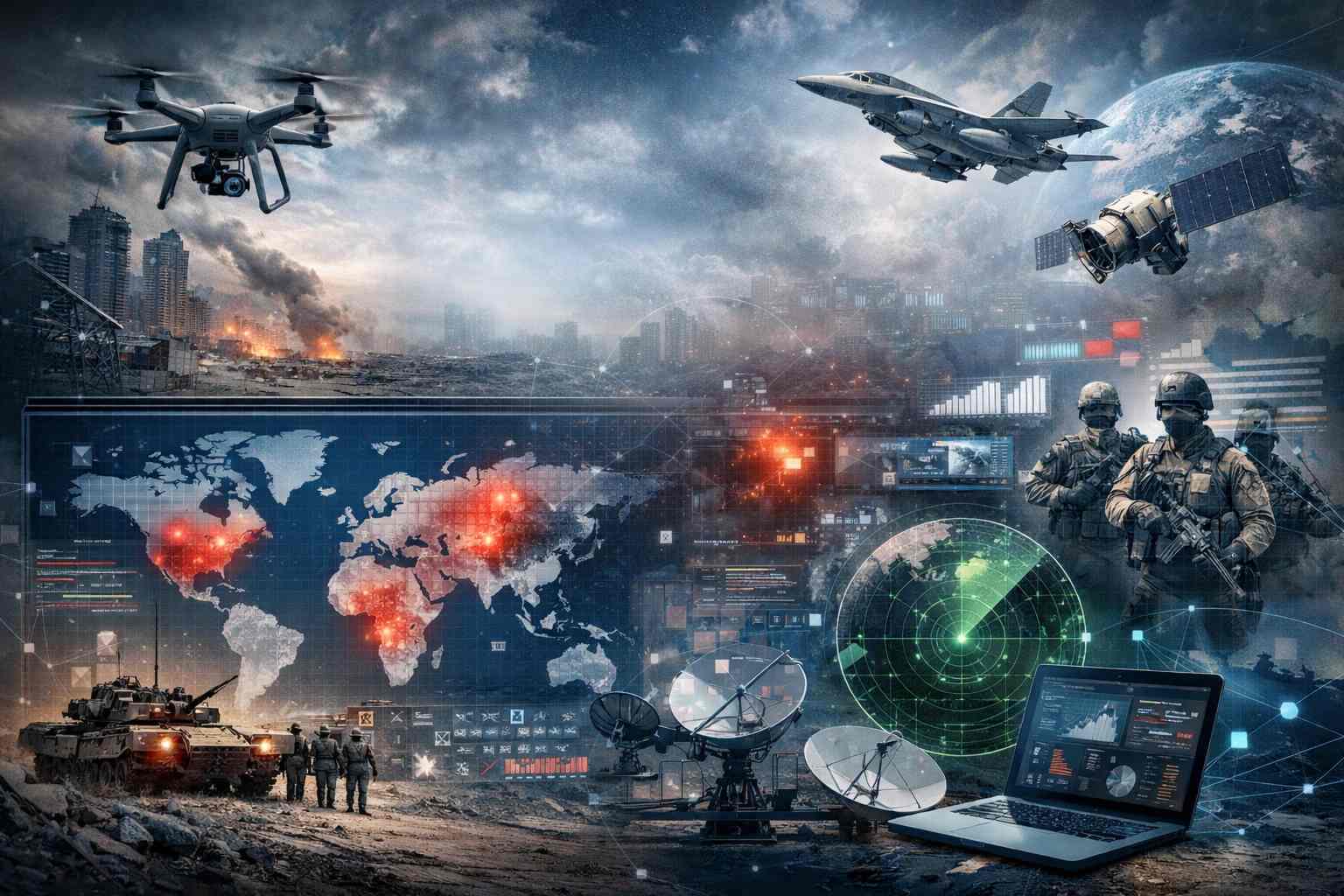
In an increasingly interconnected and volatile global landscape, geopolitical risk assessment has become essential for governments, intelligence agencies, and organizations operating across borders. Traditional classified intelligence sources, while valuable, often fall short in providing the timeliness, breadth, and contextual depth required to anticipate emerging threats such as regional conflicts, influence operations, supply chain disruptions, and hybrid warfare tactics. This is where Open Source Intelligence (OSINT) plays a pivotal role, serving as a foundational layer for integrating diverse data streams into coherent analytical frameworks. Knowlesys Open Source Intelligent System stands at the forefront of this capability, offering a comprehensive platform that enables seamless data integration, real-time alerting, multidimensional analysis, and collaborative workflows to transform raw open-source information into actionable geopolitical insights.
The Evolving Role of OSINT in Geopolitical Intelligence
Geopolitical risks manifest through subtle signals scattered across public domains: social media narratives, news reports, satellite imagery, maritime tracking data, government statements, and academic publications. These sources collectively represent 90% to 95% of the information needed for finished intelligence products in many scenarios. The challenge lies not in data scarcity but in the overwhelming volume and fragmentation of available information. Effective assessment requires integrating disparate datasets to reveal hidden patterns, correlations, and trajectories that single-source analysis might overlook.
Knowlesys addresses this by providing full-spectrum intelligence discovery across global major social media platforms, forums, and websites. The system supports monitoring in over 20 languages, processes millions of messages daily, and captures content in text, image, and video formats. This comprehensive coverage ensures that geopolitical analysts can detect early indicators of instability, such as synchronized disinformation campaigns, anomalous account behaviors, or spikes in sentiment around critical regions, before they escalate into broader crises.
Core Challenges in Data Integration for Risk Assessment
Integrating open-source data for geopolitical purposes presents several persistent challenges:
- Volume and Velocity: Daily global data generation exceeds billions of items, requiring systems capable of high-speed ingestion without sacrificing accuracy.
- Fragmentation and Heterogeneity: Information originates from diverse platforms with varying structures, formats, and reliability levels.
- Noise and Disinformation: Malicious actors increasingly deploy AI-generated content to obscure genuine signals.
- Temporal and Geospatial Correlation: Risks often involve time-sensitive events across multiple locations, demanding precise linkage of metadata like timestamps, geolocations, and propagation paths.
- Verification and Attribution: Establishing source credibility and tracing origins is critical to avoid analytical bias.
Knowlesys mitigates these through template-based collection rules that achieve near-100% accuracy in data extraction, AI-driven sensitive content recognition with 96% judgment precision, and advanced features such as metadata extraction, face recognition, and propagation path tracing. By automating initial filtering and correlation, the platform reduces manual overload and enables analysts to focus on high-value interpretation.
Multidimensional Analysis: From Raw Data to Strategic Insight
Once integrated, data must undergo rigorous analysis to inform risk assessments. Knowlesys provides nine key analytical dimensions:
- Content theme parsing and sentiment classification (positive, negative, neutral).
- Hotspot trend tracking and automatic discovery of emerging topics.
- Account profiling, including registration details, behavioral patterns, and fake account detection via interaction analysis.
- Influence evaluation of key opinion leaders (KOLs) based on reach, engagement, and narrative guidance.
- Propagation path reconstruction, identifying origin nodes, diffusion layers, and critical amplifiers.
- Geographic distribution visualization through heatmaps and regional clustering.
- Multimedia溯源 for images and videos to verify authenticity and origins.
- Cross-platform correlation to detect coordinated activities.
- Behavioral resonance modeling to quantify synchronized actions across entities.
These capabilities enable analysts to construct comprehensive risk profiles. For instance, in monitoring regional tensions, the system can aggregate social media discussions, news coverage, and visual evidence to map sentiment shifts, identify influence networks, and forecast potential escalation points. Visual outputs such as knowledge graphs, trend curves, and propagation maps facilitate rapid comprehension and evidence-based reporting.
Intelligence Alerting: Enabling Proactive Risk Mitigation
Timeliness is paramount in geopolitical contexts, where delays can allow threats to materialize. Knowlesys delivers minute-level early warnings—often within 10 seconds for sensitive detections—through customizable thresholds on propagation velocity, mention volume, and negativity levels. Multi-channel notifications ensure alerts reach decision-makers instantly, providing the golden window for response.
In practice, this supports scenarios such as anticipating disinformation surges tied to diplomatic events, detecting coordinated narrative pushes across platforms, or identifying emerging hotspots in contested regions. The system's ability to recover deleted content further bolsters continuity in long-term monitoring.
Collaborative Workflows and Reporting for Institutional Impact
Geopolitical risk assessment is rarely a solitary endeavor. Knowlesys fosters team synergy through shared data access, task assignment via work orders, broadcast notifications, and instant messaging. This eliminates silos, enriches intelligence completeness, and accelerates collective analysis.
One-click report generation produces professional outputs in multiple formats—HTML, Word, Excel, PPT—incorporating visualizations and data-backed narratives. Automated periodic reports (daily, weekly, monthly) support ongoing situational awareness and compliance requirements, reducing preparation time from days to minutes.
Conclusion: Building Resilience in an Uncertain World
As geopolitical dynamics grow more complex—driven by technological competition, regional rivalries, and hybrid threats—robust data integration and analysis capabilities are indispensable. Knowlesys Open Source Intelligent System empowers intelligence professionals to navigate this environment with confidence, delivering end-to-end support from discovery to dissemination. By harnessing AI-augmented OSINT, organizations can anticipate risks, validate assumptions, and formulate evidence-driven strategies that enhance national security, operational resilience, and informed decision-making in an era of persistent uncertainty.