OSINT Intelligence Indexing: Structuring Data for Rapid Retrieval and Strategic Analysis
Introduction
In 2026, the volume of open-source intelligence data generated daily has reached an unprecedented scale. Social media platforms, satellite imagery feeds, dark web forums, financial transaction records, geopolitical news streams, and cross-border communications collectively produce petabytes of potentially actionable intelligence every 24 hours. For government agencies, national intelligence centers, and military analytical units operating across the United States, the Middle East, the UAE, and Saudi Arabia, the challenge is no longer data acquisition — it is data architecture.
The ability to rapidly retrieve a specific threat indicator from three months of indexed dark web communications, or to correlate a newly surfaced geopolitical signal with historical entity records, can be the difference between proactive deterrence and reactive crisis management. Yet the majority of OSINT programs still operate on fragmented, unstructured data repositories that resist fast, precise retrieval. This article examines why OSINT intelligence indexing has become a foundational capability for modern national security operations, and how structured data architectures enable the rapid retrieval and strategic analysis that decision-makers demand.
Why Intelligence Retrieval Speed Matters in 2026
The operational tempo of modern threat environments has compressed the decision cycle dramatically. A geopolitical flashpoint that develops over 72 hours in 2026 may involve hundreds of thousands of social media signals, dozens of conflicting news narratives, encrypted communications intercepts, and dark web chatter — all requiring synthesis before a credible intelligence picture can be formed.
Studies of intelligence failures consistently identify retrieval latency as a critical vulnerability. When analysts cannot locate relevant historical threat records within minutes, they either duplicate prior analytical work or — more dangerously — make assessments without the benefit of contextual precedent. In high-stakes environments such as counter-terrorism operations in the Gulf region or cyber threat monitoring for critical infrastructure in the United States, delayed retrieval directly translates to degraded situational awareness.
Key Insight: Government intelligence retrieval speed is not merely an efficiency metric — it is an operational risk variable. Every minute of retrieval latency in a crisis situation represents an expanding window of analytical uncertainty that adversaries can exploit.
Furthermore, as AI-assisted intelligence analysis becomes standard practice, the quality of AI outputs is directly constrained by the quality of indexed inputs. An AI system querying a poorly structured OSINT database will return incomplete, inconsistent, or misleading results regardless of the sophistication of its algorithms. Structured indexing is therefore the prerequisite for effective AI intelligence search systems.
The Hidden Risks of Poorly Structured OSINT Data
Many intelligence organizations underestimate the operational cost of unstructured OSINT repositories. The risks manifest across four critical dimensions:
- Retrieval Failure Under Time Pressure: Analysts under crisis conditions resort to keyword searches across unindexed repositories, generating high-noise, low-precision results. Critical signals are buried beneath irrelevant data.
- Entity Disambiguation Errors: Without consistent entity tagging and cross-platform entity mapping, the same individual, organization, or location may be represented by dozens of variant spellings and identifiers across different data sources. This fractures the intelligence picture and enables adversaries to exploit naming inconsistencies.
- Historical Intelligence Inaccessibility: Threat patterns that emerged six or eighteen months ago may be directly relevant to current operations, but without time-series indexing and temporal metadata, analysts cannot efficiently surface historical threat records for comparative analysis.
- AI Analysis Degradation: Machine learning models trained or queried against unstructured data produce unreliable outputs. Semantic search, entity recognition, and predictive threat modeling all require clean, consistently structured input data to function at operational standards.
For government data architecture teams and OSINT platform managers, addressing these risks requires a systematic approach to intelligence indexing — not incremental improvements to existing search interfaces, but a foundational restructuring of how raw OSINT data is ingested, tagged, organized, and made retrievable.
Core Principles of Intelligence Indexing
Effective OSINT intelligence indexing is built on four interconnected principles that together create a high-speed, high-fidelity retrieval architecture.
1. Metadata Tagging Systems
Every intelligence record entering a structured OSINT database must be tagged with a standardized metadata schema at the point of ingestion. This schema should capture, at minimum: source platform, geographic origin, language, collection timestamp, entity identifiers (persons, organizations, locations), threat category, confidence level, and classification tier.
A well-designed metadata tagging system transforms raw OSINT data into queryable intelligence objects. Rather than searching through unstructured text, analysts can filter by combinations of metadata attributes — for example, retrieving all records tagged with a specific entity identifier, within a defined geographic region, collected within a 90-day window, and classified above a minimum confidence threshold.
| Metadata Field | Example Values | Retrieval Function |
|---|---|---|
| Source Platform | Telegram, Dark Web Forum, Twitter/X, News Wire | Cross-platform entity mapping |
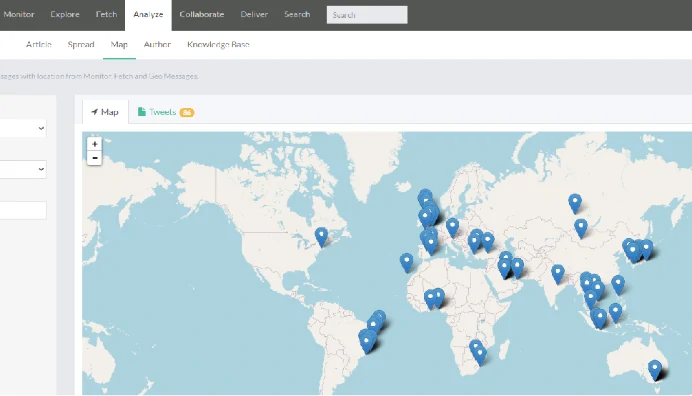
| Geographic Tag | UAE, Saudi Arabia, Iraq, Eastern Mediterranean | Geopolitical intelligence filtering |
| Threat Category | Cyber, Terrorism, Disinformation, Financial Crime | Domain-specific retrieval |
| Temporal Index | ISO 8601 timestamp + event horizon tag | Time-series intelligence organization |
| Entity ID | Canonical entity hash + alias registry | Entity disambiguation and graph linking |
| Confidence Score | 0.0–1.0 (model-assigned or analyst-validated) | Quality-filtered retrieval |
2. AI-Assisted Semantic Indexing
Keyword-based indexing is insufficient for the linguistic complexity of modern OSINT data, which spans multiple languages, dialects, coded terminology, and evolving slang — particularly in dark web intelligence indexing contexts. AI-assisted semantic indexing applies natural language processing models to generate vector embeddings for each intelligence record, enabling semantic similarity search that retrieves conceptually related records even when exact keyword matches are absent.
For Arabic-language OSINT monitoring in the Middle East, or for decoding obfuscated terminology in dark web forums, semantic indexing dramatically improves recall rates compared to traditional keyword search. Analysts querying for threat concepts rather than specific terms can surface relevant intelligence that would otherwise remain invisible in a keyword-indexed repository.
Advanced implementations integrate large language model (LLM) query interfaces that allow analysts to pose natural language questions directly to the indexed database — for example: "Retrieve all records from the past 60 days indicating coordination between financial networks in the Gulf region and cyber threat actors targeting US critical infrastructure." The AI intelligence search system translates this query into a structured retrieval operation across multiple metadata dimensions simultaneously.
3. Cross-Platform Entity Mapping
A single threat actor may operate under different identifiers across Telegram, dark web forums, social media platforms, and financial transaction records. Without cross-platform entity mapping, these fragmented records appear as unrelated data points. With it, they resolve into a unified intelligence profile that reveals the full scope of an actor's activities, networks, and behavioral patterns.
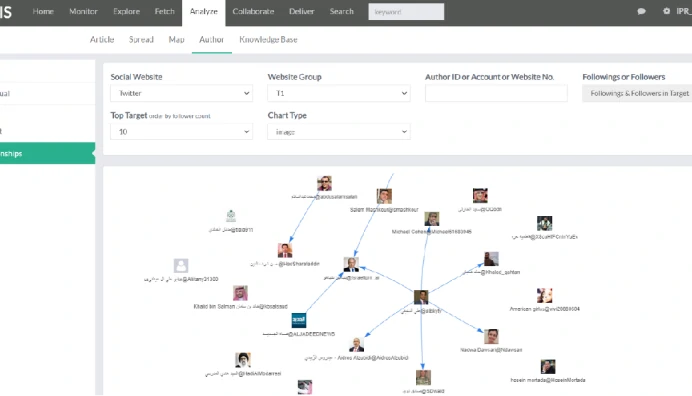
Cross-platform entity mapping requires a canonical entity registry — a master record for each identified entity that aggregates all known aliases, platform identifiers, associated accounts, and linked entities. When new OSINT records are ingested, automated entity resolution processes match them against the registry and link them to the appropriate canonical entity, continuously enriching the intelligence graph.
This capability is particularly critical for geopolitical intelligence databases monitoring state-affiliated actors who deliberately use platform fragmentation as an operational security measure. The intelligence graph that emerges from cross-platform entity mapping provides a structural view of threat networks that no single-platform analysis can replicate.
4. Time-Series Intelligence Organization
Threat intelligence is inherently temporal. The significance of a signal often depends on its relationship to preceding and subsequent events. Time-series intelligence organization structures OSINT data along temporal axes, enabling analysts to reconstruct event timelines, identify escalation patterns, and correlate current signals with historical threat cycles.
Effective time-series indexing goes beyond simple timestamp recording. It involves event horizon tagging — classifying records according to their position within recognized threat development cycles — and temporal clustering, which groups records into coherent event sequences. This allows analysts to query not just for records within a time range, but for records that represent specific phases of threat development, such as pre-attack reconnaissance activity or post-incident attribution signals.
Building High-Speed Government Intelligence Retrieval Workflows
Translating indexing principles into operational retrieval workflows requires architectural decisions at the platform, process, and personnel levels. The following framework reflects best practices for national intelligence centers and military analytical departments operating at scale in 2026.
- Ingestion Pipeline Standardization: All OSINT data sources — whether social media monitors, dark web crawlers, satellite imagery processors, or news aggregators — must feed into a standardized ingestion pipeline that applies metadata tagging and entity resolution before data enters the primary index. This prevents the accumulation of unstructured legacy data that degrades retrieval performance over time.
- Tiered Index Architecture: A two-tier index structure separates hot indexes (recent data, high-frequency access, optimized for sub-second retrieval) from cold indexes (historical data, lower access frequency, optimized for storage efficiency). Analysts working on current operations query the hot index by default, while historical threat indexing queries route to the cold index with slightly longer but still acceptable retrieval times.
- Role-Based Query Interfaces: Different analytical roles require different retrieval interfaces. Tactical analysts need rapid single-entity lookups; strategic analysts need multi-dimensional cross-domain queries; data architects need index health monitoring and quality assurance dashboards. A well-designed government intelligence retrieval system provides role-appropriate interfaces that reduce cognitive load and accelerate time-to-insight.
- Automated Alert Indexing: High-priority threat indicators should trigger automated index updates that immediately surface relevant historical records and push them to relevant analyst queues. This transforms the index from a passive repository into an active intelligence distribution mechanism.
Case Studies of Rapid Intelligence Analysis in Crisis Situations
A national cybersecurity center in the Gulf region detected anomalous network activity suggesting a coordinated intrusion campaign targeting energy sector infrastructure. Using a structured OSINT database with cross-platform entity mapping, analysts retrieved 847 related records — spanning dark web forum discussions, social media threat actor profiles, and historical malware signature reports — within four minutes of initiating the query. The time-series index revealed that similar pre-attack reconnaissance patterns had appeared 11 days before a previous infrastructure attack 14 months earlier. This historical correlation enabled the security team to implement targeted countermeasures 36 hours before the anticipated attack window, successfully disrupting the campaign.
During a period of elevated geopolitical tension in the Eastern Mediterranean, a government information operations unit identified a rapidly spreading disinformation narrative across Arabic-language social media platforms. Using AI-assisted semantic indexing, analysts queried the OSINT database for semantically similar content patterns and retrieved a cluster of 2,300 records from a six-month historical window. Cross-platform entity mapping revealed that 73 accounts across four platforms shared a common infrastructure fingerprint, linking the current campaign to a previously documented state-affiliated influence operation. The full attribution analysis, which would have taken days using manual methods, was completed in under three hours — enabling a timely public counter-narrative response.
A military intelligence unit monitoring dark web forums for weapons procurement discussions identified a new alias posting detailed technical specifications. Querying the dark web intelligence index against the canonical entity registry returned 34 historical records associated with the same writing style fingerprint and technical vocabulary cluster, spanning 18 months of activity under six different aliases. The time-series organization of these records revealed a consistent operational pattern — the actor became active in 6-week cycles aligned with known regional conflict escalation periods. This behavioral profile enabled predictive monitoring that resulted in the identification of a planned procurement event before it was executed.
How Knowlesys Intelligence System Enables Strategic Intelligence Indexing
Knowlesys Intelligence System is purpose-built for the intelligence indexing and retrieval challenges faced by government agencies, national intelligence centers, and military analytical departments across the United States, the UAE, Saudi Arabia, and the broader Middle East region. The platform's architecture directly addresses the structural deficiencies that limit OSINT effectiveness in high-volume, high-stakes operational environments.
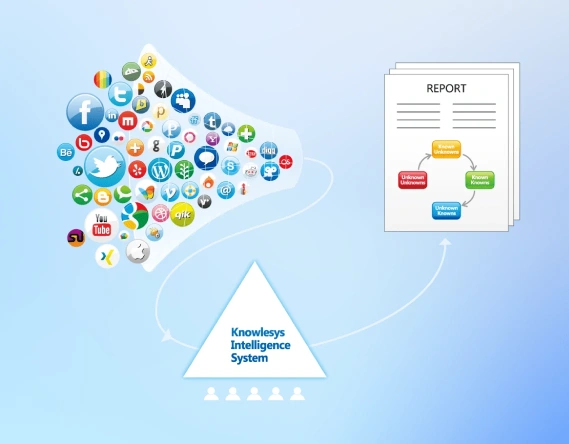
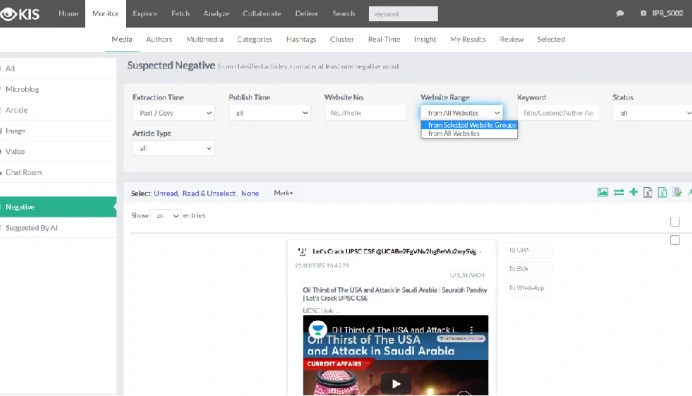
At the data ingestion layer, Knowlesys applies automated metadata tagging across all supported source types — including social media platforms, news aggregators, dark web sources, financial data feeds, and geospatial intelligence streams. Every record entering the system is immediately tagged with the full metadata schema required for high-precision retrieval, eliminating the unstructured data accumulation that degrades legacy OSINT repositories over time.
The platform's AI-assisted semantic indexing engine supports multilingual semantic search across Arabic, English, Farsi, Russian, and other operationally relevant languages, enabling analysts to retrieve intelligence by concept rather than keyword — a critical capability for monitoring encrypted communities and coded communications in dark web intelligence indexing operations.
Knowlesys's cross-platform entity mapping system maintains a continuously updated canonical entity registry that resolves aliases and links records across all monitored platforms into unified intelligence profiles. The geopolitical intelligence database integrates regional entity networks — including state actors, non-state armed groups, financial networks, and influence operation infrastructure — providing the structural context that transforms individual OSINT records into actionable strategic intelligence.
For military analytical departments requiring rapid intelligence analysis under operational time constraints, Knowlesys provides role-optimized retrieval interfaces with sub-second query response times on hot-indexed data and automated alert workflows that push relevant historical context to analysts the moment a new threat indicator is detected.
The platform's time-series intelligence organization capabilities enable historical threat indexing that supports both retrospective analysis and predictive threat modeling — giving government and military clients the temporal intelligence depth required to identify recurring patterns, anticipate threat cycles, and make evidence-based strategic decisions.
The Future of AI-Powered Intelligence Retrieval
Looking beyond 2026, the trajectory of AI-powered intelligence retrieval points toward increasingly autonomous indexing systems that continuously refine their own organizational structures based on analyst query patterns and emerging threat taxonomies. Several developments will shape this evolution:
- Self-Optimizing Index Architectures: Machine learning systems will monitor retrieval performance metrics and autonomously restructure index schemas to optimize for the query patterns most frequently executed by operational analysts — effectively learning the intelligence priorities of the organizations they serve.
- Predictive Pre-Retrieval: AI systems will anticipate analyst information needs based on current operational context and pre-stage relevant intelligence clusters before queries are explicitly submitted, further compressing time-to-insight in crisis situations.
- Cross-Domain Intelligence Fusion: Future structured OSINT databases will integrate seamlessly with classified intelligence streams, enabling hybrid retrieval workflows that surface open-source context alongside restricted intelligence records within a single unified query interface.
- Adversarial Index Resilience: As adversaries become increasingly sophisticated in their attempts to manipulate OSINT environments through coordinated disinformation and false entity creation, intelligence indexing systems will incorporate adversarial detection layers that flag and quarantine potentially manipulated records before they contaminate the primary index.
For government data architecture teams and OSINT platform managers, the strategic imperative is clear: investment in intelligence indexing infrastructure today is investment in analytical capability for the threat environments of tomorrow. Organizations that build structured, AI-ready OSINT databases now will enter the next generation of intelligence operations with a decisive analytical advantage over those still managing unstructured data repositories.
Ready to Transform Your Intelligence Indexing Architecture?
Knowlesys Intelligence System works directly with government agencies, national intelligence centers, and military analytical departments to design and deploy structured OSINT indexing solutions optimized for rapid retrieval and strategic analysis. Contact our team to discuss your organization's intelligence data architecture requirements.
Request a Consultation