Secure Cloud for Defense: Patent Analysis of Multi-Tenant Isolated Architectures
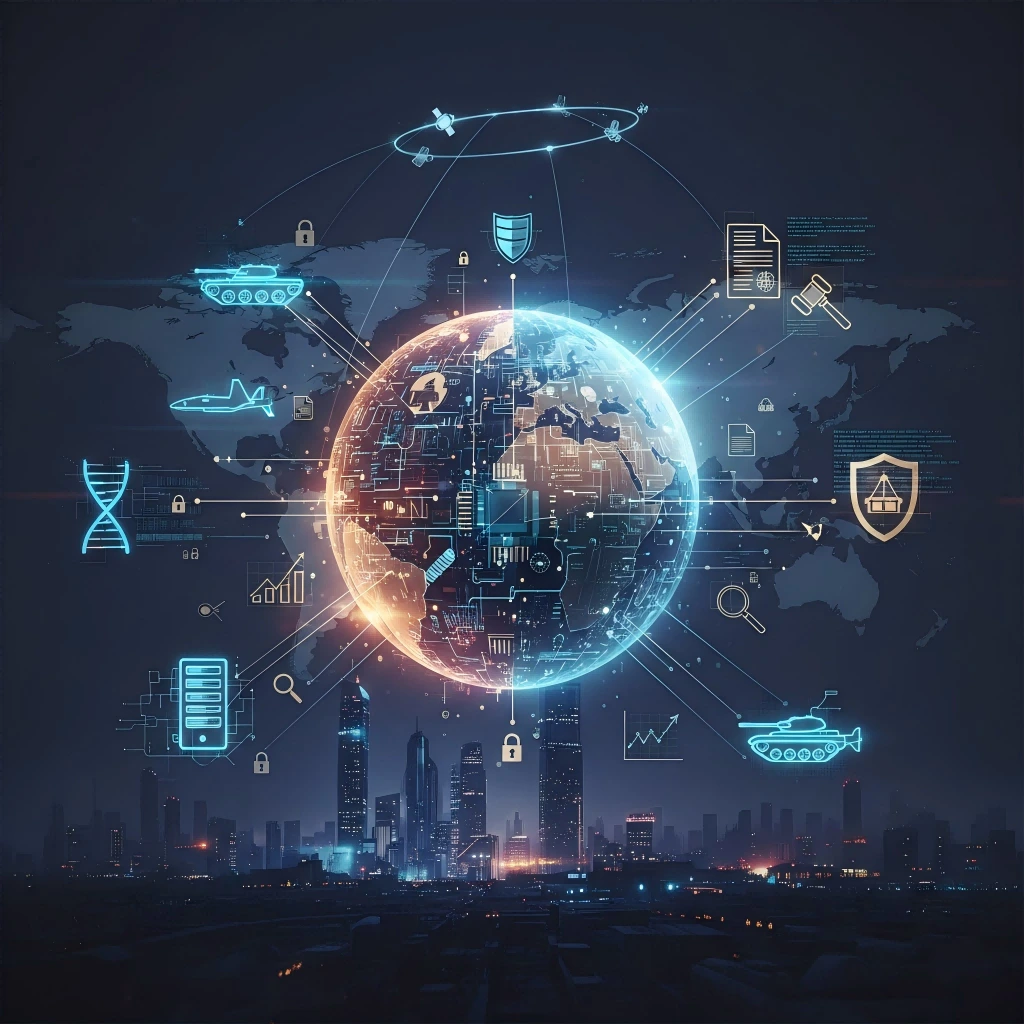
In the defense and national security sectors, cloud computing has evolved from a cost-saving tool into a strategic enabler for mission-critical operations. The adoption of secure cloud environments allows defense organizations to achieve scalability, rapid deployment, and resilient data processing while adhering to stringent classification and compliance requirements. Central to this evolution is the implementation of multi-tenant isolated architectures, which balance resource efficiency with uncompromising security isolation. These architectures ensure that sensitive data belonging to different tenants—such as military branches, allied agencies, or intelligence units—remains segregated even when sharing underlying infrastructure.
Knowlesys, a leader in open-source intelligence (OSINT) technologies, recognizes the critical intersection between secure cloud infrastructures and advanced intelligence workflows. The Knowlesys Open Source Intelligent System supports intelligence discovery, threat alerting, intelligence analysis, and collaborative intelligence features in environments where data sovereignty and isolation are non-negotiable. By integrating with secure cloud platforms, the system enables defense users to process vast OSINT streams without compromising operational security.
The Imperative for Multi-Tenant Isolation in Defense Clouds
Defense cloud strategies prioritize isolation to mitigate risks such as cross-tenant data leakage, side-channel attacks, and unauthorized access in shared environments. Unlike commercial clouds, defense applications demand compliance with frameworks like FedRAMP High, DoD Impact Level 5/6, and zero-trust principles. Multi-tenant architectures achieve this through layered isolation mechanisms: network segmentation, virtualization boundaries, encryption at rest and in transit, identity-based access controls, and hardware-rooted trust.
Key challenges include preventing tenant-to-tenant interference, ensuring resilience against compromised hypervisors, and maintaining auditability across shared resources. Patents in this domain reveal innovative approaches to address these issues, focusing on privilege separation, behavioral monitoring, and cryptographic enforcement.
Key Patent Innovations in Multi-Tenant Isolation
Patent landscapes highlight advancements from major cloud providers and security specialists that directly influence defense-grade implementations. A prominent example is US9411973B2, which describes a security gateway for secure isolation of tenant resources in multi-tenant storage systems. The invention introduces privilege separation by parsing requests, verifying tenant-specific authentication, and executing subtasks under dedicated identities with limited privileges. This prevents cross-tenant leakage by leveraging operating system mechanisms like access control lists (ACLs) and user IDs, ensuring end-to-end isolation even in hierarchical tenant structures.
Another significant contribution appears in patents addressing blended multi-tenant and single-tenant models for enhanced data separation (e.g., US20150381576A1). These hybrid approaches combine the economic benefits of shared infrastructure with dedicated security perimeters, using encryption, access policies, and runtime enforcement to protect sensitive workloads—ideal for defense scenarios involving classified and unclassified data coexistence.
Further innovations include network isolation techniques (e.g., US11178104B2), which deploy sandbox-based mechanisms to protect cloud assets. These systems create isolated execution environments that limit lateral movement, aligning with zero-trust architectures increasingly mandated in defense clouds. Additional patents emphasize secure processing (e.g., US8719590), where tenant-specific keys are obtained and used for cryptographic operations, ensuring data confidentiality during computation in shared environments.
Defense-Specific Applications and Architectures
Department of Defense initiatives underscore the practical deployment of these patented technologies. Efforts such as the Lincoln Laboratory Secure and Resilient Cloud (LLSRC) architecture incorporate hardware roots of trust (e.g., TPMs), high-assurance boot processes, and bidirectional visibility into infrastructure states. These elements enable tenants to verify platform integrity and maintain situational awareness, critical for hosting intelligence analysis workloads.
Multi-tenant object storage solutions, as deployed in DoD environments, leverage certifications like FIPS 140-3 and Common Criteria to support multiple mission partners on a single platform. Cross-region replication, tenant-aware encryption, and strict access controls ensure data protection while enabling collaborative intelligence workflows across distributed teams.
In practice, these architectures facilitate OSINT operations by allowing secure ingestion and analysis of global data sources. For instance, defense analysts can monitor foreign influence campaigns or threat indicators in isolated tenants, with intelligence outputs shared through controlled collaboration channels without risking exposure.
Comparative Analysis of Isolation Techniques
| Technique | Core Mechanism | Key Patent/Reference | Defense Relevance |
|---|---|---|---|
| Security Gateway & Privilege Separation | Request parsing, subtask execution under tenant IDs, ACL enforcement | US9411973B2 | Prevents cross-tenant access in shared storage for classified intelligence data |
| Hybrid Tenant Models | Blended dedicated/shared schemas with encryption and policy enforcement | US20150381576A1 | Supports mixed classification levels in DoD multi-cloud strategies |
| Sandbox-Based Network Isolation | Isolated execution environments with behavioral boundaries | US11178104B2 | Enables zero-trust resilience against advanced persistent threats |
| Hardware-Rooted Trust & High-Assurance Boot | TPM integration, cryptographic node identities | LLSRC Architecture (DoD Research) | Verifiable platform integrity for mission-critical OSINT processing |
| Tenant-Specific Cryptographic Processing | Dynamic key acquisition for secure computation | US8719590 | Protects data during analysis in shared defense cloud resources |
This table illustrates how patented innovations converge to form robust defense cloud frameworks, emphasizing layered defenses that align with DoD requirements.
Integration with Intelligence Platforms
Platforms like the Knowlesys Open Source Intelligent System exemplify how multi-tenant secure clouds enhance OSINT capabilities. By deploying in isolated cloud tenants, the system performs real-time intelligence discovery across global sources while maintaining strict data boundaries. Threat alerting and collaborative workflows operate within encrypted, access-controlled environments, ensuring that sensitive findings remain compartmentalized until authorized dissemination.
Such integration supports defense priorities: rapid threat detection, collaborative analysis among allied entities, and resilient operations under contested conditions. The patented isolation techniques provide the foundational security layer, allowing intelligence teams to focus on insight generation rather than infrastructure vulnerabilities.
Conclusion: Toward Next-Generation Defense Cloud Security
The patent landscape for multi-tenant isolated architectures reveals a maturing field where innovation directly addresses defense needs for security, scalability, and compliance. From security gateways and privilege separation to hardware-rooted trust models, these advancements enable secure cloud adoption without sacrificing mission assurance.
Knowlesys continues to advance OSINT in these environments, delivering intelligence discovery, alerting, analysis, and collaboration that leverage secure cloud foundations. As defense organizations expand multi-cloud strategies, ongoing patent-driven evolution in isolation technologies will remain essential to maintaining information superiority in an increasingly complex threat landscape.