Privacy Preserving Computation: Geopolitical Value of FHE and SMPC Patents
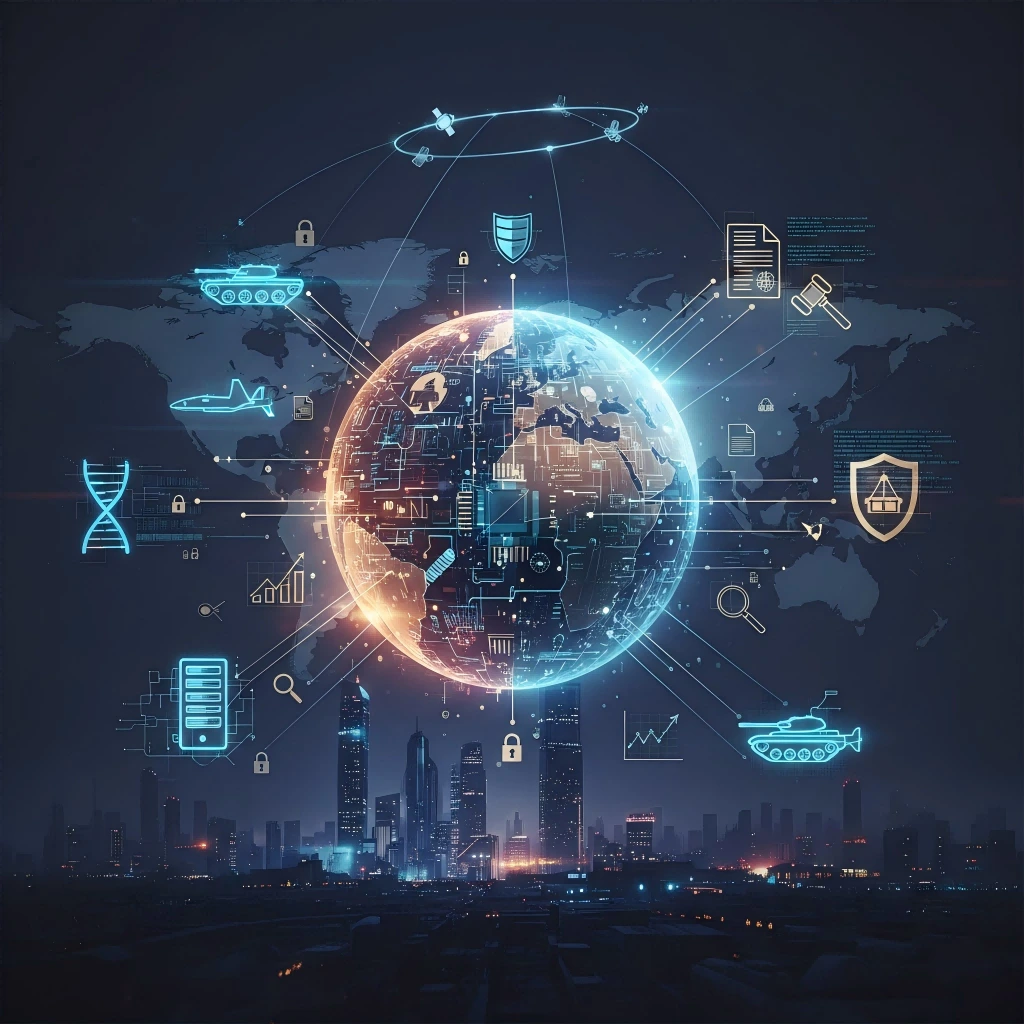
In an increasingly interconnected yet fragmented global landscape, the ability to derive intelligence from data without compromising its confidentiality has become a cornerstone of national security, economic competitiveness, and strategic autonomy. Privacy-preserving computation technologies—particularly Fully Homomorphic Encryption (FHE) and Secure Multi-Party Computation (SMPC)—enable computations on encrypted data or distributed private inputs while ensuring that sensitive information remains protected throughout the process. These advancements are not merely technical innovations; they represent critical assets in the geopolitical arena, where control over data flows, secure collaboration across borders, and resistance to adversarial intelligence gathering define power dynamics.
Knowlesys recognizes the profound implications of these technologies in open-source intelligence (OSINT) ecosystems. The Knowlesys Open Source Intelligent System integrates advanced analytical capabilities that align with the principles of privacy-preserving computation, enabling secure intelligence discovery, threat alerting, and collaborative workflows even in environments where data sovereignty and confidentiality are paramount. By facilitating intelligence analysis without unnecessary exposure of raw sources, such platforms contribute to maintaining operational security in high-stakes international scenarios.
The Strategic Imperative of Privacy-Preserving Technologies
FHE and SMPC address fundamental challenges in modern intelligence and cybersecurity: how to extract value from sensitive datasets—whether held by allied agencies, private sector partners, or adversarial networks—without risking exposure or breach. FHE allows arbitrary computations on fully encrypted data, producing results that decrypt only to authorized parties, while SMPC enables multiple distrusting entities to jointly compute functions over their private inputs, revealing only the final output.
Geopolitically, mastery of these technologies confers asymmetric advantages. Nations or coalitions that lead in patent portfolios and practical implementations can:
- Conduct secure cross-border intelligence sharing without compromising sources or methods.
- Enable privacy-preserving threat intelligence fusion among allies while mitigating risks of data exfiltration.
- Protect critical infrastructure analytics and supply chain monitoring from foreign surveillance.
- Maintain superiority in cyber operations where encrypted data processing thwarts reverse engineering or interception.
In the context of rising quantum threats and regulatory fragmentation (e.g., GDPR, national data localization laws), these capabilities shift from theoretical to existential for intelligence communities and defense entities.
Fully Homomorphic Encryption: From Theoretical Breakthrough to Geopolitical Asset
FHE, first conceptualized in 1978 and realized practically by Craig Gentry in 2009, has evolved through generations of schemes (e.g., GSW, CKKS for approximate arithmetic, TFHE for boolean circuits). Patents in this domain—held by pioneers like IBM, academic innovators, and emerging specialists—cover core bootstrapping techniques, noise management, modulus switching, and optimizations for SIMD operations.
The geopolitical value lies in quantum resilience and unilateral control. Lattice-based FHE schemes resist known quantum attacks, unlike traditional public-key systems vulnerable to Shor's algorithm. Leading patent filers in the United States and allied nations position themselves to dominate secure cloud computing, encrypted AI inference, and privacy-preserving analytics for defense applications. For intelligence workflows, FHE enables processing of intercepted encrypted communications or shared datasets without decryption keys ever leaving sovereign control.
Real-world implications include enhanced homeland security use cases, where agencies compute on encrypted citizen or allied data streams for pattern recognition in threat alerting, all while complying with strict privacy mandates. Knowlesys leverages aligned principles in its intelligence analysis modules, ensuring collaborative intelligence remains secure even when integrating multi-source OSINT feeds across jurisdictions.
Secure Multi-Party Computation: Enabling Trusted Collaboration in Distrustful Environments
SMPC, rooted in protocols like Yao's Garbled Circuits and GMW, has matured into practical tools for distributed computation. Patents focus on efficiency improvements, malicious security models, secret sharing optimizations, and integrations with blockchain or federated systems.
Geopolitically, SMPC excels in alliance-building scenarios: NATO partners computing joint risk assessments on shared threat indicators without exposing national intelligence; financial intelligence units across borders analyzing money laundering patterns; or cyber defense coalitions aggregating indicators of compromise. The technology reduces reliance on trusted intermediaries, mitigating insider risks and foreign influence in collaborative intelligence.
Leading innovators in SMPC patents emphasize scalability for large-scale computations, critical for real-time threat alerting in global OSINT monitoring. In high-tension environments, SMPC preserves operational secrecy by ensuring no single party accesses complete datasets, directly supporting intelligence collaboration workflows that Knowlesys facilitates through its platform's secure sharing and analysis features.
Patent Landscape and Competitive Dynamics
The FHE and SMPC patent arenas reveal clear geopolitical contours. U.S. entities dominate foundational FHE breakthroughs (e.g., IBM's optimizations, academic-government collaborations), while SMPC sees strong activity from global players focused on practical deployments in finance, healthcare, and security. China and Europe file aggressively in applied integrations, signaling intent to challenge Western leadership in privacy-preserving standards.
Key strategic patterns include:
| Technology | Core Patent Focus | Geopolitical Advantage |
|---|---|---|
| FHE | Bootstrapping, lattice-based schemes, approximate arithmetic | Quantum-safe unilateral encrypted computation; defense analytics dominance |
| SMPC | Garbled circuits, secret sharing, malicious security | Secure multi-nation intelligence fusion; reduced trust dependencies |
Control over these patents influences international standards (e.g., HomomorphicEncryption.org consortium), export controls, and technology transfer restrictions—tools wielded in great-power competition.
Integration into Modern Intelligence Ecosystems
For organizations like Knowlesys, these technologies enhance OSINT platforms by enabling privacy-first intelligence pipelines. The Knowlesys Open Source Intelligent System supports intelligence discovery across global sources while incorporating safeguards that align with privacy-preserving principles—ensuring threat alerting and analysis occur without undue exposure of sensitive collection methods or partner data.
In collaborative scenarios, SMPC-like workflows allow joint evaluation of OSINT-derived insights among agencies, while FHE-inspired protections secure delegated processing in untrusted environments. This convergence strengthens resilience against information warfare, where adversaries seek to exploit data leaks or disrupt allied coordination.
Conclusion: Toward Sovereign Data Advantage
The geopolitical value of FHE and SMPC patents extends far beyond commercial innovation—they underpin the next era of secure, sovereign intelligence operations. As quantum risks loom and data weaponization intensifies, nations investing in these technologies gain enduring strategic leverage. Knowlesys remains committed to advancing OSINT solutions that embed privacy-preserving principles, empowering users to navigate complex global threats with confidence in data security and analytical integrity.