The Role of OSINT in Decision Making During International Crises
In today's rapidly evolving geopolitical landscape, international crises—ranging from armed conflicts and humanitarian emergencies to disinformation campaigns and cyber threats—demand swift, accurate, and actionable intelligence. Open Source Intelligence (OSINT), derived exclusively from publicly and commercially available information, has emerged as a foundational pillar for decision-makers in governments, intelligence agencies, and humanitarian organizations. By providing real-time visibility into unfolding events, OSINT reduces uncertainty, enables proactive responses, and enhances the credibility of strategic decisions.
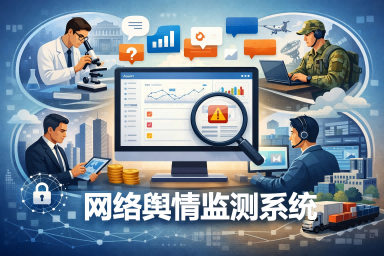
Knowlesys, a leader in advanced OSINT technologies, empowers institutions with the Knowlesys Open Source Intelligent System, a comprehensive platform that facilitates intelligence discovery, threat alerting, in-depth analysis, and collaborative workflows. This system supports high-stakes environments by processing vast volumes of data from global social media, websites, and multimedia sources, delivering timely insights that inform critical decisions during crises.
The Strategic Importance of OSINT in Crisis Environments
International crises are characterized by information overload, disinformation, and time sensitivity. Traditional classified intelligence sources, while valuable, often face delays in collection and dissemination. OSINT addresses these limitations by offering immediate access to verifiable public data, including social media posts, satellite imagery, news reports, and user-generated content.
During major conflicts, OSINT has proven instrumental in verifying troop movements, assessing military capabilities, and countering false narratives. For instance, in the ongoing Russia-Ukraine conflict, publicly available sources enabled analysts to track military build-ups, document potential war crimes, and map civilian impacts in near real-time—often providing insights faster than classified channels. This transparency not only supports operational planning but also shapes international public opinion and diplomatic responses.
Humanitarian crises, such as natural disasters or mass displacement, similarly benefit from OSINT's ability to monitor population movements, evaluate infrastructure damage, and identify emerging risks. OSINT tools enable authorities to prioritize aid allocation, establish safe corridors, and provide early warnings, ultimately saving lives and optimizing resource deployment.
Real-Time Intelligence Discovery and Threat Alerting
The speed of modern crises requires intelligence that is both rapid and reliable. OSINT platforms excel in this domain by continuously scanning global sources for relevant signals. Knowlesys Open Source Intelligent System exemplifies this capability through its intelligence discovery engine, which captures text, images, and videos across major social media platforms and websites, processing billions of data points daily to detect sensitive or high-value information.
Threat alerting mechanisms further accelerate decision-making. The system employs AI-driven models to identify anomalies, such as sudden spikes in negative sentiment or coordinated disinformation, triggering alerts within minutes. This early warning capacity allows decision-makers to intervene before situations escalate, whether mitigating cyber threats to critical infrastructure or responding to emerging security risks in conflict zones.
In practice, OSINT has supported indications and warnings (I&W) in various scenarios, from predicting escalations in regional tensions to detecting coordinated influence operations that could undermine stability.
Intelligence Analysis: From Data to Actionable Insight
Raw information alone is insufficient; effective crisis management requires sophisticated analysis. OSINT platforms like the Knowlesys system provide multi-dimensional tools for dissecting events, including propagation path tracing, key opinion leader evaluation, geographic heatmaps, and behavioral clustering.
These capabilities enable analysts to uncover hidden networks, assess the credibility of sources, and reconstruct event timelines. For example, in armed conflicts, OSINT analysis has facilitated the identification of coordinated accounts spreading misinformation, the verification of visual evidence through metadata and geolocation, and the evaluation of impact on civilian populations.
Collaborative intelligence workflows enhance this process by allowing teams to share insights, assign tasks, and build comprehensive assessments. The result is a unified intelligence picture that supports high-confidence decisions, from resource allocation in humanitarian operations to diplomatic engagements in geopolitical standoffs.
Case Studies: OSINT in Action During Major International Crises
The Russia-Ukraine conflict stands as a landmark example of OSINT's transformative role. Publicly available satellite imagery and social media footage allowed independent verification of military deployments, equipment losses, and potential violations of international law. OSINT communities documented incidents such as civilian casualties and infrastructure damage, contributing to accountability efforts and informing global responses.
In humanitarian contexts, OSINT has aided disaster response by mapping affected areas and tracking aid needs. During large-scale displacement events, real-time monitoring of social platforms has helped organizations anticipate population flows and security challenges, enabling more effective coordination with local authorities.
These cases illustrate how OSINT bridges the gap between information abundance and decision quality, providing decision-makers with evidence-based options amid uncertainty.
Challenges and the Path Forward
While OSINT offers immense advantages, it also presents challenges, including disinformation risks, ethical considerations around privacy, and the need for rigorous verification. Platforms must incorporate advanced filtering, anomaly detection, and human-in-the-loop validation to maintain reliability.
Knowlesys addresses these through robust accuracy measures, including high-precision data extraction and AI-assisted sensitive content identification, ensuring outputs meet the standards required for government and law enforcement applications. Ongoing innovation, including integration of emerging AI technologies, will further strengthen OSINT's role in crisis decision-making.
Conclusion
As international crises grow more complex and interconnected, OSINT has solidified its position as the intelligence discipline of first resort. By delivering timely, transparent, and verifiable insights, it empowers leaders to make informed decisions that mitigate risks, protect populations, and preserve stability.
With platforms like the Knowlesys Open Source Intelligent System, organizations gain a powerful ally in navigating these challenges—transforming the vast open source environment into strategic advantage for intelligence discovery, alerting, analysis, and collaborative action in the face of global uncertainty.