How OSINT Helps Analysts Identify Strategic Trends
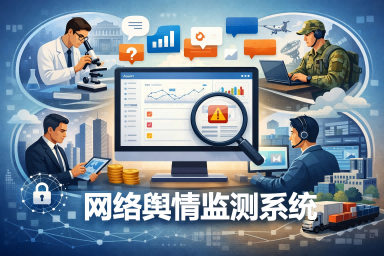
In today's rapidly evolving digital landscape, where vast amounts of information flow constantly across global networks, Open Source Intelligence (OSINT) has become an indispensable tool for intelligence analysts. By systematically collecting and analyzing publicly available data from sources such as social media, news outlets, forums, and websites, OSINT enables professionals to detect emerging patterns, anticipate shifts in behavior, and uncover hidden strategic developments. Platforms like the Knowlesys Open Source Intelligent System empower analysts with advanced capabilities in intelligence discovery, alerting, analysis, and collaborative workflows, transforming raw data into actionable strategic insights.
The Strategic Value of OSINT in Trend Identification
Strategic trends often emerge subtly before manifesting as major events or threats. OSINT provides early visibility into these developments by monitoring real-time conversations, sentiment shifts, and behavioral anomalies across diverse sources. Unlike classified intelligence, OSINT draws from open channels, allowing continuous, non-intrusive observation of public discourse, geopolitical movements, and technological advancements.
For instance, analysts can track rising discussions around specific hashtags, keywords, or topics to identify emerging hotspots. This approach reveals patterns in public sentiment, coordinated activities, or shifts in narrative focus—critical indicators of broader strategic changes. In national security contexts, OSINT helps detect early signs of influence operations, misinformation campaigns, or evolving threat actor tactics.
The Knowlesys Open Source Intelligent System excels in this domain through its comprehensive intelligence discovery module, which scans billions of data points daily across major social platforms and websites. By supporting multilingual content and multi-media formats (text, images, videos), it ensures no critical signal is missed, enabling analysts to spot trends in global public opinion and potential risks before they escalate.
Core Techniques for Uncovering Strategic Trends with OSINT
Effective trend identification relies on structured methodologies that combine data collection, advanced analysis, and visualization. Key techniques include:
Real-Time Monitoring and Hotspot Detection
Continuous scanning of social media, forums, and news sites allows analysts to automatically discover trending topics based on mention volume, velocity, and engagement metrics. AI-driven algorithms prioritize high-relevance content, flagging sudden spikes that may signal emerging strategic developments.
The Knowlesys system's hotspot analysis feature automatically surfaces current network trends, providing minute-level updates and customizable monitoring dimensions such as target accounts, geographic regions, or key opinion leaders (KOLs).
Sentiment Analysis and Narrative Tracking
By evaluating emotional tone (positive, negative, neutral) across large datasets, OSINT reveals shifts in public perception toward policies, events, or entities. Tracking sentiment trajectories over time helps predict escalation or de-escalation of issues.
Knowlesys integrates precise sentiment analysis with propagation path tracing, allowing analysts to map how narratives spread and identify influential nodes driving trend momentum.
Here are examples of advanced data visualization dashboards commonly used in OSINT trend analysis:These visualizations highlight global trends, temporal patterns, and key metrics, making complex data more accessible for strategic decision-making.
Network and Behavioral Pattern Analysis
Graph-based analysis uncovers connections between accounts, topics, and entities, revealing coordinated behaviors or collaborative networks indicative of orchestrated campaigns.
Knowlesys employs behavioral clustering, fake account detection, and KOL influence assessment to distinguish organic trends from manipulated ones, enhancing the reliability of strategic assessments.
Examples of knowledge graph visualizations in intelligence analysis:Such graphs illustrate relationships and propagation structures, aiding in the identification of underlying strategic drivers.
Intelligence Alerting: Turning Trends into Actionable Warnings
Early detection is paramount in strategic intelligence. OSINT platforms deliver minute-level alerts for threshold breaches, such as rapid increases in negative mentions or anomalous activity clusters. This enables proactive responses to emerging threats or opportunities.
Knowlesys Open Source Intelligent System offers intelligence alerting with customizable thresholds and multi-channel notifications (system, email, client), ensuring critical trends reach decision-makers instantly. Its AI-powered sensitive content recognition achieves high accuracy, minimizing false positives while maximizing timeliness.
Collaborative Workflows and Reporting for Strategic Depth
Trend identification is rarely a solitary task. Collaborative features allow teams to share insights, assign investigations, and build comprehensive intelligence products. Automated report generation consolidates findings into formats like HTML, Word, Excel, or PPT, complete with visualizations for executive briefings.
Knowlesys supports full-cycle intelligence management, from discovery to reporting, with 20 years of accumulated expertise and robust data security. This facilitates seamless team collaboration and consistent strategic outputs.
Conclusion: OSINT as a Cornerstone of Modern Strategic Intelligence
OSINT empowers analysts to navigate the information overload of the digital age, transforming public data into foresight for strategic advantage. By leveraging advanced discovery, analysis, alerting, and collaboration, systems like the Knowlesys Open Source Intelligent System provide the depth and speed required to identify and respond to evolving trends.
As threats and opportunities continue to emerge from open sources, organizations equipped with mature OSINT capabilities gain a decisive edge in anticipating change, mitigating risks, and informing high-stakes decisions.