The Role of Intelligence Prioritization in Conflict Assessment
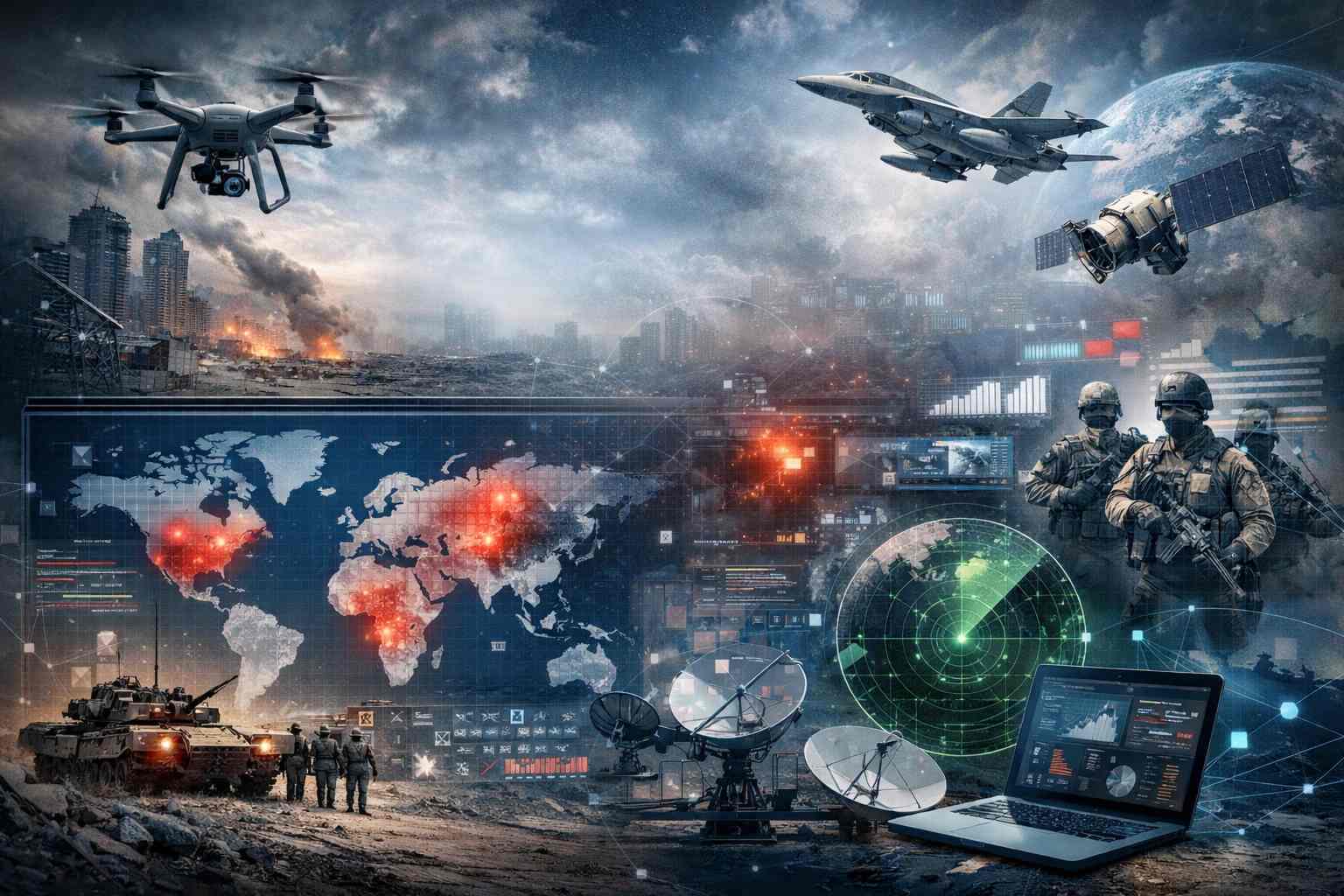
In today's rapidly evolving geopolitical landscape, conflict assessment demands more than vast data collection—it requires precise, timely, and focused intelligence to inform strategic decisions. With the exponential growth of open-source information from social media, news outlets, satellite imagery, and public forums, intelligence teams face information overload. Effective prioritization of intelligence becomes the decisive factor that separates actionable insight from noise, enabling faster threat detection, resource optimization, and risk mitigation in crisis and conflict environments.
Knowlesys addresses this challenge through the Knowlesys Open Source Intelligent System, an advanced OSINT platform engineered for high-stakes intelligence operations. By integrating intelligence discovery, alerting, analysis, and collaborative workflows, the system empowers defense, security, and government organizations to systematically prioritize high-value intelligence signals amid global data streams.
Why Intelligence Prioritization Is Essential in Modern Conflict Assessment
Conflict zones generate enormous volumes of data daily—from real-time social media updates and eyewitness accounts to geospatial observations and propaganda dissemination. Without structured prioritization, analysts risk missing critical indicators of escalation, such as synchronized behavioral patterns, sudden narrative shifts, or anomalous activity clusters that signal coordinated preparations.
Prioritization frameworks enable teams to align intelligence efforts with command priorities, often expressed through Priority Intelligence Requirements (PIRs) or Commander's Critical Information Requirements (CCIRs). These requirements focus collection and analysis on enemy intent, capabilities, location, and operational patterns—elements directly tied to decision-making in kinetic and non-kinetic environments.
In practice, effective prioritization reduces uncertainty, optimizes limited analytical resources, and accelerates the intelligence cycle from discovery to dissemination. Organizations that master this discipline gain information advantage, allowing proactive responses rather than reactive measures in fluid conflict situations.
Core Components of Intelligence Prioritization Frameworks
Modern prioritization relies on multi-layered evaluation criteria that assess relevance, urgency, reliability, and impact. Key dimensions include:
- Relevance to Mission Objectives: Intelligence is ranked based on its alignment with defined PIRs, such as indicators of adversary mobilization, territorial claims, or ethnic tension escalation.
- Timeliness and Velocity: Signals exhibiting rapid change—such as burst activity from coordinated accounts or sudden spikes in threat-related discourse—are assigned higher priority to enable minute-level response windows.
- Confidence and Verifiability: Sources are evaluated for authenticity, cross-correlation potential, and historical accuracy to avoid disinformation traps common in contested information spaces.
- Potential Impact: Indicators linked to violence, humanitarian crises, or strategic shifts receive elevated attention due to their capacity to influence operational outcomes.
These criteria form the foundation of scoring models that help filter millions of daily data points into focused, high-confidence intelligence products.
Knowlesys Open Source Intelligent System: Prioritization in Action
The Knowlesys Open Source Intelligent System embeds intelligence prioritization at every stage of the OSINT lifecycle, transforming raw data into decision-ready insight for conflict assessment.
Intelligence Discovery: Targeted yet Comprehensive Coverage
The system supports both full-domain scanning and highly directed monitoring, allowing teams to track thousands of key accounts, opinion leaders, and topic clusters simultaneously. By defining custom parameters—geographic regions, keywords, behavioral thresholds, and media types—analysts ensure early detection of emerging risks without drowning in irrelevant content.
Intelligence Alerting: Minute-Level Risk Flagging
AI-powered models automatically identify and prioritize time-sensitive signals, delivering alerts in as little as minutes when high-risk patterns emerge. Customizable thresholds for propagation velocity, sentiment intensity, and coordination indices ensure that only the most operationally significant events reach decision-makers promptly, preserving critical response time in conflict scenarios.
Intelligence Analysis: Multi-Dimensional Scoring and Contextualization
Knowlesys applies advanced behavioral resonance models to quantify coordination strength across accounts, calculate collaborative activity indices, and map propagation pathways. Combined with entity profiling, sentiment tracking, geospatial visualization, and multimedia tracing, these capabilities enable analysts to rapidly score and rank intelligence according to its strategic relevance and threat level.
Visual tools such as knowledge graphs, heat maps, and trend curves further accelerate prioritization by revealing hidden connections and temporal anomalies that might indicate escalation risks.
Collaborative Intelligence Workflows: Team-Based Refinement
Prioritization is not a solitary task. The system supports seamless sharing, task assignment, and consensus-building among analysts, allowing distributed teams to refine rankings, validate findings, and escalate high-priority items efficiently. This collaborative layer ensures collective expertise shapes final intelligence assessments.
Real-World Application in Conflict Environments
In active conflict zones, prioritization frameworks have proven essential for early warning and response. For instance, detecting synchronized narrative promotion across platforms can signal orchestrated mobilization efforts well before physical escalation occurs. Similarly, identifying timezone masking or behavioral anomalies helps uncover deceptive operations designed to simulate local activity.
Knowlesys users in security and defense sectors have leveraged these capabilities to monitor emerging flashpoints, trace disinformation campaigns, and support situational awareness during crises—delivering evidence-based assessments that guide policy, operational planning, and risk mitigation.
Conclusion: Prioritization as a Strategic Differentiator
In an age where open-source data represents both opportunity and overload, intelligence prioritization stands as the cornerstone of effective conflict assessment. By systematically focusing attention on high-impact signals, organizations can achieve superior situational understanding, faster decision cycles, and greater resilience against evolving threats.
Knowlesys Open Source Intelligent System provides the technical foundation and operational flexibility required to implement robust prioritization at scale. Through AI-driven filtering, behavioral modeling, real-time alerting, and collaborative analysis, it empowers intelligence professionals to navigate complexity with clarity—ensuring that critical insights reach decision-makers when they matter most.