Open Source Intelligence Methods for Geopolitical Conflict Early Warning
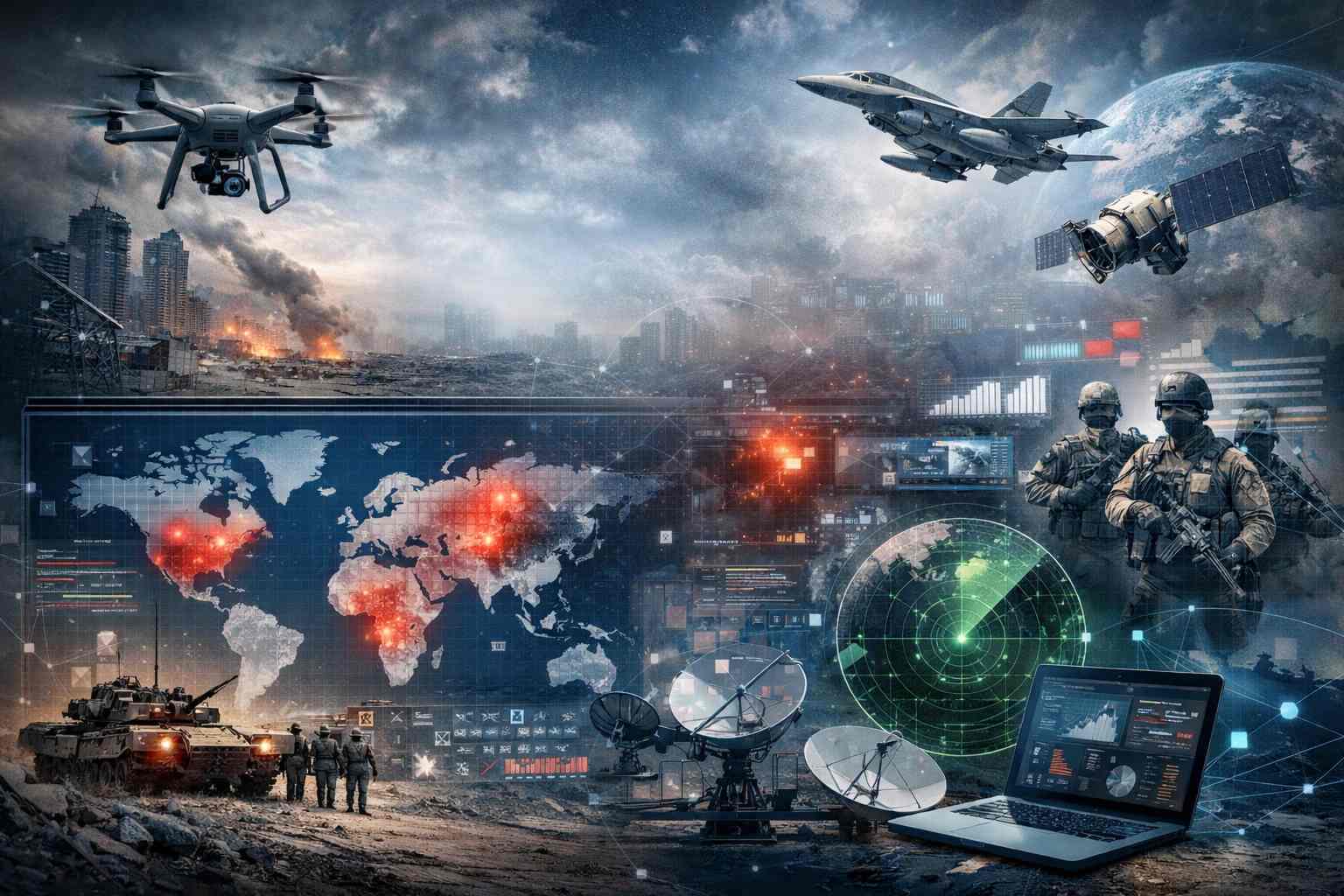
In an increasingly interconnected and volatile world, the ability to anticipate geopolitical conflicts before they escalate into crises represents a strategic imperative for governments, intelligence agencies, and multinational organizations. Open Source Intelligence (OSINT) has emerged as a cornerstone capability in this domain, leveraging publicly available data to detect subtle precursors of instability, aggression, or escalation. Platforms such as the Knowlesys Open Source Intelligent System exemplify how advanced OSINT technologies integrate comprehensive data acquisition, AI-driven analysis, and collaborative workflows to deliver timely, actionable insights that support proactive decision-making and risk mitigation.
The Strategic Imperative of Early Warning in Geopolitical Contexts
Geopolitical conflicts rarely erupt without warning signs. Historical precedents, including the lead-up to major military actions, demonstrate that indicators such as narrative shifts, troop movement logistics, disinformation campaigns, and synchronized online activity often manifest in open channels weeks or months in advance. Traditional classified intelligence sources provide depth but can suffer from latency or access limitations, whereas OSINT offers breadth, immediacy, and cost-effectiveness by drawing from social media, news aggregators, forums, geospatial data, and multimedia content.
Effective early warning hinges on identifying patterns that deviate from baseline norms—spikes in hostile rhetoric, unusual propagation of specific narratives across platforms, or behavioral anomalies in account clusters. These signals, when correlated and analyzed rigorously, enable analysts to forecast potential flashpoints, assess escalation risks, and inform diplomatic, military, or security responses.
Core OSINT Methods for Detecting Conflict Precursors
Modern OSINT methodologies for geopolitical early warning encompass several interconnected techniques, each addressing different layers of the information ecosystem.
1. Narrative and Sentiment Monitoring
Shifts in public discourse often precede kinetic events. OSINT practitioners monitor surges in adversarial propaganda, disinformation narratives, or polarized sentiment using semantic analysis and trend detection. Tools scan multilingual content across global platforms to identify coordinated messaging that aligns with state or non-state actor objectives. For instance, early detection of amplified anti-adversary themes can signal preparatory justification for aggression.
The Knowlesys Open Source Intelligent System excels in this area through its intelligence discovery module, which captures text, images, and videos in real time across major social networks and websites. Its AI-powered thematic parsing and sentiment classification automatically flag emerging hotspots, enabling analysts to track narrative evolution and amplification before they reach critical mass.
2. Behavioral and Account Network Analysis
Coordinated activity among accounts—particularly those exhibiting synchronized posting, templated content, or cross-platform migration—frequently indicates orchestrated influence operations. OSINT methods involve profiling authors, detecting fake or task-oriented accounts via registration patterns, interaction graphs, and behavioral clustering.
Advanced platforms like Knowlesys apply multi-dimensional analysis, including fake account recognition based on behavioral features and association chains. This capability isolates anomalous clusters that may be testing narratives or building support for escalation, providing critical lead time for countermeasures.
3. Propagation and Spread Tracking
Understanding how information travels reveals key influencers and diffusion nodes. OSINT traces event propagation paths, identifies first-origin sources, and maps geographic distribution through heatmaps and network graphs. Rapid spread of conflict-related content, especially when originating from specific regional clusters, serves as a strong escalation indicator.
Knowlesys supports propagation analysis by reconstructing spread pathways and highlighting critical nodes such as high-influence KOLs or coordinated accounts, visualized through intuitive graphs that accelerate investigative workflows.
4. Multimedia and Geospatial Intelligence Integration
Conflicts increasingly involve visual evidence. OSINT incorporates multimedia forensics, including source verification for images and videos, face recognition for subject identification, and geospatial correlation with satellite-derived or location-tagged data. Unusual logistical patterns visible in open imagery or shipping records can precede military movements.
The Knowlesys platform's multimedia analysis features enable precise tracing of content origins and integration of GEOINT inferences, supporting comprehensive risk assessment in contested regions.
Real-World Applications and Predictive Power
OSINT's value in geopolitical early warning has been demonstrated across multiple scenarios. Prior to large-scale events, analysts have observed logistical anomalies, narrative build-ups, and synchronized online activity that aligned with subsequent developments. In counter-influence contexts, monitoring disinformation networks has allowed interventions that disrupted preparatory phases.
Platforms such as the Knowlesys Open Source Intelligent System operationalize these methods through end-to-end workflows: intelligence discovery scans billions of daily items with minute-level alerting; intelligence analysis applies nine dimensions of evaluation, from sentiment to propagation tracing; and collaborative features enable team-based validation and reporting. This closed-loop approach reduces detection time from days to minutes, transforming raw data into evidence-based foresight.
Challenges and Best Practices in OSINT-Driven Early Warning
Despite its strengths, OSINT faces challenges including information overload, disinformation noise, and attribution complexity. Best practices emphasize multi-source verification, anomaly detection over keyword reliance, and human-machine collaboration to refine algorithmic outputs.
Knowlesys addresses these through robust AI models tuned for intelligence contexts, high-accuracy data extraction, and human-in-the-loop verification, ensuring reliability in high-stakes environments. Stability features, including 24/7 operation and cluster architecture, maintain performance during sustained monitoring of volatile situations.
Conclusion: Building Resilience Through Proactive Intelligence
As geopolitical tensions evolve amid rapid technological change, OSINT remains indispensable for early warning of conflicts. By systematically capturing and analyzing open-source signals, organizations can move from reactive posture to anticipatory strategy, safeguarding interests and promoting stability. The Knowlesys Open Source Intelligent System represents a mature embodiment of these principles, delivering full-cycle intelligence capabilities that empower analysts to detect threats early, understand dynamics deeply, and respond collaboratively—ultimately contributing to more informed and timely decisions in an uncertain global landscape.