Cyclical Security Situation Analysis in Conflict Regions
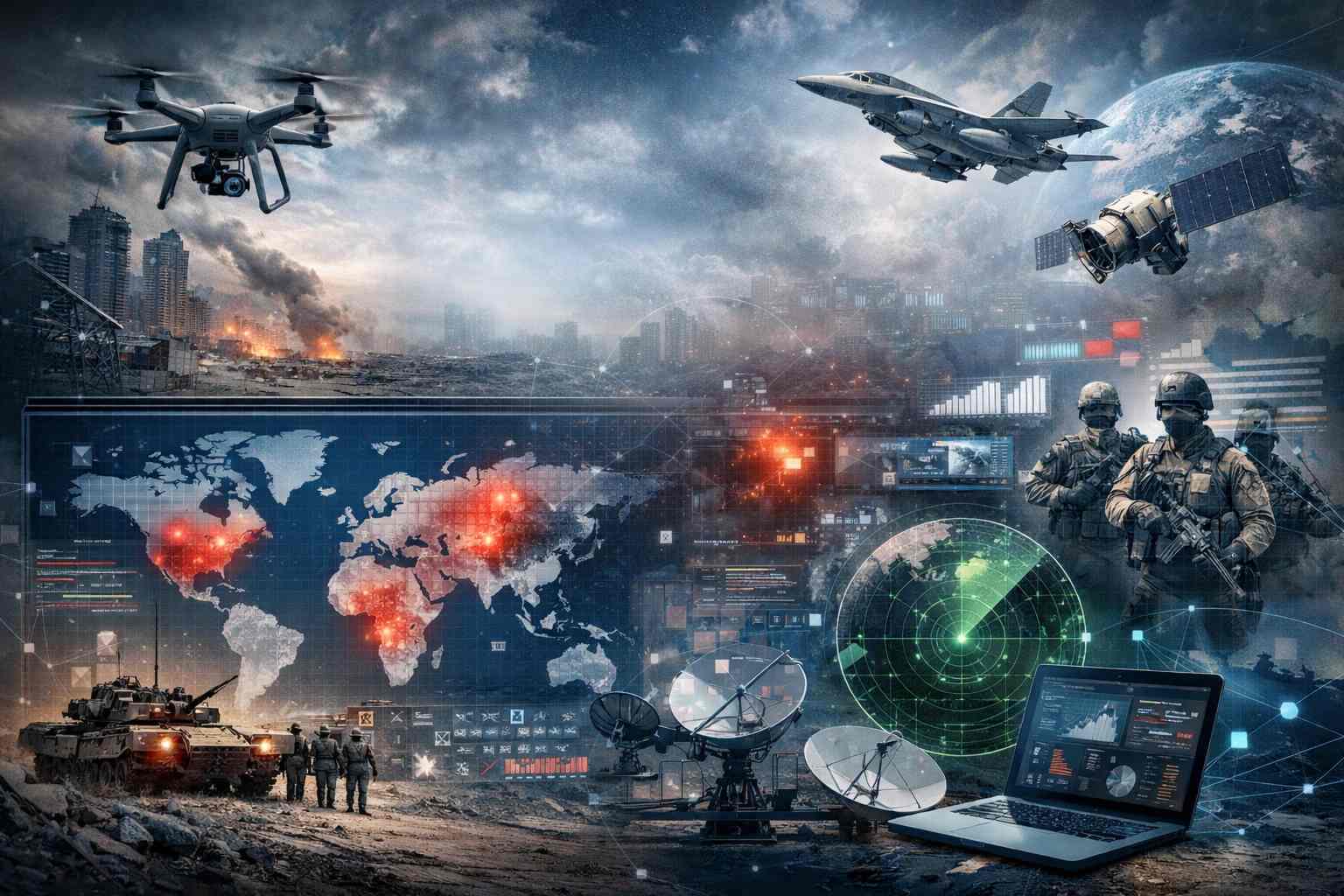
In volatile conflict zones around the world, security situations rarely follow linear progressions. Instead, they exhibit recurring cycles of escalation, de-escalation, relative stability, and renewed tension. These cyclical patterns—driven by seasonal factors, political rhythms, resource availability, and behavioral dynamics—pose significant challenges for intelligence analysts, security operators, and decision-makers. Understanding and anticipating these cycles is essential for proactive threat mitigation, resource allocation, and strategic planning. The Knowlesys Open Source Intelligent System provides advanced OSINT capabilities to detect, map, and analyze these recurring patterns, transforming fragmented open-source data into actionable intelligence for long-term situational awareness in high-risk environments.
The Nature of Cyclical Dynamics in Conflict Regions
Conflict regions often display predictable rhythms rather than constant chaos. Historical and contemporary examples reveal that violence and instability can surge during specific periods—such as harvest seasons in agrarian societies, religious or cultural holidays, election cycles, or weather-dependent mobility windows—before subsiding into temporary lulls. These fluctuations stem from interconnected drivers: environmental conditions influencing mobility and logistics, economic pressures tied to seasonal livelihoods, political opportunism around anniversaries or events, and tactical adaptations by armed actors.
In sub-Saharan Africa, for instance, cyclical violence has been documented in regions where inter-communal clashes align with seasonal grazing routes or agricultural cycles, leading to periodic spikes in incidents followed by phases of reduced activity. Similarly, in parts of the Middle East and South Asia, patterns emerge around major religious observances or political milestones, where tensions build, erupt, and then recede under temporary ceasefires or resource constraints. Recognizing these rhythms shifts analysis from reactive incident tracking to predictive modeling of future hotspots.
Challenges in Monitoring Cyclical Security Patterns
Traditional intelligence approaches often struggle with cyclical analysis due to fragmented data sources, time lags in reporting, and the overwhelming volume of open information. In conflict settings, classified channels may miss subtle shifts in public sentiment or grassroots mobilization that signal impending escalation. Meanwhile, manual monitoring fails to capture long-term trends across vast geographic and temporal scales.
Key challenges include:
- Identifying recurring triggers amid noise from one-off events
- Correlating multi-source data (social media, news, geospatial proxies) over extended periods
- Distinguishing genuine cyclical patterns from random fluctuations
- Tracking actor behavior across cycles to reveal adaptive strategies
Effective cyclical analysis requires continuous, multi-dimensional monitoring that integrates real-time discovery with historical trend reconstruction.
OSINT Capabilities for Cyclical Pattern Detection
Open Source Intelligence (OSINT) excels in this domain by leveraging publicly available data streams to build comprehensive temporal and spatial profiles of security situations. Advanced platforms aggregate billions of data points from global social media, forums, news outlets, and multimedia sources, enabling analysts to observe emerging cycles as they form.
Knowlesys Open Source Intelligent System supports cyclical security analysis through its core modules:
Intelligence Discovery for Continuous Coverage
The system conducts full-spectrum monitoring across major platforms, capturing text, images, and videos in over 20 languages. Customizable parameters allow focused tracking of conflict indicators—such as keywords related to mobilization, geographic tags in contested areas, or accounts linked to key actors—while maintaining broad surveillance to detect unexpected shifts.
Intelligence Alerting for Early Cycle Indicators
AI-driven detection identifies minute-level anomalies that signal the onset of escalation phases. By setting thresholds on sentiment trends, mention volumes, or propagation speeds, the system delivers timely alerts when activity deviates from baseline cyclical norms, providing crucial lead time before violence peaks.
Intelligence Analysis for Pattern Recognition
Nine analytical dimensions enable deep cyclical insight:
- Trend tracking to visualize seasonal or periodic spikes in activity
- Geographic heatmaps revealing recurring hotspots
- Propagation path reconstruction to map how tensions spread in each cycle
- Behavioral clustering to identify coordinated actors repeating patterns
- Sentiment and topic analysis to correlate narrative shifts with violence phases
These tools support the creation of time-series models and knowledge graphs that highlight cyclical structures, such as escalation triggers followed by de-escalation plateaus.
Collaborative Workflows and Reporting for Sustained Analysis
Cyclical analysis demands ongoing collaboration among teams. The Knowlesys platform facilitates intelligence sharing through task assignment, real-time notifications, and shared datasets, ensuring collective refinement of cycle models over time. One-click report generation produces customizable documents—daily summaries for tactical updates or quarterly trend analyses for strategic reviews—complete with visualizations like trend curves, heatmaps, and propagation graphs.
This closed-loop approach—from discovery to reporting—supports iterative improvement of predictive models, adapting to evolving conflict dynamics.
Strategic Value in High-Risk Environments
By illuminating cyclical patterns, organizations gain strategic advantages:
- Anticipating escalation windows to preposition resources or engage preventive diplomacy
- Optimizing patrol and monitoring schedules around predictable lulls and surges
- Identifying manipulation tactics that exploit cycles, such as disinformation timed to inflame tensions
- Supporting long-term policy formulation with evidence-based trend projections
In regions with protracted instability, this capability moves operations from crisis response to cycle management, reducing surprise and enhancing resilience.
Conclusion: Transforming Cycles into Predictable Intelligence
Cyclical security situations in conflict regions represent both a challenge and an opportunity. While patterns of recurring tension can perpetuate instability, they also offer predictability when properly analyzed. Knowlesys Open Source Intelligent System empowers intelligence professionals to harness OSINT for comprehensive cycle detection, early warning, and in-depth analysis—delivering the foresight needed to navigate complex, dynamic environments. As conflicts continue to evolve, mastering these rhythms through advanced intelligence tools remains essential for effective security management and risk reduction.