Why Intelligence Analysts Need Automated News Monitoring Platforms
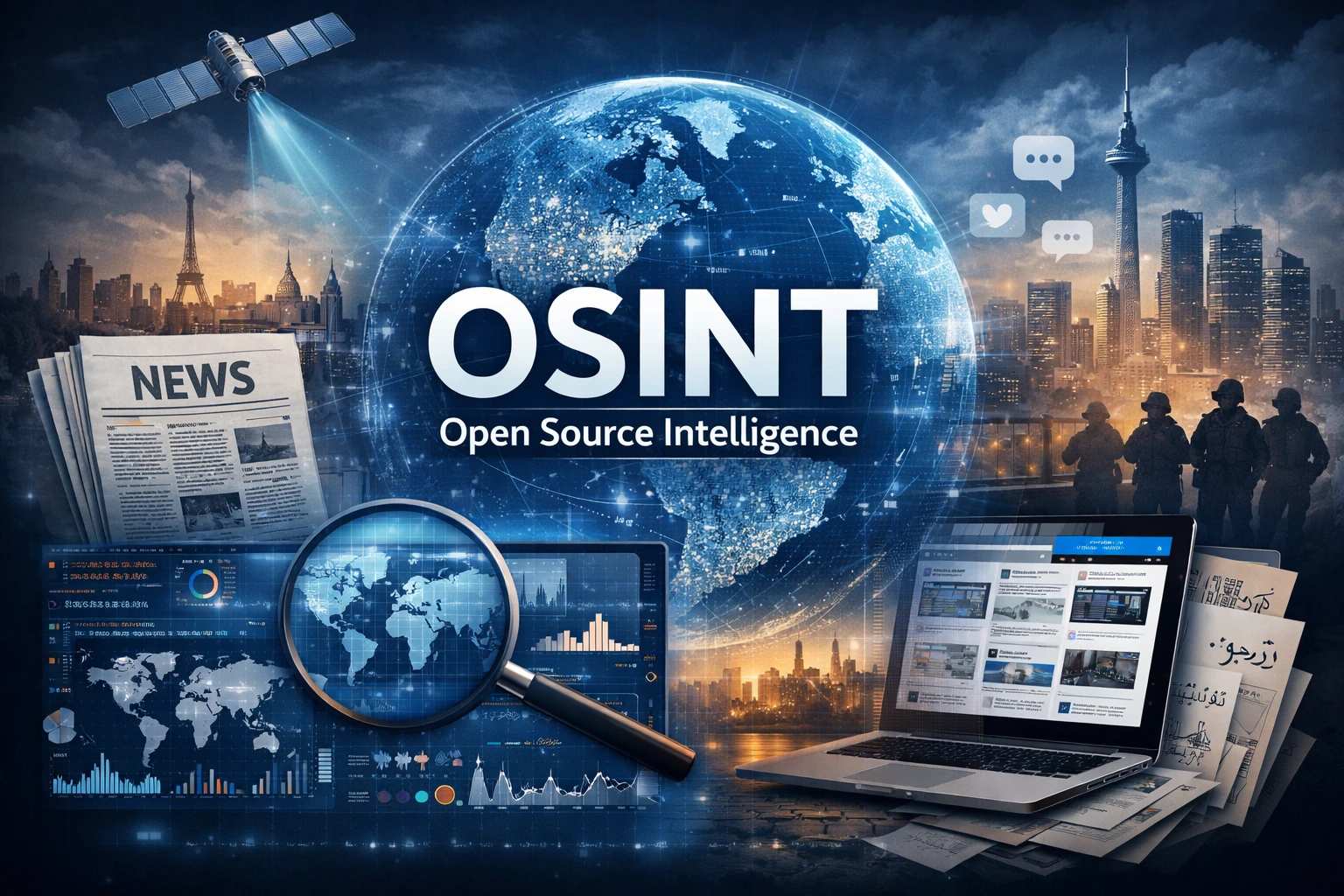
In the rapidly evolving landscape of global security and intelligence operations, the volume of publicly available information has exploded exponentially. News sources, social media feeds, forums, blogs, and multimedia content generate billions of data points daily, creating both unprecedented opportunities and overwhelming challenges for intelligence analysts. Manual monitoring of these sources is no longer feasible, as it leads to delays, missed signals, and analyst fatigue. Automated news monitoring platforms have become essential tools in modern OSINT workflows, enabling analysts to maintain situational awareness, detect emerging threats early, and produce timely, actionable intelligence.
The Overwhelming Scale of Open-Source Data
Contemporary open-source intelligence relies heavily on continuous monitoring of news and media ecosystems. With over 400 terabytes of data created online daily, traditional manual approaches—scanning headlines, reading articles, and cross-referencing sources—cannot keep pace. Analysts face the constant risk of information overload, where critical indicators of threats, such as early signs of geopolitical tensions, coordinated disinformation campaigns, or emerging security vulnerabilities, become buried in noise.
Automated platforms address this by ingesting data from diverse sources at scale, including global news outlets, social platforms, and web forums. They employ advanced crawling and acquisition engines to capture content in real time, ensuring comprehensive coverage without human limitations. This capability is particularly vital in high-stakes environments where seconds or minutes can determine the difference between proactive response and reactive damage control.
Real-Time Threat Detection and Early Warning
One of the primary reasons intelligence analysts require automated systems is the need for rapid identification of risks. Emerging threats often manifest first in open sources—through subtle shifts in narrative, unusual activity spikes, or localized reports that later escalate. Manual monitoring struggles with timeliness, often resulting in delayed alerts that reduce response windows.
Platforms like the Knowlesys Open Source Intelligent System exemplify this advancement by delivering intelligence discovery and alerting in near real-time. The system captures multi-modal content—text, images, and videos—from major global platforms and processes it through AI-driven models to flag sensitive OSINT. With discovery speeds reaching as fast as 10 seconds for high-priority items and alerting within minutes, analysts gain a decisive edge in threat anticipation. This supports proactive measures in areas such as homeland security, counterterrorism, and misinformation mitigation.
Enhanced Accuracy and Reduced Cognitive Burden
Human analysts excel at contextual judgment and nuanced interpretation, but they are prone to errors under sustained high-volume workloads. Manual news monitoring introduces risks of oversight, bias in selection, and inconsistent application of criteria across sources. Automated platforms mitigate these issues through consistent, rule-based, and AI-enhanced filtering.
Knowlesys Open Source Intelligent System applies machine learning for precise sensitive content identification, achieving high accuracy in distinguishing relevant intelligence from irrelevant noise. Features such as sentiment analysis, topic clustering, and anomaly detection allow the system to prioritize items based on predefined thresholds, freeing analysts to focus on high-value interpretation rather than exhaustive triage. This human-machine synergy elevates overall intelligence quality while reducing burnout and improving long-term operational sustainability.
Multidimensional Analysis for Deeper Insights
Beyond collection and alerting, automated platforms provide robust analytical layers that manual processes cannot replicate efficiently. Analysts need tools to trace propagation paths, map geographic distributions, evaluate source credibility, and uncover hidden connections—tasks that demand sophisticated computation.
The Knowlesys Open Source Intelligent System offers nine core analytical dimensions, including content theme parsing, emotional polarity assessment, actor profiling, dissemination pathway reconstruction, and geographic heatmapping. Visual tools such as propagation graphs, hotword clouds, and trend curves transform raw data into intuitive representations, enabling faster pattern recognition and evidence-based conclusions. In collaborative environments, these capabilities support team workflows, ensuring shared understanding and accelerated decision-making across units.
Addressing Key Operational Pain Points
Intelligence workflows frequently encounter recurring challenges: tracking specific accounts or entities amid vast data streams, verifying information authenticity, recovering deleted content for investigative continuity, and generating compliant reports under tight deadlines. Automated platforms systematically resolve these issues.
For instance, Knowlesys supports directed monitoring of thousands of target accounts and key opinion leaders, identifies anomalous behaviors indicative of coordinated or fictitious entities, and preserves data for retrospective analysis. Its reporting engine automates the creation of structured documents in multiple formats, incorporating visualizations and evidence chains, which streamlines compliance and briefing processes for stakeholders.
Strategic Advantages in a Dynamic Threat Environment
As threats become more sophisticated—spanning cyber operations, hybrid warfare, and narrative manipulation—intelligence organizations must leverage technology to maintain superiority. Automated news monitoring platforms provide the foundation for persistent, multi-source awareness, enabling analysts to anticipate adversary moves, validate hypotheses with cross-corroborated evidence, and inform policy or operational responses with greater confidence.
Knowlesys Open Source Intelligent System, built on decades of specialized OSINT expertise, delivers a comprehensive, secure ecosystem that aligns with stringent data handling requirements. Its integration of intelligence discovery, alerting, analysis, collaboration, and reporting forms a closed-loop process that empowers analysts to convert overwhelming information flows into strategic advantage.
Conclusion: From Overload to Operational Excellence
The demands on intelligence analysts continue to intensify in an era of information saturation and accelerating global events. Relying solely on manual news monitoring is no longer sustainable or effective. Automated platforms represent a necessary evolution, augmenting human expertise with scalable, precise, and rapid capabilities. By adopting systems such as the Knowlesys Open Source Intelligent System, intelligence communities can achieve higher efficiency, earlier threat detection, deeper analytical insight, and ultimately, more informed decisions that enhance security and mission success.