Emerging Trends in Intelligence Monitoring in a Multilingual Information Environment
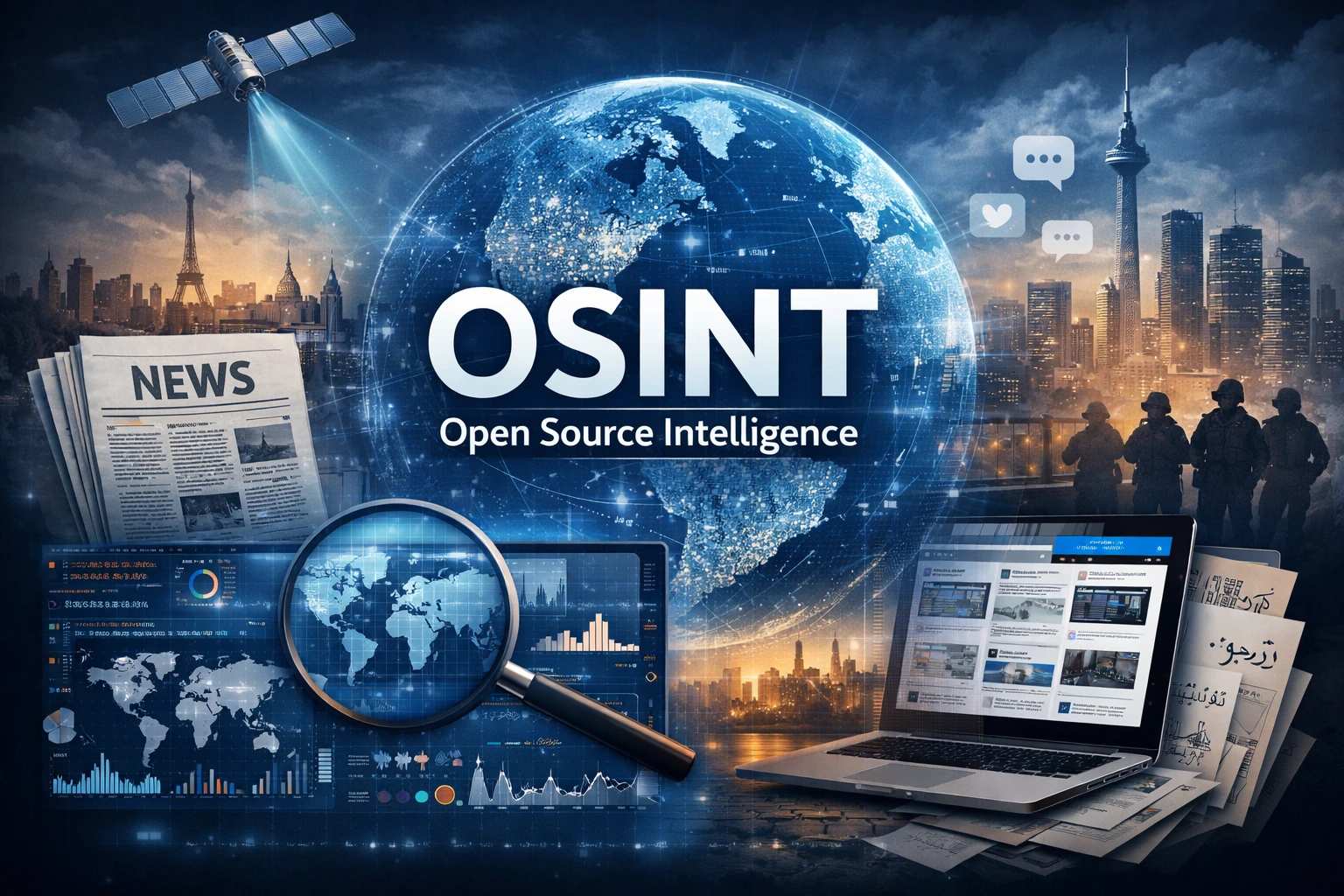
In the rapidly evolving landscape of open-source intelligence (OSINT), the proliferation of multilingual content across global digital platforms has transformed intelligence monitoring into a highly complex yet essential discipline. As information flows seamlessly across borders in dozens of languages, dialects, and informal variants, intelligence agencies, law enforcement, and security organizations face unprecedented challenges in achieving comprehensive situational awareness. Knowlesys addresses these demands through its flagship Knowlesys Intelligence System (KIS), an advanced OSINT platform engineered for real-time intelligence discovery, alerting, analysis, and collaborative workflows in diverse linguistic environments.
The current date marks a pivotal moment in 2026, where AI-driven innovations are reshaping how multilingual data is processed, correlated, and actioned. This article examines key emerging trends, persistent challenges, and practical solutions that define effective intelligence monitoring today.
The Explosion of Multilingual Digital Content and Its Intelligence Implications
Global online discourse now routinely spans Arabic dialects, Farsi, Urdu, Turkish, English, and numerous regional variations, often blending formal language with slang, emojis, misspellings, and symbolic expressions. This multimodal, multilingual reality complicates traditional keyword-based monitoring, as threats and narratives frequently manifest in mixed-language campaigns designed to evade detection.
Intelligence operations must now contend with coordinated influence activities that leverage linguistic diversity to target specific audiences while obscuring origins. For instance, disinformation may originate in one language ecosystem but rapidly propagate across others through cross-platform sharing. Knowlesys Intelligence System counters this by enabling full-domain coverage of major social media platforms, websites, and multimedia sources, processing billions of data items daily to capture text, images, videos, and their contextual linkages.
AI-Powered Multilingual Semantic Understanding as a Core Capability
One of the most significant trends in 2026 is the shift from literal translation to context-aware semantic analysis. Modern OSINT platforms increasingly incorporate next-generation multilingual large language models (LLMs) that auto-detect languages and dialects, deliver near-human-quality translations, and perform cross-language content correlation. This allows analysts to uncover unified narratives across linguistic boundaries without relying on isolated keyword matching.
Knowlesys has advanced this capability within the Knowlesys Intelligence System, supporting over 20 languages—including major global languages and regional dialects such as Gulf Arabic, Levantine, and Egyptian variants. The system's multilingual AI engine excels in handling non-standard communication patterns, ensuring accurate semantic interpretation in mixed-language environments. This represents a critical evolution from earlier systems limited by rigid translation pipelines, enabling deeper intelligence discovery and threat alerting in real-world operational scenarios.
Integration of Multimodal and Cross-Platform Fusion Analysis
Intelligence monitoring in 2026 demands unified analysis across text, images, audio, and video. Emerging trends emphasize AI-assisted cross-modal processing, where visual and auditory elements are correlated with textual content to provide richer contextual insights. Deepfake detection, video intelligence, and GEOINT inference further enhance the ability to verify authenticity and trace origins in multilingual campaigns.
Knowlesys Intelligence System integrates these elements into a cohesive workflow, supporting narrative monitoring, behavioral clustering, and large-scale cross-platform fusion. By combining intelligence discovery with advanced analysis tools—such as propagation path tracing, key opinion leader (KOL) evaluation, and fake account identification—the platform accelerates investigative efficiency and supports collaborative intelligence efforts across teams.
Real-Time Alerting and Predictive Insights in High-Volume Environments
Speed remains paramount in multilingual intelligence monitoring. With data volumes reaching billions of items daily, the ability to deliver minute-level (or faster) alerts on emerging risks is a defining trend. AI models now prioritize high-value signals based on propagation velocity, sentiment shifts, and cross-language resonance, moving beyond reactive monitoring to predictive threat alerting.
The Knowlesys Intelligence System exemplifies this through its intelligence alerting module, which achieves sensitive OSINT discovery in as little as 10 seconds and warning response times under 5 minutes. Multi-channel notifications ensure timely delivery to decision-makers, while customizable thresholds adapt to specific operational needs, enabling proactive responses in dynamic multilingual threat landscapes.
Challenges: Data Sovereignty, Explainability, and Non-Standard Language Handling
Despite technological progress, several challenges persist. Multilingual environments often feature limited-access sources, dialectal variations, and intentional obfuscation, reducing visibility and increasing false negatives. Regulatory demands for data sovereignty—particularly in regions with strict localization requirements—further complicate global monitoring.
Explainable AI and human-machine consensus mechanisms are emerging as essential safeguards against bias and hallucination risks. Knowlesys Intelligence System incorporates robust validation layers, high-accuracy metadata extraction (99%), and AI judgment precision (96%), while supporting sovereign data handling to meet institutional compliance standards.
From Monitoring to Actionable Collaborative Intelligence
The ultimate trend in 2026 is the transition toward integrated, collaborative intelligence ecosystems. Platforms must facilitate team-based workflows, shared insights, and automated reporting to transform raw data into strategic decisions. Knowlesys Intelligence System supports this through intelligence collaboration features—including task assignment, real-time sharing, and one-click generation of multi-format reports (HTML, Word, Excel, PPT)—ensuring seamless transitions from discovery to operational response.
Conclusion: Positioning for the Multilingual Future of OSINT
As multilingual information environments continue to expand, effective intelligence monitoring requires platforms that combine comprehensive coverage, semantic depth, multimodal fusion, and rapid alerting. Knowlesys, with its Knowlesys Intelligence System, stands at the forefront of these advancements, delivering intelligence discovery, threat alerting, in-depth analysis, and collaborative capabilities tailored to the complexities of global OSINT operations.
Organizations investing in such systems gain not only visibility into emerging threats but also the analytical edge needed to navigate an increasingly interconnected and linguistically diverse digital world. The future of intelligence lies in mastering multilingual complexity—turning information overload into strategic advantage.