Technology-Human Collaboration in Geopolitical Situational Awareness
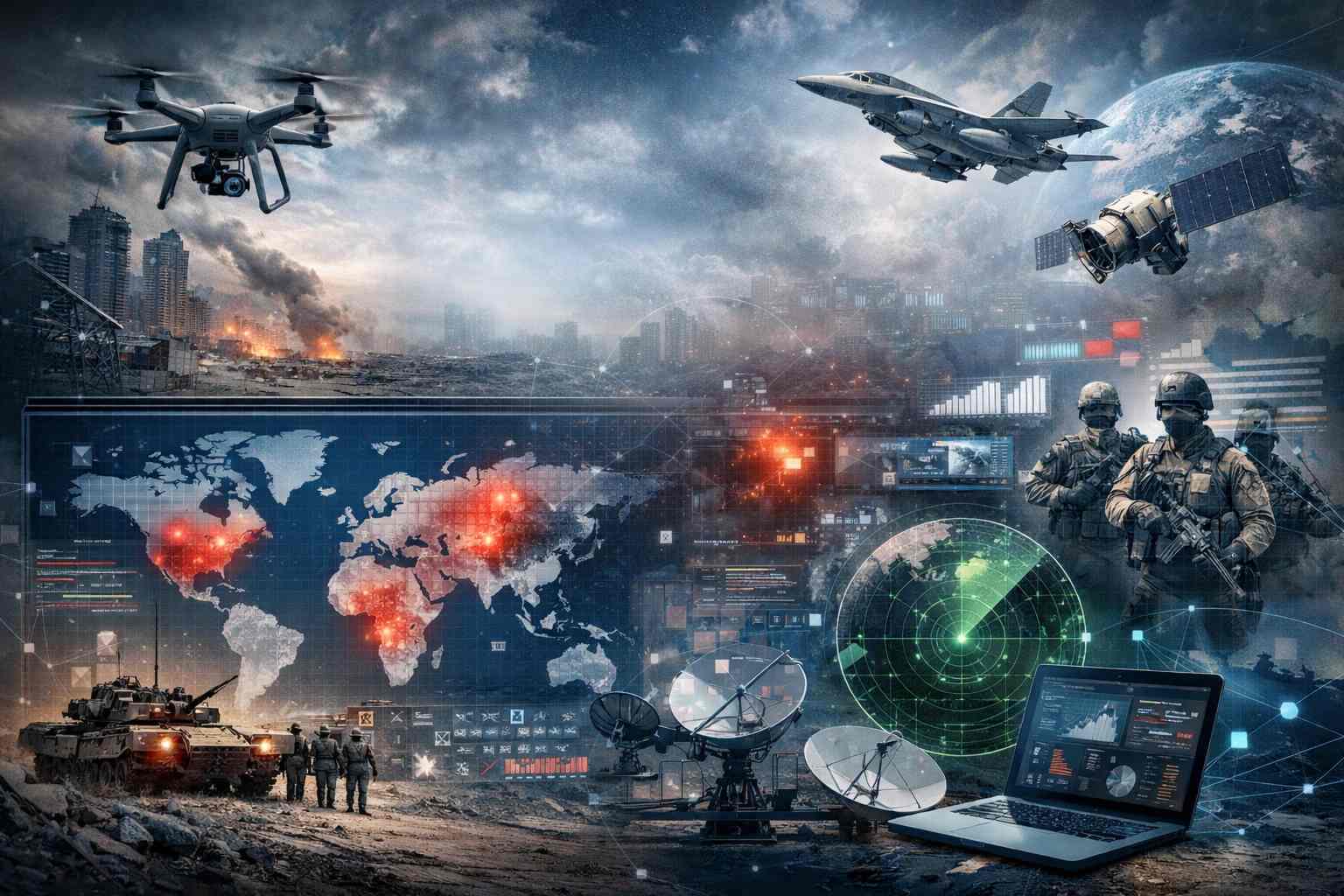
In an increasingly volatile global landscape, geopolitical situational awareness demands more than traditional intelligence gathering—it requires the seamless integration of advanced technology with human expertise. The rapid evolution of open-source intelligence (OSINT) platforms has positioned AI-driven systems as indispensable tools for processing vast data volumes, while human analysts provide contextual judgment, ethical oversight, and strategic interpretation. Knowlesys Open Source Intelligent System exemplifies this collaborative paradigm, enabling intelligence professionals to achieve superior decision advantage in complex, high-stakes environments.
The Imperative for Hybrid Intelligence in Modern Geopolitics
Geopolitical risks today manifest through hybrid threats: disinformation campaigns, influence operations, proxy conflicts, and rapid escalations amplified by digital channels. Traditional monitoring struggles with the scale and velocity of open-source data—billions of daily messages across social platforms, forums, and news outlets. AI excels at real-time pattern detection, anomaly identification, and multilingual processing, but lacks the nuanced understanding of cultural, historical, and political contexts that humans bring.
Knowlesys addresses this challenge through a full-cycle OSINT framework that emphasizes technology-human collaboration. The system’s intelligence discovery engine captures comprehensive, multilingual content from global platforms, while its alerting module delivers minute-level notifications on emerging risks. Human operators then refine these outputs, validating findings and directing deeper investigations to ensure accuracy and relevance.
Core Components of Effective Human-Machine Teaming
Successful collaboration relies on complementary strengths: machines handle exhaustive data processing, while humans focus on high-level reasoning and validation.
Intelligence Discovery and Initial Filtering
Knowlesys Open Source Intelligent System scans major social networks, websites, and multimedia sources, supporting over 20 languages to uncover hidden signals in text, images, and videos. AI-driven models automatically identify sensitive content, such as spikes in coordinated narratives or anomalous account behaviors, reducing the initial data overload for analysts.
This automated layer enables teams to monitor thousands of key opinion leaders, target accounts, and geographic regions simultaneously—capabilities far beyond manual efforts—while preserving human oversight to adjust monitoring parameters based on evolving geopolitical priorities.
Threat Alerting and Rapid Response
The platform’s intelligence alerting functionality operates at minute-level speed, flagging threshold breaches like sudden sentiment shifts or amplification by influencers. Customizable thresholds allow users to define risk indicators tailored to specific scenarios, such as instability precursors or information operations.
Human analysts receive these alerts via multiple channels, enabling immediate evaluation and response. This hybrid loop prevents alert fatigue by prioritizing high-confidence signals, while human expertise prevents over-reliance on automated judgments in ambiguous cases.
Multi-Dimensional Intelligence Analysis
Knowlesys provides nine analysis dimensions, including thematic parsing, sentiment classification, author profiling, propagation tracing, geographic heatmapping, and multimedia forensics. AI generates visualizations like propagation graphs and hotspot trends, accelerating insight generation.
Analysts interpret these outputs, cross-verifying with classified sources or domain knowledge to uncover coordinated campaigns or behavioral clusters indicative of state-sponsored activities. This collaborative process transforms raw data into actionable intelligence, enhancing situational awareness in contested information environments.
Collaborative Workflows and Report Generation
Intelligence collaboration features support team-based workflows, including data sharing, task allocation, and instant messaging. Shared dashboards facilitate distributed analysis, allowing specialists to contribute complementary perspectives.
One-click report generation produces customizable formats—HTML, Word, Excel, or PPT—integrating AI-summarized insights with human-edited narratives. This ensures reports meet compliance standards while accelerating delivery for decision-makers.
Real-World Impact in Geopolitical Contexts
In practice, this technology-human synergy proves vital for monitoring geopolitical risks. For instance, during periods of regional tension, the system detects narrative shifts across platforms, enabling analysts to trace amplification networks and attribute influence operations. By combining AI’s scale with human strategic insight, organizations maintain proactive awareness and mitigate escalation risks.
Knowlesys Open Source Intelligent System supports homeland security, counterterrorism, and intelligence agencies by delivering evidence-based insights that inform policy and operational responses. Its emphasis on human-machine consensus verification—where algorithmic outputs undergo expert review—builds trust and reliability in high-stakes decisions.
Challenges and Future Directions
Despite advances, challenges remain: ensuring AI transparency, mitigating biases in models, and adapting to emerging threats like deepfakes. Knowlesys continually refines its Cognitive AI Engine to address these, incorporating feedback loops that improve accuracy over time.
Looking ahead, deeper integration of predictive analytics and enhanced visualization will further empower collaborative teams. As geopolitical competition intensifies, platforms that master this human-technology balance will define the next era of intelligence superiority.
Conclusion
Geopolitical situational awareness thrives at the intersection of technological power and human ingenuity. Knowlesys Open Source Intelligent System represents a mature realization of this collaboration, providing intelligence discovery, threat alerting, analysis, and collaborative features that enable professionals to navigate uncertainty with confidence. By augmenting human capabilities rather than replacing them, such systems ensure that decision-makers receive timely, accurate, and contextually rich intelligence—essential for safeguarding interests in an unpredictable world.