Identifying Geopolitical Risk Transmission Pathways
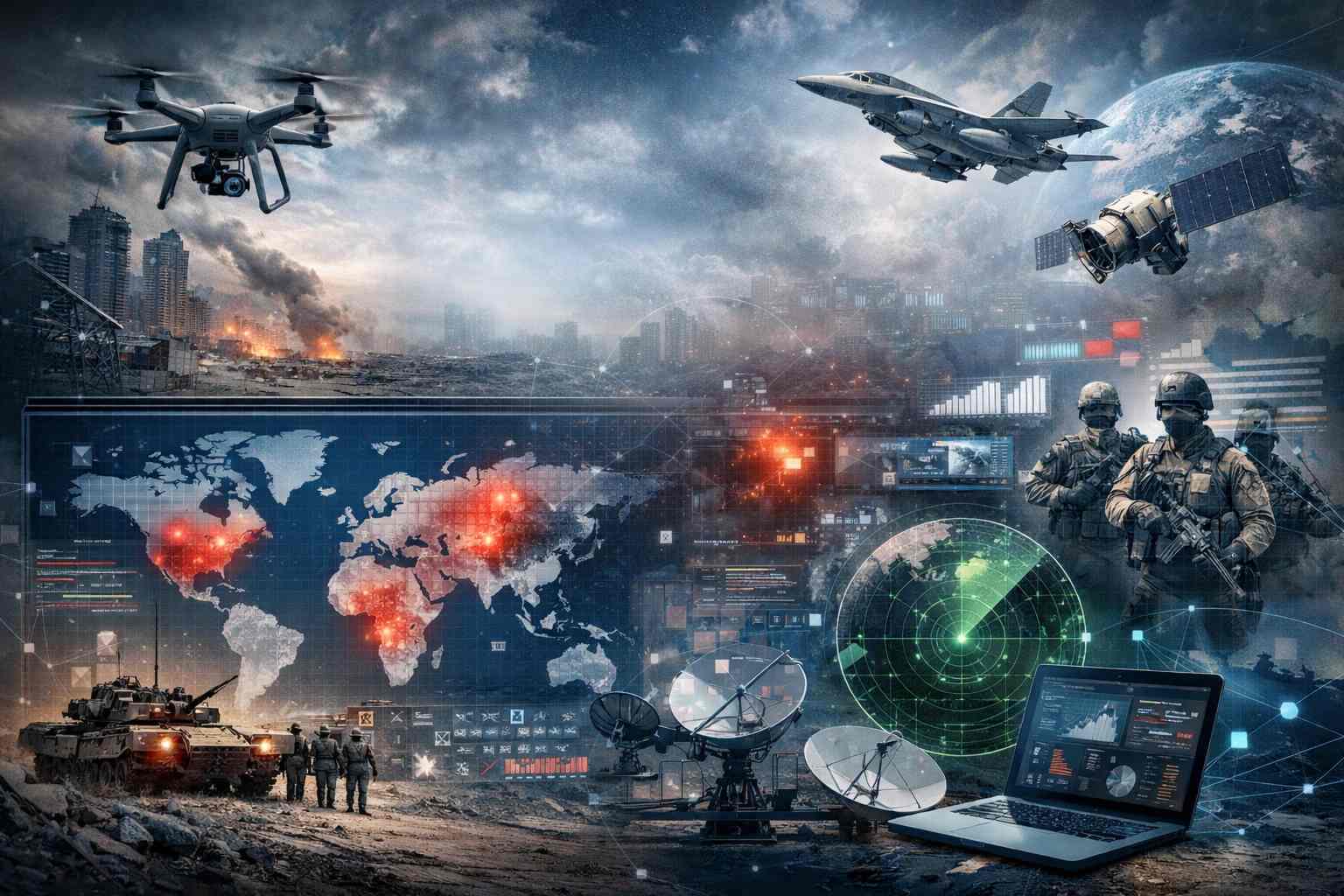
In today's interconnected world, geopolitical risks rarely remain confined to their point of origin. A regional conflict, diplomatic dispute, or sanctions regime can rapidly propagate through digital narratives, economic channels, supply networks, and behavioral clusters, generating cascading effects that impact national security, financial stability, and operational continuity. Understanding these transmission pathways has become essential for intelligence communities, homeland security agencies, and strategic decision-makers who must anticipate escalation before physical or hybrid threats materialize.
The Knowlesys Open Source Intelligent System empowers organizations to map and dissect these pathways with precision. By integrating real-time intelligence discovery, early alerting, multidimensional analysis, and collaborative workflows, the platform transforms fragmented open-source signals into coherent visibility over how geopolitical risks evolve and spread across borders, platforms, and domains.
The Nature of Geopolitical Risk Transmission in the Digital Age
Geopolitical risks transmit through multiple overlapping layers. Digital amplification often serves as the primary accelerator: inflammatory narratives originating in one region can rapidly gain traction on global social media, forums, and messaging platforms, influencing public sentiment, policy debates, and even market behavior far beyond the initial flashpoint.
Key transmission characteristics include:
- Synchronized propagation: Coordinated accounts or influence nodes amplify messages across platforms within compressed timeframes.
- Cross-border spillover: Local events trigger global reactions, particularly when involving major powers, critical resources, or strategic alliances.
- Hybrid escalation patterns: Online rhetoric precedes or accompanies physical actions, cyber operations, or economic disruptions.
- Temporal anomalies: Activity bursts that defy normal diurnal or timezone patterns frequently indicate external orchestration.
Effective identification requires moving beyond surface-level monitoring to trace originators, amplifiers, diffusion nodes, and downstream impact zones. Knowlesys addresses this challenge through a structured intelligence lifecycle that captures the full dynamics of risk propagation.
Intelligence Discovery: Capturing the Initial Signals
The foundation of pathway identification lies in comprehensive, real-time discovery of relevant open-source intelligence. Knowlesys continuously scans global social media platforms, news outlets, forums, video-sharing sites, and other public channels, processing billions of items daily across more than 20 languages.
Users define precise monitoring targets — including keywords, topics, key opinion leaders, suspect accounts, geographic regions, or event clusters — enabling focused capture of emerging geopolitical signals. The system detects multi-format content (text, images, videos) and flags sensitive indicators such as sudden spikes in inflammatory language, coordinated posting behavior, or anomalous multimedia dissemination.
This broad yet targeted discovery phase ensures that the earliest precursors of risk transmission are not missed, providing the raw material needed to trace how a localized issue begins to spread internationally.
Intelligence Alerting: Detecting Acceleration in Near Real-Time
Risk transmission accelerates when isolated discussions evolve into widespread narratives. Knowlesys delivers minute-level alerting powered by AI-driven sensitive content recognition and customizable thresholds for propagation velocity, mention volume, sentiment polarity, and geographic concentration.
Alerts arrive via multiple channels — system notifications, email, dedicated clients — allowing rapid assessment of whether an emerging signal represents the start of a broader transmission pathway. For instance, when monitoring contested regions or upcoming elections, the system can instantly flag synchronized activity across platforms, timezone-masked behaviors, or unusual influencer involvement, giving analysts precious time to evaluate potential escalation.
Intelligence Analysis: Mapping Propagation Pathways and Networks
Once acceleration is detected, detailed analysis reveals the structure and direction of transmission. Knowlesys offers nine core analytical dimensions to dissect pathways:
- Content and sentiment tracking: Theme evolution, emotional valence shifts, and narrative mutation over time.
- Actor profiling: Account origin characteristics, behavioral authenticity assessment, influence scoring, and false-identity detection.
- Propagation path tracing: Identification of originators, key amplifiers, diffusion layers, and terminal nodes in the spread chain.
- Geographic visualization: Heatmaps showing regional concentrations, cross-border jumps, and hotspot migration.
- Network graphing: Interactive knowledge graphs exposing collaborative clusters, synchronized behaviors, and influence hierarchies.
- Temporal analysis: Activity timelines, burst detection, and timezone drift identification to reveal orchestration patterns.
- Multimedia provenance: Tracing original sources of images and videos to uncover repurposed or manipulated content.
These capabilities allow analysts to construct clear visual models of how a geopolitical risk moves from initial discussion to global resonance, pinpointing critical nodes where intervention could disrupt further spread.
Case Example: Tracing Narrative Propagation During Regional Tensions
Consider a territorial dispute or election-related controversy in a strategically sensitive area. Initial posts appear on local platforms, then rapidly appear on international social media with translated captions and coordinated hashtags. Knowlesys would:
- Detect the early spike through continuous full-domain scanning.
- Alert teams to synchronized multilingual activity and sentiment intensification.
- Map the propagation path: identifying the likely origin account(s), key amplifiers (influencers, bot-like clusters), and secondary diffusion through cross-platform sharing.
- Visualize geographic spread via heatmaps and network graphs showing how the narrative jumps regions and timezones.
- Highlight anomalies such as timezone masking or behavioral resonance among seemingly unrelated accounts.
This end-to-end visibility enables proactive measures — from counter-messaging to heightened physical security preparations — long before downstream effects (protests, cyber incidents, market volatility) emerge.
Intelligence Collaboration: Enabling Team-Based Pathway Disruption
Risk transmission rarely follows linear or predictable routes. Knowlesys supports collaborative intelligence workflows through shared data pools, task assignments, broadcast notifications, and instant messaging. Teams can enrich pathway maps with complementary insights — one analyst focusing on narrative evolution, another on actor authenticity, a third on geographic implications — building a comprehensive picture faster than siloed approaches allow.
This collaborative layer ensures that transmission pathways are not only identified but actively monitored and countered across organizational boundaries.
Conclusion: From Visibility to Anticipatory Action
Geopolitical risk transmission pathways represent the invisible arteries through which local tensions become global threats. By systematically uncovering origin points, amplification mechanisms, diffusion routes, and impact zones, organizations gain the foresight needed to interrupt escalation cycles and protect core interests.
Knowlesys Open Source Intelligent System stands at the forefront of this capability, delivering an integrated platform that combines unmatched coverage, speed, analytical depth, and collaborative power. In an era where digital signals increasingly foreshadow real-world consequences, mastering the identification of transmission pathways is no longer optional — it is a strategic imperative for security and stability.